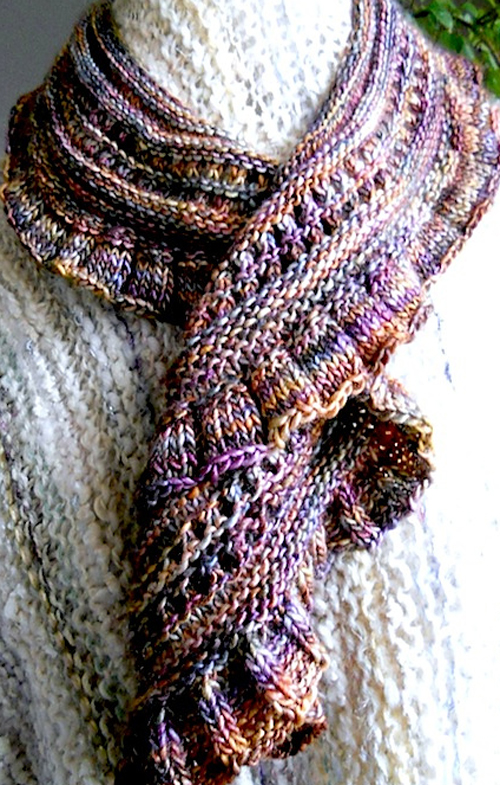
Multnomah Shawl. Photo © Kate Ray / Hello Knitty
Multnomah by Kate Ray is a classic
triangular shawl knitting pattern that combines a simple
garter-stitch body with a beautiful
Feather and Fan lace border.
Originally published in 2009 through Hello Knitty, Multnomah has become
an enduring favorite among shawl knitters. It uses fingering-weight yarn
and approximately 412 yards (377 m) for the original
size, making it a lovely project for a special skein of sock yarn.
Availability update: the original Hello Knitty source
is now out of print, but the free pattern has been preserved in an
archived copy. More information and the archived pattern source are
available through the pattern's current Ravelry record.
Multnomah Shawl Pattern Details
- Designer: Kate Ray
- Originally published: August 2009
- Original publication: Hello Knitty
- Craft: Knitting
- Category: Shawl / wrap
- Shape: Triangular
- Current availability: Free archived pattern
- Yarn weight: Fingering
- Yardage: Approximately 412 yards (377 m)
- Needles: US 3 (3.25 mm) circular needle, 24 inches / 60 cm or longer
- Gauge: 24 stitches and 21 garter ridges = 4 inches (10 cm) in garter stitch
- Original finished size: Approximately 44 × 19 inches
- Construction: One-piece triangular shawl
- Main stitches: Garter stitch and Feather and Fan lace
- Notions: Four stitch markers
- Language: English, with translations also documented
A Classic Garter Stitch and Lace Shawl
Multnomah has a wonderfully effective construction: the majority of the
upper shawl is worked in relaxing garter stitch, while
the lower section changes into a flowing Feather and Fan lace border.
The contrast between the simple body and decorative edge gives the shawl
much of its character without requiring lace knitting throughout the
entire project.
This also makes Multnomah an appealing introduction to knitted shawls
for someone who wants a project with both straightforward knitting and
a more decorative finishing section.
The Garter-Stitch Body
The shawl begins with a small number of stitches and gradually expands
into its triangular shape.
Most of this first section is garter stitch, with increases used to
create the growing shawl.
Garter stitch is particularly effective with hand-dyed and variegated
fingering yarns because the simple texture allows the yarn's color
changes to remain visible.
Feather and Fan Lace Border
The lower portion introduces the classic
Feather and Fan motif.
This traditional combination of increases and decreases creates the
distinctive waves and openwork along the bottom of the shawl.
Once blocked, the Feather and Fan section opens beautifully and provides
a decorative contrast to the dense garter-stitch body.
A One-Skein Fingering-Weight Shawl
The original Multnomah was designed around approximately
412 yards (377 m) of fingering-weight yarn.
That makes the original size particularly attractive for the special
skeins of sock yarn that many knitters have in their stash.
If your skein contains significantly less yarn, you may need to make a
smaller version. If you have more yarn, the design can also be expanded.
The Original Yarn
Kate Ray's original sample used
The Sanguine Gryphon Bugga! in the Rainbow Scarab
colorway.
The original project used essentially the entire skein, approximately
412 yards.
You do not need the original yarn to make Multnomah. A fingering-weight
yarn that produces a fabric and gauge you enjoy can be substituted.
Choosing Yarn for Multnomah
Multnomah works especially well with yarns where you want both the color
and stitch pattern to remain visible.
Solid and tonal yarns can emphasize the Feather and Fan texture, while
gently variegated or long-color-repeat yarns can create dramatic color
movement across the growing triangular shape.
When substituting yarn, pay attention to total yardage rather than
simply comparing the number of skeins.
Needles and Gauge
The original pattern specifies a
US 3 (3.25 mm) circular needle at least
24 inches (60 cm) long.
The documented gauge is:
24 stitches and 21 garter ridges = 4 inches (10 cm)
in garter stitch
A circular needle is useful because the shawl eventually contains many
stitches, even though the work itself is knitted flat rather than joined
in the round.
Finished Size
The original Multnomah measures approximately:
44 inches across × 19 inches deep
This places the original design in the shawlette-to-small-shawl range,
making it easy to wear around the neck as well as across the shoulders.
Multnomah Is Easy to Resize
One of the most useful characteristics of the design is that
the size can be adjusted.
Kate Ray documented alternative points for beginning the Feather and
Fan border, allowing knitters to create smaller or larger versions of
the original shawl.
You can also extend the lace section with additional repeats when you
have enough yarn.
Making a Larger Multnomah
If you want a larger shawl, the garter-stitch section can be extended
before beginning the lace border.
Because the Feather and Fan motif has a predictable stitch repeat, the
designer documented several larger starting points for the lace section.
Keep in mind that every additional row becomes longer as the shawl
grows, so larger versions can consume yarn much faster near the end of
the project.
Making a Smaller Version
Multnomah can also be reduced if you have less than the original
412-yard recommendation.
Starting the Feather and Fan section earlier creates a smaller
shawlette while retaining the defining combination of garter stitch and
lace.
This flexibility makes the design useful when you want to work with a
specific amount of treasured fingering-weight yarn.
Skills Used in the Multnomah Shawl
Useful techniques for this project include:
- Garter stitch
- Working flat on circular needles
- Basic increases
- Yarn overs
- Basic decreases
- Using stitch markers
- Following a repeating lace motif
- Binding off a large number of stitches
- Wet blocking lace
Is Multnomah Beginner Friendly?
Multnomah can be a very approachable first shawl for a knitter who
already knows the basic knit stitch and is ready to learn simple
increases, decreases and yarn overs.
The long garter-stitch section gives you time to become comfortable
with the shawl's shaping before reaching the Feather and Fan border.
The lace section requires more attention, but it is based on a repeating
motif rather than a large collection of unrelated lace patterns.
A Good First Lace Shawl
If full lace shawls feel intimidating, Multnomah provides a gentler
introduction.
Only the border uses the Feather and Fan lace motif, so a mistake does
not mean navigating lace across the entire shawl.
Using stitch markers and checking your stitch counts regularly can make
the transition into the lace section much easier.
Use a Lifeline in the Lace Section
A lifeline can be particularly helpful when knitting the Feather and Fan
border.
Threading a contrasting strand through the stitches after a correct
repeat gives you a safe point to return to if you discover a mistake
later.
This simple precaution can save a great deal of time when working long
lace rows.
Blocking Makes a Big Difference
Don't judge the Feather and Fan border completely while it is still on
the needles.
Lace often looks compressed before blocking. Washing the finished shawl
and gently pinning it to shape allows the openwork and waves to become
much more visible.
Always use a blocking method appropriate for the fiber content of your
chosen yarn.
Why Multnomah Works With Variegated Yarn
Multnomah became especially popular as a project for colorful sock yarn.
The garter-stitch body provides a relatively simple background for
changing colors, while the Feather and Fan border adds texture without
overwhelming the yarn.
This combination can be particularly effective with hand-dyed yarns and
long color repeats.
A Popular Modern Shawl Classic
Multnomah has remained remarkably popular since its original publication
in 2009.
Thousands of knitters have made versions in different yarns, colors and
sizes, demonstrating how adaptable the basic garter-and-lace structure
can be.
Its enduring appeal comes from a useful balance: enough simple knitting
to make the project relaxing, followed by enough lace to make the
finished shawl feel special.
Why Knit the Multnomah Shawl?
Multnomah is an excellent choice if you have a beautiful skein of
fingering yarn and want something more decorative than a plain
garter-stitch shawl without committing to complicated lace from beginning
to end.
The triangular shape is practical to wear, the size is adjustable, and
the Feather and Fan border gives the finished piece a classic wavy
edge.
It is also a useful bridge between basic knitting and more advanced lace
shawls.
Get the Free Archived Multnomah Shawl Pattern
Multnomah by Kate Ray was originally published free
through Hello Knitty. That original website source is now out of print,
but the pattern has been preserved in an archived copy.
The current Ravelry pattern record provides the pattern information and
points knitters to the archived free version.
View the Multnomah Pattern & Archived Free Source →
The original Hello Knitty source is no longer active. Amazing Knitting
does not host or reproduce the designer's complete pattern. Pattern
availability was checked when this article was updated.