Skip to content

...

Showing posts sorted by date for query seamless baby cardigan. Sort by relevance Show all posts

Linnie Cardigan - Free Knitting Pattern

Linnie Cardigan - Free Knitting Pattern
The photo above © Justyna Lorkowska
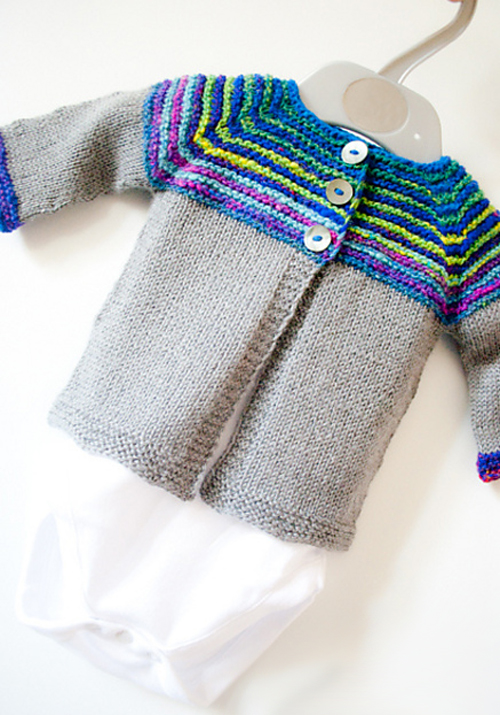
What beautiful knitting baby cardigan (free knitting pattern)! I found it on Ravelry...
Linnie is a seamless cardigan knit utilizing the top-down raglan shaping method. It is perfect if you wish to destash some sock yarn lying around somewhere in your house :-)

Download Pattern: Linnie 

Baby Cardigan and Romper - Knitting Pattern

Baby Cardigan and Romper - Knitting Pattern
Designed by © OGE Knitwear Designs
What beautiful baby cardigan and romper knitting pattern! I found it on Etsy...
Seamless top down sweater can be knitted with or without sleeves. Oneseie is knitted in garter stitch with a small amount of seaming required. Rated easy by Ravelrers. Sizes Cardigan -- 3 to 6 months, 6 to 12 months, 12 to 18 months : Onesie -- 0 to 3 months, 6 to 9 months, 9 to 12 months. DK weight yarn.

Ducky Hoodie - Knitting Pattern

Ducky Hoodie - Knitting Pattern
The photo above © sofiecat

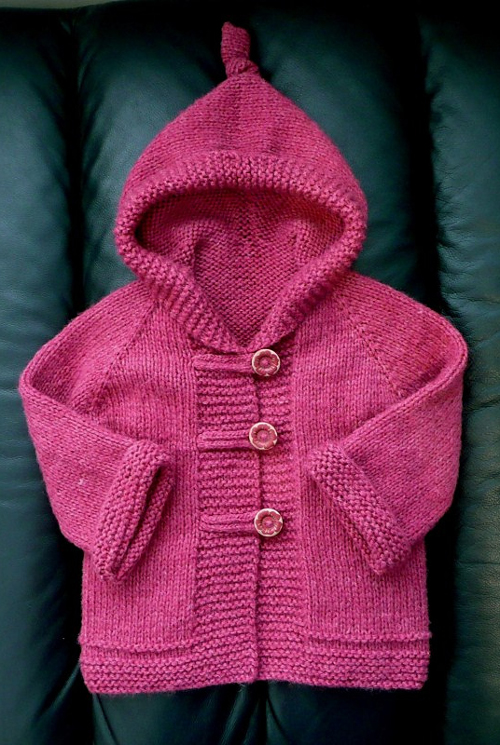
Looking for a playful hooded baby and child knitting pattern? The design shown here is Duck Soup by annypurls, a clever nearly seamless jacket with a distinctive knotted hood, decorative i-cord closures, and generous sizing designed to give growing children extra wear.

Originally published in 2008, Duck Soup combines practical construction with whimsical details. It can be worn first as a roomy little coat and later as a more fitted cardigan as the child grows.

Duck Soup Hoodie Pattern at a Glance

Pattern: Duck Soup

Designer: annypurls

Craft: Knitting

Category: Baby / Child Hooded Jacket

Construction: Top-down and nearly seamless

Yarn Weight: Bulky

Gauge: 16 stitches and 24 rows = 4 inches in stockinette

Main Needle Size: US 8 / 5.0 mm

Additional Needle Size: US 2 / 2.75 mm

Yardage: Approximately 400–900 yards (366–823 m)

Sizes: 3 months to 4/5 years

Pattern Availability: Paid pattern

About the Duck Soup Hoodie

Duck Soup is a hooded jacket designed by annypurls for babies, toddlers, and young children. The pattern stands out because of its playful knotted hood and handmade i-cord closures.

The jacket is worked mostly back and forth on a circular needle, while the sleeves are knitted in the round. This keeps seaming to a minimum and gives the finished garment a clean construction.

A Jacket Designed to Grow with a Child

One of the most interesting features of Duck Soup is its generous fit. The design was intentionally created so that a child could wear it in more than one way as they grow.

It can begin as a roomy three-quarter-length coat with folded cuffs and a folded hood brim. Later, those sections can be unfolded so the same garment works more like a fitted cardigan.

That makes this pattern especially appealing for knitters who want to put time into a handmade garment that can be worn for more than a very short baby-size window.

Available Sizes

The current Ravelry listing includes the following sizes:

  • 3 months
  • 6 months
  • 18 months
  • 2–3 years
  • 4–5 years

Always check the original pattern page before choosing a size, since the designer's current listing is the authoritative source for measurements and construction details.

Yarn and Yardage

The jacket is designed primarily for bulky-weight yarn. The original samples used Classic Elite Yarns Countess for the main garment.

Depending on size, the listed total yarn requirement is approximately:

400–900 yards (366–823 meters)

Small amounts of contrasting yarn can also be used for the decorative i-cord closures, making this a nice project for adding colorful accents.

Needles and Gauge

The published main gauge is:

16 stitches × 24 rows = 4 inches in stockinette stitch

The listing includes US 8 / 5.0 mm needles for the main bulky-weight fabric and US 2 / 2.75 mm for smaller details.

Row gauge is especially important in this design because it affects the depth of the armholes and the overall fit.

Knotted Hood and I-Cord Closures

The details are what make Duck Soup memorable. Instead of a conventional hood, the design finishes with a playful knot at the top.

The front uses knotted i-cord buttons together with i-cord loops, creating decorative frog-style closures rather than standard buttons.

The original pattern also includes a photo tutorial for making these closures.

Construction and Skills

Duck Soup is worked top-down and is described as nearly seamless. Depending on your experience, the project may involve:

  • Top-down garment construction
  • Raglan-style shaping
  • Knitting back and forth on circular needles
  • Knitting sleeves in the round
  • I-cord
  • Decorative frog closures
  • Picking up or managing stitches around garment edges

The combination makes it more involved than a very basic baby cardigan, but also gives the finished jacket much more character.

Is Duck Soup a Free Knitting Pattern?

No. The Duck Soup pattern by annypurls is currently a paid pattern on Ravelry.

At the time this Amazing Knitting page was originally created, availability or external links may have been presented differently. We now direct readers to the designer's current Ravelry listing so they can see the latest price and availability.

Amazing Knitting does not reproduce the designer's copyrighted knitting instructions.

View the Duck Soup Pattern

Visit the original Ravelry page to see the current pattern details, price, sizing information, designer notes, and purchase options.

View the Duck Soup Pattern →

Pattern credit: Duck Soup was designed by annypurls. Pattern price, availability, sizing, and technical details are controlled by the designer and may change over time.

More Baby and Child Hoodie Knitting

Explore more baby hoodie knitting patterns, baby cardigan knitting patterns, and child sweater knitting patterns from the Amazing Knitting archive.

Before You Start

Check the original Ravelry listing before buying yarn or beginning the project so you can confirm the current price, size information, materials, gauge, and any pattern updates from the designer.

Owlie Sleep Sack - Free Knitting Pattern

Owlie Sleep Sack - Free Pattern
Photo above © bisoubunny

Owlie Sleep Sack by Teresa Cole is a cozy newborn knitting project featuring an adorable band of little cable owls near the top.

The simple stockinette body keeps the overall construction manageable, while the owl motif adds just enough texture and personality to make the finished piece feel special.

Designed for newborns and young infants, this project has become a popular handmade baby gift and photography prop.

Best of all, the original Owlie Sleep Sack pattern is still officially available for free.

Important Baby Safety Note

The designer specifically warns that the Owlie Sleep Sack is not intended for babies to sleep in unattended. Never leave a baby in the sleep sack when the child is out of your sight. Treat it as a supervised cozy wrap or photography accessory, not as an unsupervised sleep product.

✓ Free Pattern Availability

Owlie Sleep Sack by Teresa Cole is currently listed on Ravelry as an available free pattern, with the original source credited to the Comfort Wool Blog.

Owlie Sleep Sack at a Glance

Pattern: Owlie Sleep Sack

Designer: Teresa Cole

Original Source: Comfort Wool Blog

Category: Baby sleep sack / cocoon

Size: Newborn / Infant

Suggested Yarn: Malabrigo Yarn Worsted

Yarn Weight: Aran / 10 ply

Yardage: 150–200 yd / 137–183 m

Needles: US 7 / 4.5 mm

Gauge: 5 sts per inch in stockinette

Construction: One piece, seamless, worked in the round

Featured Technique: Cable owl motif

Availability: Free

About the Owlie Sleep Sack

Owlie Sleep Sack is a small baby cocoon with a smooth knitted body and a decorative band of cable owls near the upper section.

That combination makes the design especially charming: most of the knitting is straightforward, while the owl section provides a fun introduction to cable work.

Because the project is compact, it can also be a practical way to practice new techniques without committing to a full-size garment.

The Owl Cable Motif

The most distinctive feature is the row of little knitted owls.

Cable stitches create the body and shape of each owl by crossing groups of stitches over one another.

Once repeated around the sleep sack, the individual cable motifs become a decorative band that gives the project its recognizable look.

A Good Introduction to Cables

If you already feel comfortable knitting and purling in the round, Owlie can be a useful next project for learning basic cable techniques.

You will be able to practice:

  • Working in the round
  • Maintaining stockinette fabric
  • Following cable instructions
  • Crossing stitches
  • Keeping an even gauge
  • Shaping a simple baby cocoon

Yarn and Yardage

The published pattern record lists Malabrigo Yarn Worsted as the suggested yarn.

The required yardage is approximately:

150–200 yards / 137–183 meters

That relatively small quantity makes Owlie a practical project for a single special skein, depending on skein yardage and your gauge.

Needles and Gauge

The listed needle size is:

US 7 / 4.5 mm

The published gauge is:

5 stitches per inch in stockinette

Gauge matters because the pattern is designed for a very small baby size. A substantially different gauge can change both the width and the length of the finished sack.

Why Gauge Is Especially Important for Baby Projects

Adult accessories such as scarves can often tolerate considerable size variation.

A newborn project is less forgiving.

If your stitches are much looser or tighter than the published gauge, the finished sleep sack may be significantly larger or smaller than intended.

Make a swatch if you are substituting yarn or needles.

Worked in the Round

Owlie is designed as a seamless, one-piece project worked in the round.

That keeps the smooth stockinette body free from a long side seam and allows the owl motifs to continue around the upper section.

If you are new to circular knitting, make sure the cast-on stitches are not twisted before joining in the round.

Choosing a Yarn Substitute

You do not have to use the original Malabrigo yarn, but choose a substitute that can produce the required gauge and a comfortable fabric.

Consider:

  • Yarn weight
  • Gauge
  • Softness
  • Fiber content
  • Washability
  • Stitch definition
  • Total yardage

Choose Yarn That Shows the Owls

Smooth or moderately plied yarns generally make cable motifs easier to see.

Very fuzzy yarn can soften the edges of the little owls, while strong color changes may visually compete with the cable shapes.

A solid or gently tonal color is often an excellent choice when you want the owl pattern to remain the star of the project.

Softness Matters

Any yarn used next to a baby's skin should feel comfortable and avoid irritating fibers or rough finishes.

Washability is also worth considering because baby items often need frequent cleaning.

Always follow the care instructions for the yarn you select.

Do Not Add Loose Decorations

The cable texture itself creates the owl shape, so additional embellishment is not necessary.

For a baby item, avoid loose buttons, beads or decorations that could detach.

If you customize the project, prioritize secure construction and supervised use.

Use Stitch Markers

Markers can help keep repeated owl sections organized.

They are particularly useful when several similar cable motifs repeat around the project and you want to identify an error before completing the entire round.

Check Your Cables Before Moving On

Cable mistakes are easier to correct soon after they happen.

After completing each cable round, pause and look at the motifs before knitting several more rounds.

Check that each owl is crossing in the intended direction and that none of the repeats has shifted.

Is Owlie Sleep Sack Suitable for Beginners?

A knitter who has only just learned the basic knit stitch may find the project ambitious.

It is more approachable if you already know how to:

  • Knit and purl
  • Work in the round
  • Read written pattern instructions
  • Maintain gauge

The owl section can then serve as a manageable introduction to cables.

Newborn / Infant Size

The official pattern record identifies the original size as Newborn/Infant.

Do not assume that enlarging the yarn or needle size automatically creates a safely proportioned older-baby version.

If you modify the dimensions, treat the changes as your own modification rather than as an official additional size from the designer.

Important: This Is Not an Unattended Sleep Product

Please Read Before Making This Project

The original pattern record specifically warns that the sleep sack is not meant for babies to sleep in unattended. Never leave a child in the Owlie Sleep Sack when the child is out of your sight.

This warning is part of the designer's own pattern information and should remain clearly visible on any page discussing the project.

The word "sleep sack" in the pattern name should not be interpreted as permission to use the handmade item as an unsupervised infant sleep product.

A Lovely Supervised Baby Gift

Used appropriately, Owlie can make a charming handmade newborn gift, supervised snuggle wrap or photography accessory.

Its small size also means it can be completed much more quickly than a baby blanket while still showcasing an interesting knitted motif.

Is Owlie Sleep Sack Still Free?

Yes.

Ravelry currently lists Owlie Sleep Sack by Teresa Cole as available for free.

The pattern record points back to the original Comfort Wool Blog source.

Amazing Knitting does not reproduce the designer's complete copyrighted row-by-row instructions. Use the authorized pattern source below for the full directions.

Get the Free Owlie Sleep Sack Pattern

The current Ravelry record is the safest route for confirming the designer, specifications and free availability:

Get the Free Owlie Sleep Sack Pattern →

More Free Baby Knitting Patterns

Continue with these verified free baby patterns already restored in the Amazing Knitting archive:

Explore More Baby Knitting

Before You Cast On

Check that your yarn is soft, appropriate for a baby item and capable of producing the required gauge.

Practice the owl cable motif on a small swatch if cables are new to you, and use stitch markers to keep the repeated sections organized.

Most importantly, remember the designer's safety warning and use the finished Owlie Sleep Sack only with direct adult supervision.

Pattern credit: Owlie Sleep Sack was designed by Teresa Cole and published through the Comfort Wool Blog. The existing Amazing Knitting photograph is credited to bisoubunny. Amazing Knitting provides an independent project guide and does not reproduce the designer's complete copyrighted knitting instructions.

Puerperium Cardigan - Free Pattern

Puerperium Cardigan - Free Pattern
Photos above © xgeckox

Puerperium Cardigan by Kelly van Niekerk is a beautifully simple newborn cardigan designed with the first weeks of a baby's life in mind.

Worked from the top down with seamless construction, it combines practical baby-friendly dressing with a wonderfully clean design. The asymmetric button placement gives the cardigan its distinctive look while leaving plenty of room for knitters to personalize the basic garment.

It is also an exceptionally popular little knit, with thousands of completed projects recorded by knitters on Ravelry.

Best of all, the original newborn-size Puerperium Cardigan pattern is still available as a free download.

✓ Free Pattern Availability

The original newborn-size Puerperium Cardigan by Kelly van Niekerk is currently available as a free Ravelry download. The designer also created a separate expanded version called Beyond Puerperium, which is a paid pattern covering additional sizes and yarn weights.

Puerperium Cardigan at a Glance

Pattern: Puerperium Cardigan

Designer: Kelly van Niekerk

Studio: PEKAPEKA Design Studio

Published: May 2011

Category: Newborn Cardigan

Free Size: Approx. 3–4 kg / 7–9 lb birthweight

Approx. Chest: 37.5 cm / 14¾ in

Yarn Weight: DK / 8-ply

Suggested Yarn: Madelinetosh Tosh DK

Yardage: Approx. 197–219 yd / 180–200 m

Needles: US 6 / 4 mm

Gauge: 22 sts × 30 rows = 4 in / 10 cm in stockinette

Construction: Top-down and seamless

Sleeves: Straight or tailored tapered option

Availability: Free Ravelry download

What Does “Puerperium” Mean?

The unusual name has a very specific connection to the purpose of the cardigan.

The puerperium is the period immediately following childbirth. The designer created this cardigan specifically to be easy for new parents to put on and take off their newborn during those first weeks.

That practical idea is central to the design rather than simply being an unusual pattern name.

Designed Specifically for Newborns

The free Puerperium pattern is intentionally focused on one small size.

It is written for a newborn weighing approximately:

3–4 kg / 7–9 lb

The approximate finished chest circumference is:

37.5 cm / 14¾ inches

This is important to understand before beginning: the free pattern is not a multi-size baby cardigan pattern.

Top-Down Construction

Puerperium is worked from the top down.

Top-down construction has several advantages for a small baby garment. You can see the cardigan taking shape as you knit, and the construction avoids the need to assemble multiple large garment pieces afterward.

It also makes the cardigan an approachable introduction to top-down garment knitting.

A Seamless Baby Cardigan

One of the pattern's biggest attractions is its seamless construction.

For knitters who dislike sewing garment pieces together, this is an especially welcome feature.

It also produces a neat interior, which is particularly appealing for clothing worn by a newborn.

The Distinctive Button Placement

Puerperium does not look like an ordinary symmetrical button-front cardigan.

Its buttonband follows the shaping line, creating the distinctive asymmetric front that makes the otherwise simple cardigan immediately recognizable.

This clever detail adds personality without requiring complicated colorwork or elaborate lace.

A Blank Canvas for Personalization

The designer describes Puerperium as a simple cardigan that can act as a blank canvas for embellishment.

That explains why completed versions of this pattern can look so different from one another.

Knitters can let the yarn provide the visual interest or add their own carefully chosen decorative touches.

The project photograph historically featured on this Amazing Knitting page, for example, shows how an embellishment can transform the basic cardigan into something playful and personal.

Solid or Variegated Yarn?

Both can work beautifully.

A solid yarn emphasizes the unusual construction and button placement, while a variegated or hand-dyed yarn can add visual interest to the simple stockinette fabric.

Because the basic cardigan does not rely on a complex all-over stitch pattern, it can be particularly effective for showing off a special skein of yarn.

Original Suggested Yarn

The Ravelry record suggests Madelinetosh Tosh DK.

The important technical requirement, however, is the DK / 8-ply weight and the required gauge rather than the exact brand.

The published yardage is approximately:

197–219 yards / 180–200 meters

This relatively modest yarn requirement also makes Puerperium an appealing small-garment project.

Gauge

The published gauge is:

22 stitches × 30 rows = 4 × 4 inches / 10 × 10 cm

This is measured in stockinette stitch.

The listed needle size is:

US 6 / 4 mm

Treat the needle size as a starting point. Use whichever needle size allows you to achieve the required gauge with your chosen yarn.

Gauge Matters on a Newborn Garment

It can be tempting to skip a gauge check because this cardigan is so small.

But on a newborn-size garment, even a modest gauge difference can noticeably affect the finished circumference.

If your stitches are substantially larger than specified, the cardigan may fit more like a larger infant size. If they are too small, the newborn cardigan may become uncomfortably tight.

Two Sleeve Options

The free pattern includes instructions for:

  • Straight knitted sleeves
  • Tailored tapered sleeves

This gives the knitter some control over the final silhouette while keeping the overall cardigan construction straightforward.

A Useful First Top-Down Garment

Puerperium can be an excellent stepping stone between flat accessories and larger knitted garments.

You get experience with garment construction, shaping, sleeves, buttonholes and finishing, but everything happens on a very small scale.

That means mistakes are generally discovered sooner and there are far fewer stitches to manage than on an adult cardigan.

Skills You May Practice

  • Top-down garment construction
  • Stockinette stitch
  • Increasing
  • Buttonholes
  • Separating body and sleeves
  • Working sleeves
  • Decreasing for tapered sleeves
  • Binding off
  • Weaving in ends
  • Attaching buttons securely

Choosing Yarn for a Newborn

When substituting yarn, consider more than gauge.

A newborn cardigan should ideally be made from yarn that is:

  • Comfortably soft
  • Appropriate for sensitive skin
  • Practical to wash
  • Durable enough for repeated laundering
  • Suitable for the climate in which the cardigan will be worn

Always follow the care instructions for the actual yarn you choose.

Buttons Need Extra Attention

Baby Safety Note

Because Puerperium uses multiple buttons, attach every button very securely and inspect them regularly. Small detachable items can present a hazard around babies if they become loose.

Check Button Size Before Finishing

Choose buttons that work comfortably with the buttonholes produced by your knitting.

A button that is too large can stretch the knitted opening, while one that is too small may slip through too easily.

Testing the button before sewing the entire set into place can save a frustrating finishing problem.

Why This Pattern Became So Popular

Puerperium combines several qualities knitters tend to appreciate in a baby pattern:

  • Small yarn requirement
  • Quick newborn size
  • Seamless construction
  • Simple styling
  • Distinctive button detail
  • Easy personalization
  • Free availability

Its Ravelry record now shows more than twelve thousand projects, giving new knitters an enormous gallery of yarn and color ideas to explore.

Important: The Free Pattern Is Newborn Size

Free vs. Expanded Version

The free Puerperium Cardigan is written for the newborn size in DK / 8-ply yarn. If you need more sizes or want to work in other yarn weights, the designer created a separate expanded pattern called Beyond Puerperium.

What Is Beyond Puerperium?

Beyond Puerperium is Kelly van Niekerk's comprehensive version of the original design.

It expands the concept to seven sizes from newborn through approximately two years and provides instructions for multiple yarn weights.

Unlike the original newborn Puerperium pattern, Beyond Puerperium is a paid pattern.

This does not change the status of the original pattern: the newborn-size Puerperium Cardigan itself remains free.

Is Puerperium Cardigan Still Free?

Yes.

The original Puerperium Cardigan by Kelly van Niekerk is currently available as a free Ravelry download.

Amazing Knitting does not reproduce the designer's complete copyrighted row-by-row instructions. Use the official Ravelry listing below to obtain the current pattern directly from its authorized source.

Get the Free Puerperium Cardigan Pattern

Visit the official pattern record to download the free newborn Puerperium Cardigan:

Get the Free Puerperium Cardigan Pattern →

Need More Sizes?

If you love the construction but need a larger baby or toddler size, the designer's expanded version is:

View Beyond Puerperium →

Remember that Beyond Puerperium is a separate paid pattern rather than part of the free newborn download.

More Free Baby Cardigan Patterns

If you enjoy simple baby garments, continue with these verified free patterns in the Amazing Knitting archive:

Explore More Baby Knitting

Before You Cast On

Remember that the free pattern is specifically designed for a newborn around 3–4 kg / 7–9 lb.

Check your stockinette gauge, choose a comfortable DK yarn appropriate for baby clothing, and make sure your buttons fit the finished buttonholes securely.

If the newborn size suits your project, Puerperium offers an appealing combination of straightforward knitting and clever construction — and its enormous number of completed projects makes it easy to find inspiration for colors, yarns and personalization.

Pattern credit: Puerperium Cardigan was designed by Kelly van Niekerk and published through PEKAPEKA Design Studio in 2011. The existing project photograph on this Amazing Knitting page is credited to xgeckox. Amazing Knitting provides an independent project guide and does not reproduce the designer's complete copyrighted knitting instructions.

Rosabel Cardigan by Anne Dresow - Pattern Guide

Rosabel Cardigan - Free Pattern
Photo above © sugarmom96

Rosabel Cardigan by Anne Dresow is a beautiful vintage-inspired baby and toddler cardigan combining delicate lace, classic button-front styling and a circular yoke.

The decorative lower section gives the cardigan much of its charm, while the fine yarn and understated silhouette create the heirloom look that made Rosabel a popular baby-knit project.

If this beautiful cardigan brought you here, this guide will help you understand the original Rosabel design, its sizing, yarn, gauge and construction — and what happened to the original pattern.

Although the original digital pattern is no longer available from its former source, you still have options. Below you'll also find free cardigan patterns you can knit today.

Pattern Availability

Rosabel Cardigan is currently discontinued. The Ravelry pattern record states that the digital pattern is no longer available online, and its original publication source, Nordic Baby Knits, is listed as out of print. Amazing Knitting therefore does not link to unofficial copies of the copyrighted pattern.

Rosabel Cardigan at a Glance

Pattern: Rosabel Cardigan

Designer: Anne Dresow

Designer Label: Elle & Rose Knitwear

Original Publication: Nordic Baby Knits

First Published: February 2010

Category: Baby / Toddler Cardigan

Sizes: 3–6 months, 1 year, 2 years, 4 years

Original Yarn: Sandnes Garn Babyull Lanett

Yarn Weight: Light Fingering

Yardage: Approx. 600–801 yd / 549–732 m

Needles: US 2½ / 3 mm

Gauge: 22 sts × 32 rows = 4 in / 10 cm in stockinette

Style: Vintage-inspired lace cardigan

Current Status: Discontinued / original source out of print

About the Rosabel Cardigan

Anne Dresow's Rosabel Cardigan has the kind of styling that makes a baby knit feel like an heirloom rather than an everyday basic.

The cardigan combines a traditional button front with decorative openwork and a circular-yoke construction.

The result is feminine and vintage-inspired without requiring complicated colorwork.

A Vintage-Inspired Baby Cardigan

Rosabel's appeal comes largely from the balance between simple stockinette fabric and decorative lace.

Instead of covering the entire garment in an elaborate stitch pattern, the lace creates areas of visual interest while allowing the classic cardigan shape to remain clear.

This makes the design particularly attractive in soft solid colors, where the eyelets and stitch definition can be easily seen.

Four Baby and Toddler Sizes

The original pattern was published in four sizes:

  • 3–6 months
  • 1 year
  • 2 years
  • 4 years

That range allowed knitters to use the same vintage-inspired design from early babyhood into the preschool years.

If you already legally own a copy of Rosabel, use the measurements and stitch counts for your chosen size from that original pattern rather than estimating from age alone.

Original Yarn

Rosabel was designed for Sandnes Garn Babyull Lanett, a fine merino baby yarn.

The yarn's relatively fine gauge helps produce the delicate fabric that suits the cardigan's lace details.

The published pattern record gives an approximate total requirement of:

600–801 yards / 549–732 meters

The exact amount depends on the size being knitted.

Gauge

The published stockinette gauge is:

22 stitches × 32 rows = 4 inches / 10 cm

The listed needle size is:

US 2½ / 3 mm

Needle size should always be treated as a starting point. If you legally own the original pattern and plan to knit Rosabel, use whatever needle size allows you to achieve its required gauge.

Why Gauge Matters on This Cardigan

Gauge is particularly important in a baby garment because even a small difference can noticeably change the finished circumference and length.

It also affects the appearance of lace.

Fabric that is too tight may prevent the eyelets from opening clearly, while fabric that is too loose may lose the neat structure visible in the original cardigan.

The Circular Yoke

One of Rosabel's characteristic construction features is its circular yoke.

Rather than relying on conventional rectangular armholes and separately shaped shoulder pieces, the garment's upper sections come together into a rounded yoke.

This contributes to the smooth vintage silhouette around the shoulders.

Lace Is the Main Decorative Feature

Rosabel does not need multiple colors to create visual interest.

Yarn overs and decreases form openwork details that stand out against the smoother knitted fabric.

If you are working from a legally obtained copy, read the chart or lace instructions carefully and check stitch counts at the end of pattern repeats.

Use Lifelines for Lace

A lifeline can be particularly helpful when knitting a lace section.

Run a contrasting strand through a known-correct row before continuing into another repeat.

If you later discover a mistake, the lifeline gives you a safe point to return to without unraveling the entire decorative section.

Keep Track of Yarn Overs and Decreases

Lace usually balances increases created by yarn overs with decreases elsewhere in the repeat.

Missing either one can change the total stitch count and shift the motif out of alignment.

Count stitches periodically rather than waiting until the end of a long section to check your work.

Choosing a Substitute Yarn

If you already own the original Rosabel pattern but cannot find the suggested yarn, choose a substitute based on gauge and fabric characteristics rather than brand name alone.

Consider:

  • Gauge
  • Yardage per skein
  • Fiber content
  • Softness
  • Stitch definition
  • Washability
  • Drape after blocking

Good stitch definition is particularly useful because it allows the lace details to remain visible.

Choosing Color

Rosabel works especially well in a solid or gently heathered color.

Highly variegated yarn can sometimes compete visually with delicate lace, while a quieter color lets the texture become the main feature.

Soft pinks, creams and pastels naturally reinforce the vintage look, but richer modern colors could give the same cardigan a completely different character.

Blocking Helps the Lace Open

Lace often looks compressed immediately after it comes off the needles.

Appropriate wet blocking can help the openwork settle into its intended shape and make the motif easier to see.

Always follow the care instructions for the yarn you actually use and avoid overstretching a small baby garment.

Buttons and Baby Garments

Rosabel is a button-front cardigan.

If you knit it from a copy you already own, attach every button very securely and check them regularly during use.

Loose buttons and other small detachable components can present a hazard around babies and young children.

What Happened to the Free Rosabel Pattern?

When this Amazing Knitting page was originally published in 2019, Rosabel circulated online as a free digital knitting pattern.

That situation has changed.

The current Ravelry record identifies the original source Nordic Baby Knits as out of print and states that the digital pattern is no longer available online.

For that reason, Amazing Knitting no longer describes Rosabel as a currently available free download.

Why We Don't Link to Reuploaded PDFs

You may encounter copies of Rosabel on document-sharing websites, Pinterest links or old knitting blogs.

Their existence does not establish that they are authorized distributions.

Rosabel is a copyrighted design by Anne Dresow. Amazing Knitting therefore does not link to third-party copies of the complete pattern when we cannot verify permission from the designer.

Already Own Rosabel?

If you downloaded or purchased an authorized copy while it was available, you can of course continue using your copy. Keep the original instructions and charts together, since replacing them may now be difficult.

View the Historical Rosabel Pattern Record

Ravelry still maintains the pattern record, which is useful for identifying the design, checking its original specifications and browsing completed projects.

View Rosabel Cardigan on Ravelry →

Love Rosabel? Try These Free Cardigans Instead

Rosabel may no longer have an authorized digital download, but there are still beautiful baby and child cardigans you can start today.

These free patterns have already been verified in the Amazing Knitting archive:

Explore More Baby Cardigan Patterns

Can You Still Get Rosabel Cardigan?

The original digital Rosabel Cardigan pattern is currently discontinued.

Its Ravelry record remains online for identification and project information, but it states that the digital pattern itself is no longer available.

We recommend avoiding unofficial PDF copies whose distribution rights cannot be verified.

If Anne Dresow or an authorized publisher makes Rosabel available again, this Amazing Knitting guide can be updated with the new official source.

Why Rosabel Is Still Worth Remembering

An unavailable pattern does not make the design irrelevant.

Rosabel remains a lovely example of how a relatively simple baby cardigan silhouette can be transformed through a circular yoke, delicate openwork and careful finishing.

Use it as inspiration, browse the historical projects, or choose one of the verified free alternatives above to begin a new baby cardigan today.

Pattern credit: Rosabel Cardigan was designed by Anne Dresow / Elle & Rose Knitwear and first published in 2010. The existing project photograph on this Amazing Knitting page is credited to sugarmom96. Rosabel is currently listed as discontinued. Amazing Knitting provides an independent historical and project guide and does not reproduce or distribute the designer's copyrighted knitting instructions or charts.

Fuss Free Baby Cardigan - Free Pattern

Fuss Free Baby Cardigan - Free Pattern
Photos above © grandmasuzibobs

Fuss Free Baby Cardigan by Louise Tilbrook is exactly what its name promises: a simple, practical little cardigan designed to make baby garment knitting feel approachable.

Worked from the top down with raglan shaping and no traditional garment seaming, it is an especially appealing first cardigan for knitters who want to move beyond scarves and blankets.

It is also a wonderful stash project. The cardigan uses less than 100 grams of DK yarn, comes in two small baby sizes, and can easily be personalized with stripes, contrasting borders or longer sleeves.

Best of all, Louise Tilbrook still offers the pattern for free, so you can use this guide to prepare your project and then get the current pattern from the designer.

✓ Free Pattern Availability

Fuss Free Baby Cardigan is currently available as a free pattern from designer Louise Tilbrook. Use the designer's current Free Patterns page or the Ravelry record linked below for access and up-to-date pattern information.

Fuss Free Baby Cardigan at a Glance

Pattern: Fuss Free Baby Cardigan

Designer: Louise Tilbrook

First Published: October 2013

Category: Baby Cardigan

Sizes: 0–3 months and 3–6 months

Finished Chest: 19.5 in and 21 in

Yarn Weight: DK / 8 ply

Yarn Required: Less than 100 g of DK yarn

Construction: Top-down raglan

Sleeves: Short sleeves in the original design

Style: Unisex and customizable

Availability: Free

About the Fuss Free Baby Cardigan

Louise Tilbrook designed Fuss Free Baby Cardigan as a straightforward introduction to seamless garment knitting.

Rather than knitting separate fronts, back and sleeves and then sewing them together, the cardigan begins at the neckline and grows downward using raglan shaping.

This makes the construction easy to understand as you work because you can actually see the cardigan taking shape on your needles.

Two Baby Sizes

The pattern includes:

  • 0–3 months: approximately 19.5 in finished chest
  • 3–6 months: approximately 21 in finished chest

Because babies vary considerably in size, finished garment measurements are often more useful than relying only on an age label.

A Great First Baby Cardigan

One of the strongest reasons to choose this pattern is its approachable construction.

If you have knitted scarves, hats or blankets and want to try your first sweater-style project, a tiny top-down baby cardigan lets you learn garment construction without committing to an adult-sized sweater.

You will see how the neckline, raglan sections, body and sleeves relate to each other while working on a relatively quick project.

Top-Down Raglan Construction

Fuss Free Baby Cardigan is worked from the top down with raglan shaping.

Raglan increases gradually create enough fabric for the fronts, back and sleeves.

Once the yoke reaches the appropriate size, the sleeve stitches are separated from the body and the cardigan continues downward.

This approach eliminates the traditional process of knitting several garment pieces separately and assembling them afterward.

Short Sleeves by Design

The original cardigan deliberately has short sleeves.

Louise Tilbrook describes it as a useful layering piece that can be worn over a baby vest or onesie.

The designer also notes that longer sleeves can be added if desired, making the pattern a useful starting point for customization.

Less Than 100 Grams of DK Yarn

This is an excellent stash-busting baby project.

The designer specifies less than 100 grams of DK-weight yarn for the cardigan.

The sample in the larger 3–6 month size used approximately 60–70 grams.

Actual usage will vary with your yarn, tension and any modifications, particularly if you add longer sleeves.

Original Yarn

The Ravelry pattern record associates the design with Debbie Bliss Rialto DK.

It is a DK-weight 100% merino yarn, but there is no need to use the exact original yarn.

This little cardigan is particularly suitable for experimenting with good-quality DK yarn already in your stash.

Choosing Yarn for a Baby Cardigan

For a baby garment, think beyond color when choosing yarn.

Look for a yarn that offers:

  • Softness against sensitive skin
  • Practical washing instructions
  • Good stitch definition
  • A comfortable finished fabric
  • Enough durability for repeated wear

If the cardigan is intended as a gift, easy-care yarn can be especially useful for new parents.

Perfect for Stash Busting

The small amount of yarn required makes Fuss Free Baby Cardigan a good way to use DK leftovers.

You can use one main color or introduce a contrasting shade at the borders.

Stripes are another natural choice because top-down construction makes it easy to see how the colors are developing as you knit.

Make It Your Own

The designer specifically describes the cardigan as allowing plenty of customization for baby girls and boys.

Simple possibilities include:

  • Using contrasting borders
  • Adding stripes
  • Choosing different button colors
  • Extending the sleeves
  • Using self-striping DK yarn

If you alter the sleeves or body length, remember to allow additional yarn.

Why Top-Down Knitting Is Useful

Top-down construction has several practical advantages.

You can see the proportions of the garment develop while knitting, and length adjustments are generally easier to visualize than when working separate pieces from the bottom upward.

It is also a useful technique to learn because many modern cardigan and sweater patterns use similar construction.

Keeping Track of Raglan Increases

Raglan shaping is simple once you understand the rhythm, but missing an increase can affect the stitch counts for the body or sleeves.

The original pattern helps knitters keep track by providing stitch counts for the rows in a table.

Check your counts periodically rather than waiting until the sleeve separation to discover a discrepancy.

Use Stitch Markers

Stitch markers are particularly helpful for top-down raglan projects.

They visually divide the fronts, sleeves and back so that you can quickly recognize where shaping occurs.

If one section suddenly contains an unexpected number of stitches, finding the mistake is much easier when the garment is clearly divided by markers.

A Useful Project for Learning Seamless Knitting

Louise Tilbrook specifically designed this cardigan with knitters new to seamless knitting in mind.

Working a small garment is a practical way to understand the technique before applying it to a much larger adult sweater.

Once you have completed the cardigan, concepts such as raglan increases, sleeve separation and top-down construction will feel much more familiar.

Buttons and Baby Garments

If you add buttons, attach them very securely and inspect them regularly.

Small detachable items can present a hazard around babies, so finishing deserves the same care as the knitting itself.

Skills Used in Fuss Free Baby Cardigan

  • Knitting and purling
  • Garter stitch
  • Stockinette stitch
  • Top-down knitting
  • Raglan increases
  • Using stitch markers
  • Separating body and sleeve stitches
  • Working a cardigan flat
  • Finishing button bands
  • Weaving in ends

Is Fuss Free Baby Cardigan Still Free?

Yes.

Louise Tilbrook continues to include Fuss Free Baby Cardi in the Free Patterns section of her official website, and Ravelry also currently lists Fuss Free Baby Cardigan as a free pattern.

Amazing Knitting does not reproduce Louise Tilbrook's complete copyrighted knitting instructions. Please use the designer's current pattern source for the instructions.

Get the Free Fuss Free Baby Cardigan Pattern

Start with Louise Tilbrook's official Free Patterns page:

Get the Free Pattern from Louise Tilbrook →

You can also use the Ravelry record for project examples and current pattern information:

View Fuss Free Baby Cardigan on Ravelry →

More Free Baby Cardigans on Amazing Knitting

If you enjoy simple baby garments, these already-verified free patterns in the Amazing Knitting archive are also excellent choices:

Or browse more:

Before You Start

Open the current free pattern from Louise Tilbrook and choose a soft DK yarn appropriate for a baby garment.

Keep stitch markers in place while working the raglan shaping and check the designer's stitch-count table regularly, particularly before separating the sleeves from the body.

If you are using stash yarn, weigh what you have before beginning. The original cardigan requires less than 100 grams, but stripes, longer sleeves or a longer body will change the amount needed.

Most importantly, enjoy the construction. This tiny cardigan is a useful introduction to techniques you can later carry into much larger top-down sweaters.

Pattern credit: Fuss Free Baby Cardigan was designed by Louise Tilbrook and first published in 2013. The existing project photographs on this Amazing Knitting page are credited to grandmasuzibobs. Amazing Knitting provides an independent project guide and does not reproduce the designer's complete copyrighted knitting instructions.

Seed Stitch Baby Jacket - Free Pattern

Seed Stitch Baby Jacket - Free Pattern
Photo above © knitchick2

Seed Stitch Baby Jacket by Elinor Brown is a classic free baby and toddler jacket knitting pattern with a cozy hood, double-breasted front and beautifully textured seed-stitch fabric.

Worked in worsted-weight yarn, the jacket is available in five sizes from approximately 3–6 months through 18–24 months.

Best of all, the original pattern remains available as a free Ravelry download.

✓ Free Pattern Availability

Seed Stitch Baby Jacket by Elinor Brown is currently available as a free Ravelry download. Use the current pattern listing below for the complete instructions and the designer's latest pattern notes.

Seed Stitch Baby Jacket at a Glance

Pattern: Seed Stitch Baby Jacket

Designer: Elinor Brown

Published: September 2007

Category: Baby / Toddler Jacket

Yarn Weight: Worsted / 10 ply

Original Yarn: Cascade Yarns Cascade 220

Needles: US 7 / 4.5 mm

Gauge: 19 stitches × 36 rows = 4 in / 10 cm in seed stitch

Sizes: 3–6, 6–9, 9–12, 12–18 and 18–24 months

Yardage: Approx. 440–880 yd / 402–805 m

Construction: Bottom up, seamed, set-in sleeves

Features: Seed stitch, hood, double-breasted front, buttonholes

Availability: Free Ravelry download

About the Seed Stitch Baby Jacket

Seed Stitch Baby Jacket was designed by Elinor Brown and first published in 2007.

Rather than relying on complicated colorwork or lace, the design gets much of its character from the richly textured seed-stitch fabric.

A hood and double-breasted buttoned front give the jacket the substantial appearance of a tiny coat, making it a particularly attractive project for cooler weather.

Five Baby and Toddler Sizes

The pattern includes five sizes:

  • 3–6 months
  • 6–9 months
  • 9–12 months
  • 12–18 months
  • 18–24 months

Because babies of the same age can vary considerably in size, use age only as a starting point when choosing which version to knit.

If possible, compare the intended recipient's measurements with the finished measurements in the complete pattern.

Seed Stitch Texture

Seed stitch is the defining feature of this jacket.

Alternating knit and purl stitches creates a dense, pebbled surface that looks attractive in a simple solid yarn and gives the garment plenty of visual texture.

It is also a useful stitch pattern for knitters who want to become more comfortable moving repeatedly between knit and purl stitches.

Avoid Accidental Ribbing

One common mistake when learning seed stitch is accidentally creating ribbing.

Instead of thinking only about what you worked on the previous row, learn to recognize how the next stitch appears on the needle.

In seed stitch, the new stitch should generally be worked opposite to the way the stitch below presents itself so that the knit and purl bumps remain staggered.

Check the fabric regularly during the first few inches. An accidental column of ribbing is much easier to correct when noticed early.

Gauge

The published gauge is:

19 stitches × 36 rows = 4 × 4 inches / 10 × 10 cm

This gauge is measured in seed stitch.

Be sure to swatch in the actual stitch pattern rather than assuming that your stockinette gauge will be identical.

Seed stitch can behave differently from stockinette, and gauge is particularly important for a fitted garment such as a jacket.

Needles

The published needle size is:

US 7 / 4.5 mm

Treat this as a starting point. Use whichever needle size allows you to obtain the designer's required seed-stitch gauge.

Original Yarn

The original pattern uses Cascade Yarns Cascade 220, a worsted-weight 100% wool yarn.

The yarn is listed at approximately 220 yards / 203 meters per 100-gram skein in the original pattern information.

Important Yardage Correction

Important Pattern Note

The current Ravelry listing includes a correction to the original yarn quantity. The corrected requirement is 2 (3, 3, 3, 4) skeins of Cascade 220 for the five published sizes. Check the current pattern page before purchasing yarn.

This corresponds to an approximate published range of 440–880 yards / 402–805 meters.

Buying according to the corrected information is particularly important for the larger sizes.

Choosing a Substitute Yarn

You do not have to use the original Cascade 220 to make the jacket.

A suitable worsted-weight substitute can work well if it produces the required seed-stitch gauge and a fabric appropriate for a baby's garment.

Consider:

  • Softness against the skin
  • Ease of washing
  • Good stitch definition
  • Enough resilience to hold the textured fabric
  • Ability to match the required gauge

Always check the yarn manufacturer's care instructions before choosing yarn for a baby or toddler garment.

Bottom-Up Construction

Seed Stitch Baby Jacket is constructed from the bottom up.

Ravelry also classifies the design as seamed, with set-in sleeves.

This is a more traditional garment construction than the seamless top-down baby cardigans that have become common in recent years.

Set-In Sleeves

Set-in sleeves create a defined shoulder and armhole shape.

Because the pieces are assembled during finishing, careful seaming can make a noticeable difference to the appearance of the finished jacket.

Before sewing, lay the pieces out and make sure the corresponding shaping points align correctly.

The Double-Breasted Front

One of the most distinctive details is the double-breasted front.

The overlapping front gives the little jacket a coat-like appearance and makes the buttons part of the design rather than merely a functional closure.

Take time to position the buttons evenly during finishing so that the two fronts sit neatly when fastened.

The Hood

The hood adds warmth and reinforces the jacket's cozy outerwear character.

When assembling the garment, pay attention to the junction between the hood and neckline so that the seam remains comfortable and the hood sits naturally.

Baby Button Safety

Buttons on baby garments should be attached particularly securely.

After finishing the jacket, inspect every button and fastening point before use and periodically check them for looseness.

Small detached objects can present a hazard to babies and young children.

Seaming Seed Stitch

Textured fabric can sometimes make seam placement less visually obvious than smooth stockinette.

Work slowly and keep the seam tension even. Pulling the sewing yarn too tightly can create a stiff ridge, while an excessively loose seam may allow the garment pieces to shift.

Matching corresponding rows and shaping points before sewing helps produce a more professional result.

Why This Is a Useful Skill-Building Project

Although the stitch pattern itself is straightforward, the complete jacket introduces several garment-making skills.

It provides practice with:

  • Seed stitch
  • Maintaining consistent knit-and-purl tension
  • Garment shaping
  • Bottom-up construction
  • Set-in sleeves
  • Buttonholes
  • Double-breasted fronts
  • Hood construction
  • Seaming
  • Attaching buttons securely

A Unisex Baby Jacket

Ravelry tags the design as unisex.

The simple texture and classic coat construction work well in many different colors, from soft neutrals and traditional baby shades to brighter modern combinations.

This makes it a flexible pattern for gift knitting when you want something practical rather than highly decorative.

Is Seed Stitch Baby Jacket Still Free?

Yes.

Seed Stitch Baby Jacket by Elinor Brown remains available as a free Ravelry download.

The Ravelry pattern record was updated in 2025 and also includes the important corrected yarn-quantity note.

Amazing Knitting does not reproduce Elinor Brown's complete copyrighted instructions. Use the original pattern listing for the current free pattern.

Get the Free Seed Stitch Baby Jacket Pattern

Visit the designer's Ravelry pattern page for the free download:

Get the Free Seed Stitch Baby Jacket Pattern →

More Free Baby Cardigan & Jacket Patterns

If you enjoy classic baby garments, another excellent free pattern in the Amazing Knitting archive is Harvest by Tin Can Knits.

Harvest uses a very different seamless top-down construction, making it an interesting companion project if you want to compare traditional seamed and modern seamless cardigan construction.

See the Free Harvest Cardigan →

You can also browse:

Before You Start

Choose the size carefully, make your gauge swatch in seed stitch and check the current corrected yarn quantity before purchasing your yarn.

Read through the construction before casting on so that you understand how the bottom-up pieces, set-in sleeves, hood and double-breasted front come together.

Most importantly, use the current free Ravelry download rather than an old copied version so that you have access to the latest pattern notes.

Pattern credit: Seed Stitch Baby Jacket was designed by Elinor Brown and first published in 2007. The existing project photograph on this Amazing Knitting page is credited to knitchick2. Amazing Knitting provides an independent project guide and does not reproduce the designer's complete copyrighted knitting instructions.

Beautiful Baby Jacket - Knitting Pattern Guide

Beautiful Baby Jacket - Free Pattern
Photo above © bubbs

This Beautiful Baby Jacket is a sweet newborn cardigan discovered through an older knitting project shared online. The original knitter praised the fit and noted that the version shown was suitable for Iben as a newborn.

This Amazing Knitting page was originally published in 2019 as a free-pattern discovery. During our latest review, however, we could not reliably identify the original pattern or verify a legitimate current free download for the exact jacket shown.

Pattern Availability Update

This page was originally described as a free knitting pattern. We can still verify the historical project information shown here, but we have not been able to verify the exact original pattern source or a legitimate current free download. For that reason, Amazing Knitting no longer labels the exact photographed jacket as a currently available free pattern.

Beautiful Baby Jacket at a Glance

Project: Beautiful Baby Jacket

Craft: Knitting

Category: Baby Jacket / Cardigan

Shown Size: Newborn, according to the original knitter's project note

Original Designer: Not reliably identified

Project Photo: © bubbs

Current Availability: Exact original pattern not verified

About This Baby Jacket

The appeal of this little jacket is its simple, traditional baby-cardigan style. It is the kind of practical knitted layer that can work well over a bodysuit, sleepsuit or other lightweight baby clothing.

What made the original project particularly interesting was the knitter's comment about the fit. She described it as the best-fitting baby jacket she had knitted and said that the version shown fitted Iben as a newborn.

That is useful historical context for the photographed project, but it should not be treated as a complete sizing specification for another pattern.

Why We Are Not Guessing the Original Pattern

Many baby jackets share similar shapes, construction methods and finishing details.

A photograph alone is therefore not enough to identify a knitting pattern accurately.

Several different baby-cardigan patterns found online resemble this general style, but similarity does not prove that they are the pattern used for the photographed jacket.

Rather than incorrectly crediting another designer, Amazing Knitting leaves the original designer unidentified until a reliable source can be established.

Choosing a Newborn Jacket Pattern

If you are looking for a similar baby jacket to knit, start by checking the pattern's actual finished measurements rather than relying entirely on an age label such as “newborn.”

Babies vary considerably in size, and designers do not always use identical measurements for newborn, 0–1 month or 0–3 month sizing.

Compare the pattern measurements with a well-fitting baby garment when possible and remember to allow appropriate room for layering.

Yarn for a Baby Jacket

We have not verified the yarn used for the exact jacket pictured here, so we do not provide an invented yarn specification.

For whichever verified pattern you choose, use the yarn weight and gauge specified by that designer.

For baby garments, useful yarn characteristics often include:

  • Softness against sensitive skin
  • Practical washing and care
  • Good stitch definition
  • Comfortable weight
  • Durability for repeated wear and washing

Gauge Matters for Baby Clothes

A small difference in gauge can have a surprisingly large effect on a tiny garment.

If your stitches are larger than the designer's gauge, the jacket can finish considerably wider and longer. If they are smaller, the finished garment may be too tight.

Always make a gauge swatch using the requirements of the verified pattern you decide to follow.

Check the Finished Measurements

Before casting on, look for measurements such as chest circumference, body length and sleeve length.

Finished measurements are usually much more useful than an age label when deciding whether a knitted baby jacket will fit as intended.

They are also useful if you are knitting the garment as a gift and want to choose a slightly larger size for future wear.

Useful Baby Cardigan Skills

The exact techniques required depend on the pattern you select, but common skills for knitted baby jackets include:

  • Casting on and binding off
  • Knit and purl stitches
  • Garter or stockinette stitch
  • Increasing and decreasing
  • Basic garment shaping
  • Working buttonholes
  • Picking up stitches
  • Working sleeves
  • Seaming, when required
  • Weaving in yarn ends neatly

Top-Down or Seamed?

Baby jackets are available in many different constructions.

A top-down cardigan may allow you to work much of the garment in one piece and can reduce finishing. Traditional patterns may instead use separate fronts, back and sleeves that are sewn together.

Neither method is automatically better. Choose a verified pattern whose construction matches the knitting techniques you enjoy.

Button Safety

If your chosen baby cardigan uses buttons, attach them very securely and inspect them regularly.

Small detachable components can present a hazard to babies and young children, so finishing deserves the same care as the knitting itself.

Is the Original Beautiful Baby Jacket Pattern Still Free?

We cannot currently confirm that.

The original Amazing Knitting article from 2019 presented this jacket as a free-pattern discovery, but it did not preserve enough reliable source information for us to identify the exact pattern and designer with confidence today.

We therefore do not provide an unverified download or point readers to a visually similar pattern while claiming that it is the original.

If the original source can be reliably identified in the future, this guide can be updated with the correct designer credit and availability.

Looking for a Free Alternative?

Fortunately, you do not need an unverified copy of this old pattern to knit a beautiful baby cardigan.

Amazing Knitting already has several baby jackets and cardigans whose original patterns have been identified and verified.

Harvest Cardigan

Harvest by Tin Can Knits is an excellent free alternative if you want a practical baby cardigan. It is a seamless design with sizes beginning at baby sizes and continuing all the way into adult sizes.

See the Free Harvest Cardigan →

Baby Kimono

For another small baby garment, explore our guide to the Garter Stitch Baby Cardigan by Joji Locatelli, also known as the Garter Stitch Baby Kimono.

See the Free Baby Kimono →

More Free Baby Knitting Patterns

You can continue exploring the Amazing Knitting archive for verified baby cardigans, sweaters, booties and blankets.

Explore Free Baby Cardigan Patterns →

You can also browse free baby sweaters, free baby booties, and free baby blankets.

Before You Start

Because the exact original instructions for the photographed jacket have not been verified, do not use measurements or material requirements from an unrelated pattern simply because its photograph looks similar.

Choose a verified baby-jacket pattern first, select the appropriate size, and then follow that designer's yarn, needle and gauge specifications.

Source note: This Amazing Knitting page was originally published in 2019 as a free-pattern discovery. The existing project photograph is credited to bubbs. During our latest review, the exact original pattern and designer could not be reliably identified. Amazing Knitting does not claim ownership of the photographed design and does not reproduce unverified or unauthorized pattern instructions.

Harvest Cardigan - Free Pattern

Harvest Cardigan - Free Pattern
Photo above © Tin Can Knits

Harvest by Tin Can Knits is a wonderfully approachable seamless cardigan designed for the whole family. With sizes ranging from babies through adults, it is especially appealing to knitters looking for a first sweater project without complicated seaming.

Harvest is part of the well-known Simple Collection from Tin Can Knits, a series created to help knitters build their skills through practical projects. Best of all, the Harvest cardigan pattern is still available free.

✓ Free Pattern Availability

Good news: Harvest is still available as a free knitting pattern from Tin Can Knits. The current pattern has an even broader size range than the version originally featured on Amazing Knitting, extending from babies all the way through adult 6XL.

Harvest Cardigan at a Glance

Pattern: Harvest

Designer: Tin Can Knits

Collection: The Simple Collection

First Published: December 2013

Craft: Knitting

Category: Cardigan / Sweater

Yarn Weight: Worsted

Needles: US 6 / 4 mm and US 8 / 5 mm

Gauge: 18 stitches × 24 rows = 4 inches / 10 cm

Yardage: Approximately 250–2,300 yards / 229–2,103 m

Sizes: 0–6 months through adult 6XL

Construction: Seamless cardigan

Current Availability: Free pattern

About the Harvest Cardigan

Harvest was designed as an accessible introduction to sweater knitting. Instead of creating separate fronts, back and sleeves and sewing everything together at the end, the cardigan uses a seamless construction.

This makes it particularly attractive to knitters who have already made scarves, hats or other smaller projects and are ready to try their first garment.

The clean design also makes Harvest highly adaptable. A simple change of yarn colour can make the same basic cardigan appropriate for a baby, child or adult.

An Extraordinary Size Range

One of the strongest features of Harvest is its exceptionally broad sizing.

The current pattern includes:

  • 0–6 months
  • 6–12 months
  • 1–2 years
  • 2–4 years
  • 4–6 years
  • 6–8 years
  • 8–10 years
  • XS
  • S
  • S/M
  • M
  • M/L
  • L
  • XL
  • XXL
  • 3XL
  • 4XL
  • 5XL
  • 6XL

This family-friendly range means you can use the same design concept for a tiny baby cardigan, a child's sweater or a full-size adult garment.

Yarn and Yardage

Harvest is designed for worsted-weight yarn. The current pattern lists several suitable yarns, including Cascade 220, SweetGeorgia Merino Worsted, Madelinetosh Tosh Vintage, Brooklyn Tweed Shelter and other comparable worsted yarns.

Because the pattern covers such a large size range, yarn requirements vary substantially:

Approximately 250–2,300 yards / 229–2,103 metres

Always check the current pattern for the exact yardage required for your chosen size before buying yarn.

Needles

The published needle sizes are:

  • US 6 / 4 mm
  • US 8 / 5 mm

Smaller sizes use shorter circular needles, while larger adult sizes need longer circulars to comfortably accommodate the stitches.

The pattern also allows small circumferences to be worked with double-pointed needles or with the magic loop technique using a long circular needle.

Gauge

The published stockinette gauge on the larger needles is:

18 stitches × 24 rows = 4 inches / 10 cm

Gauge matters considerably in a sweater. Even when following the correct size instructions, a different stitch gauge can make the finished garment noticeably larger or smaller than intended.

Make a swatch with your chosen yarn and adjust needle size when necessary rather than assuming the recommended needle will automatically produce the correct gauge.

Why Harvest Is a Good First Cardigan

Tin Can Knits created the Simple Collection specifically around projects that help knitters develop useful skills.

Harvest is especially suitable as a first cardigan because its straightforward style allows you to concentrate on garment construction without combining it with elaborate cables, lace or colourwork.

You still learn valuable sweater-making skills while producing a garment that is practical enough to wear regularly.

Skills You Can Practice

Harvest can help build confidence with techniques such as:

  • Working a gauge swatch
  • Knitting a garment
  • Working with circular needles
  • Increasing and decreasing
  • Working sleeves
  • Knitting small circumferences
  • Using double-pointed needles or magic loop
  • Picking up stitches
  • Finishing and weaving in yarn ends

Use the official Tin Can Knits pattern and tutorials for the exact construction sequence, stitch counts and shaping instructions.

Baby, Child or Adult Harvest?

The same pattern can produce very different projects depending on the size and yarn colour you choose.

A baby Harvest can make a practical handmade gift, while children's sizes create an everyday layering sweater. The adult sizes turn the same clean design into a versatile wardrobe cardigan.

This makes Harvest particularly useful if you enjoy knitting matching or coordinating garments for several members of a family.

Choosing Yarn for Harvest

Since the cardigan has a relatively simple surface, yarn choice can have a strong influence on its final appearance.

A smooth solid yarn emphasizes the clean construction, while heathered or subtly variegated yarn can add visual interest without changing the knitting pattern itself.

For baby and children's sizes, also consider softness, durability and washing requirements. For an adult cardigan, drape and resistance to pilling may become especially important.

Is the Harvest Cardigan Still Free?

Yes. Harvest by Tin Can Knits is still available as a free knitting pattern.

The pattern can currently be obtained through the Tin Can Knits ecosystem and is also listed as a free Ravelry download.

Amazing Knitting does not reproduce the designers' copyrighted row-by-row instructions. Instead, we direct readers to the legitimate current pattern.

Get the Free Harvest Cardigan Pattern

The Ravelry pattern page provides the current free download and links back to Tin Can Knits.

Get the Free Harvest Cardigan Pattern →

More Free Cardigan Patterns

If you enjoy Harvest, continue exploring the Amazing Knitting archive for more free sweaters and cardigans.

Explore Free Cardigan Knitting Patterns →

You can also browse free baby cardigans, children's sweaters, and free sweater patterns.

Before You Start

Download the current Harvest pattern first and choose your size from the designer's finished measurements rather than age or clothing size alone. Then confirm the yarn requirement for that size and make a gauge swatch.

If this is your first cardigan, take advantage of the supporting Tin Can Knits tutorials as you work through the project.

Pattern credit: Harvest was designed by Tin Can Knits and published as part of The Simple Collection. The existing project photograph on this Amazing Knitting page is credited to Tin Can Knits. Amazing Knitting does not reproduce the designers' copyrighted row-by-row knitting instructions.

Discover More From the Archive

A fresh mix of knitting patterns and tutorials from the Amazing Knitting archive.

Finding patterns from the archive…