Skip to content

...

Showing posts sorted by date for query free child knitting pattern. Sort by relevance Show all posts

8 Free Animal Sweater Knitting Patterns for Kids & Babies

8 Free Animal Sweater Knitting Patterns for Kids & Babies

If you love playful colorwork and children's knitting, this collection of 8 free animal sweater knitting patterns is full of charming ideas for babies and kids.

From sheep and penguins to foxes, horses, bunnies and colorful pond creatures, these patterns turn a simple sweater or cardigan into something memorable.

Every project below links first to its corresponding Amazing Knitting pattern guide, where you can check the designer, yarn, sizing and current legitimate pattern source before starting.

8 Free Animal Sweater Knitting Patterns for Kids & Babies

1. Pondemonium Baby Sweater

Pondemonium by Jennifer Small is one of the most playful animal sweaters in the Amazing Knitting archive.

Instead of featuring just one animal, the Fair Isle design creates an entire pond scene filled with ducks, frogs, bugs and snakes, together with rows of lily pads.

The pattern includes baby and toddler sizes and is worked with stranded colorwork, making it a wonderful project for knitters who enjoy detailed picture knitting.

Best for: Colorwork lovers, baby gifts and whimsical animal-themed sweaters.

See the Free Pondemonium Baby Sweater Pattern →


2. Skating Penguin Pullover

Skating Penguin Pullover by Amy Bahrt features a large penguin motif on the front of a classic children's sweater.

The cleverest detail is that the penguin also hides a functional pocket, turning the decorative picture into part of the garment itself.

The pattern includes sizes 2, 4 and 6 years and uses worsted-weight yarn with intarsia colorwork.

Best for: Penguin lovers, picture knitting and unusual children's gifts.

See the Free Penguin Pullover Pattern →


3. Sheep Yoke Baby Cardigan

Sheep Yoke Baby Cardigan by Jennifer Little combines a traditional circular-yoke look with a playful flock of tiny sheep.

The sheep form the decorative focus around the upper part of the cardigan, while the lower body remains simple enough to keep the design balanced.

The free pattern includes two baby sizes and uses DK-weight yarn.

Best for: Baby colorwork, sheep lovers and traditional yoke-style knitting.

See the Free Sheep Yoke Baby Cardigan Pattern →


4. Lamb Dance Kids Jacket

Lamb Dance by DROPS Design is a children's cardigan featuring a cheerful row of sheep around a circular colorwork yoke.

The jacket is worked from the top down and includes five sizes covering approximately ages 3 through 12 years.

Because the body below the yoke is relatively simple, the sheep remain the clear visual focus of the finished cardigan.

Best for: Older children, Scandinavian-style colorwork and knitters who enjoy top-down construction.

See the Free Lamb Dance Kids Jacket Pattern →


5. Child's Foxy Tunic

Child's Foxy Tunic by Heather Lodinsky turns a knitted tunic into a bold fox-themed garment.

A large fox face dominates the upper front, with colorwork creating the main shape and separate knitted details completing the ears and nose.

The pattern includes sizes 2, 4, 6 and 8 years and uses DK-weight yarn.

Best for: Fox lovers, statement knits and intermediate picture-colorwork projects.

See the Free Child's Foxy Tunic Pattern →


6. All the King's Horses Toddler Jumper

All the King's Horses is a charming vintage-style toddler jumper with a decorative horse motif worked across the front.

The design uses classic flat sweater construction with separate front, back and sleeves, while the animal section provides the colorful focal point.

The current free pattern includes the complete horse motif together with the garment instructions.

Best for: Horse lovers, vintage knitting and traditional picture sweaters.

See the Free All the King's Horses Jumper Pattern →


7. Ba-Ba Toddler's Sweater

Ba-Ba Toddler's Sweater is another vintage children's jumper with playful animal-inspired colorwork.

The pattern uses dark and light wool with small contrasting details to build the motif, while the neckline is finished with a classic K2, P2 rib.

The free instructions include the front, back, sleeves and finishing details.

Best for: Vintage-style kids' knitting, animal colorwork and classic toddler sweaters.

See the Free Ba-Ba Toddler Sweater Pattern →


8. Adorable Bunny Motif Kids' Sweater

This Bunny Motif Kids' Sweater uses repeating rabbit shapes to create an all-over stranded-colorwork design.

Instead of placing one large animal on the front, the pattern creates a tessellated field of bunnies across the fabric.

The classic crewneck shape and ribbed cuffs, hem and neckline keep the garment simple enough for the repeating animal motif to become the main attraction.

Best for: Bunny lovers, repeating Fair Isle motifs and high-contrast color combinations.

See the Free Bunny Motif Kids' Sweater Pattern →

Which Animal Sweater Should You Knit First?

  • For the most colorful design: Pondemonium
  • For penguin fans: Skating Penguin Pullover
  • For a baby gift: Sheep Yoke Baby Cardigan
  • For older children: Lamb Dance Kids Jacket
  • For a bold picture motif: Child's Foxy Tunic
  • For horse lovers: All the King's Horses
  • For vintage animal style: Ba-Ba Toddler's Sweater
  • For repeating Fair Isle: Bunny Motif Kids' Sweater

Why Animal Sweaters Are So Much Fun to Knit

Animal motifs give children's knitwear personality without changing the basic purpose of the garment.

Depending on the pattern, the animal can be created with stranded colorwork, intarsia, duplicate stitch or separate knitted details.

That makes this collection useful for knitters who want to practice decorative techniques while still producing a practical sweater, cardigan or tunic.

Choosing Yarn for Children's Animal Sweaters

Smooth yarns usually show animal motifs more clearly than very fuzzy yarns, especially when the pattern relies on picture knitting or stranded colorwork.

For children's garments, also consider softness, washability and durability. Always match the original pattern gauge when substituting yarn, since the dimensions of the animal motif and the garment itself both depend on correct tension.

More Free Knitting Collections

Looking for more baby and children's garments?

Explore Free Baby Sweater & Cardigan Patterns →

Or try another fun accessory collection:

Explore 8 Free Sock & Slipper Knitting Patterns →

Free Pattern Availability

The projects in this collection were reviewed for legitimate free availability when this article was prepared.

Pattern locations, downloads and pricing can change over time. Each project therefore links first to its corresponding Amazing Knitting guide, where the current source can be checked before you begin.

Read Our Pattern Availability & Editorial Policy →

Amazing Knitting is an independent pattern discovery and project-guide site. The knitting patterns and charts featured in this collection remain the intellectual property of their respective designers and publishers. Amazing Knitting does not reproduce complete copyrighted row-by-row instructions or charts unless it has permission to do so.

9 Free Baby Sweater & Cardigan Knitting Patterns You'll Love

9 Free Baby Sweater & Cardigan Knitting Patterns You'll Love

Looking for a beautiful free baby sweater knitting pattern for your next project? This collection brings together nine lovely baby sweaters, cardigans and jackets, from simple beginner-friendly designs to lace, colorwork and textured knits.

Whether you're knitting a handmade baby-shower gift, a cozy newborn cardigan or a little sweater for a growing toddler, these patterns offer a wonderful variety of styles and construction methods.

Best of all, every pattern in this collection is currently available for free. Each project below links to our detailed Amazing Knitting guide, where you can check the yarn, needles, sizing, construction and current legitimate pattern source before casting on.

9 Free Baby Sweater & Cardigan Knitting Patterns

1. Growing Garden Cardigan

If you love cheerful colorwork, the Growing Garden Cardigan by Sandi Rosner is a wonderful place to begin.

Designed for Purl Soho, this top-down baby cardigan uses simple slip-stitch colorwork to create tiny rows of colorful textured dots. Because only one color is worked at a time, it can also be an approachable introduction to colorwork knitting.

The pattern uses DK-weight cotton yarn and includes four sizes from newborn through 18–24 months.

Best for: Easy colorwork, top-down construction and colorful baby gifts.

See the Growing Garden Cardigan Free Pattern Guide →

2. Checco's Dream Baby Cardigan

Checco's Dream by DROPS Design is a sweet textured baby cardigan with a wonderfully unusual construction.

The cardigan is worked back and forth using seed stitch and stockinette, with the sleeves incorporated into the construction rather than being made as completely separate pieces.

It is available in a particularly useful range of sizes, beginning at 1–3 months and extending through 3–4 years.

Best for: Classic baby style, textured knitting and a wide size range.

See the Checco's Dream Free Knitting Pattern Guide →

3. Leaf Love Baby Sweater

For something a little more decorative, try the Leaf Love Baby Sweater by Taiga Hilliard.

This top-down cardigan combines a classic baby sweater shape with an offset button front and a beautiful leaf lace panel. The lace provides enough detail to make the project interesting without covering the entire garment in a complicated stitch pattern.

The free pattern includes four baby sizes from 0–3 months through 12–18 months and is designed for worsted-weight yarn.

Best for: Leaf lace, elegant baby gifts and knitters ready for a little decorative detail.

See the Leaf Love Baby Sweater Free Pattern Guide →

4. Garter Ridge Baby Cardigan

The Garter Ridge Baby Cardigan by Sarah Hoadley proves that simple texture can make a baby sweater look special.

Designed with contrasting garter ridges and smooth stockinette sections, this cardigan has a timeless appearance that works equally well in traditional baby colors or modern neutrals.

The pattern includes sizes from 0–6 months through 2–3 years and uses approximately 336–504 yards of yarn, depending on size.

Best for: Simple texture, classic styling and practical everyday baby cardigans.

See the Garter Ridge Baby Cardigan Free Pattern Guide →

5. Fuss Free Baby Cardigan

Need a tiny cardigan without lots of complicated finishing? The Fuss Free Baby Cardigan by Louise Tilbrook is an excellent choice.

This little raglan cardigan was designed with simplicity in mind and is particularly appealing to knitters who are new to seamless garment knitting.

It uses DK-weight yarn, requires less than 100 grams for the original small sizes and leaves plenty of room for personalization with stripes, contrasting edges or other simple modifications.

Best for: First baby cardigans, stash yarn and knitters learning seamless construction.

See the Fuss Free Baby Cardigan Free Pattern Guide →

6. Harvest Cardigan

Harvest by Tin Can Knits is much more than a baby cardigan pattern. It is a family cardigan with sizes extending from babies all the way through adults.

Part of the designers' Simple Collection, Harvest was created to help knitters learn essential garment-making skills. Its seamless construction and clean styling make the baby sizes particularly appealing for anyone attempting a cardigan for the first time.

The pattern uses worsted-weight yarn and its exceptionally broad size range also makes it possible to knit coordinating cardigans for siblings or other family members.

Best for: First sweaters, family knitting and learning seamless cardigan construction.

See the Harvest Cardigan Free Pattern Guide →

7. Puerperium Cardigan

The Puerperium Cardigan by Kelly Brooker is a wonderfully simple little cardigan created specifically with a newborn baby's earliest weeks in mind.

Its clean, top-down seamless construction makes it a versatile blank canvas. You can keep it beautifully simple or personalize it through yarn choice, buttons, stripes or small embellishments.

Because it is such a compact newborn garment, it can also be an appealing project when you want to knit a thoughtful handmade gift without committing to a large sweater.

Best for: Newborn gifts, simple top-down knitting and personalization.

See the Puerperium Cardigan Free Pattern Guide →

8. French Macaroon Baby Sweater

Prefer a pullover instead of a cardigan? French Macaroon by Caro in the City is a charming garter-stitch baby and child sweater with a distinctive two-color design.

The sweater is worked flat in two main pieces, making it quite different from many of the seamless cardigans in this collection. A boat neckline and small button opening at the back add practical finishing details.

Six sizes are included, ranging from newborn through 4 years, making this a pattern you can return to as a child grows.

Best for: Garter stitch, color blocking and newer garment knitters.

See the French Macaroon Baby Sweater Free Pattern Guide →

9. Seed Stitch Baby Jacket

The Seed Stitch Baby Jacket is another lovely option when texture is more important to you than elaborate colorwork.

Seed stitch creates a beautifully textured knitted fabric using only knit and purl stitches, giving a simple baby jacket plenty of visual interest without requiring complicated cables or stranded colorwork.

It is a particularly nice choice for a solid-color yarn, where the small raised texture can become the main feature of the finished garment.

Best for: Textured knitting, classic baby style and knit-and-purl stitch practice.

See the Seed Stitch Baby Jacket Free Pattern Guide →

Which Free Baby Sweater Should You Knit First?

With nine different designs, the best pattern depends on what you want to practice and the style of garment you want to make.

For a straightforward first cardigan, start with Fuss Free Baby Cardigan or Harvest. Both are excellent choices for learning garment construction without making decorative stitches the main challenge.

If you want lace, Leaf Love Baby Sweater adds a beautiful botanical detail. For texture, look at Garter Ridge Baby Cardigan, Checco's Dream or the Seed Stitch Baby Jacket.

For color, the Growing Garden Cardigan offers a playful introduction to slip-stitch colorwork, while French Macaroon lets two contrasting yarn colors become the focus of a very simple shape.

Free Baby Cardigans for Different Skill Levels

Baby sweaters are excellent projects for developing garment-knitting skills because their smaller scale allows you to practice techniques that also appear in adult sweaters.

Depending on the pattern you choose, you can practice top-down construction, raglan shaping, working sleeves, button bands, lace, seed stitch, garter stitch, color changes and seamless knitting.

If you are relatively new to garments, choose a simpler design first and concentrate on achieving the correct gauge and understanding the construction. You can move on to lace or colorwork once the basic sweater-making process feels familiar.

Choosing Yarn for a Baby Sweater

Always check the individual pattern before buying yarn. These nine designs do not all use the same yarn weight, gauge or yardage.

For baby garments, consider softness and comfort as well as appearance. Washability can also be important for clothing that may need frequent cleaning.

If you substitute yarn, match the pattern's required gauge rather than relying only on the yarn-weight label. A gauge swatch can prevent a beautifully knitted cardigan from ending up much larger or smaller than intended.

A Handmade Baby Gift

A knitted baby cardigan or sweater can make a memorable handmade gift for a newborn, baby shower or first birthday.

Several patterns in this collection require relatively modest amounts of yarn, making them useful for special skeins or leftovers from larger projects. Others include multiple sizes, so a favorite design can be knitted again as the child grows.

Before starting, open the individual Amazing Knitting guide and then follow the link to the designer's current original pattern. Check the latest sizing, yarn requirements, gauge, needle sizes and any pattern updates before casting on.

More Free Knitting Patterns

If baby sweaters aren't the only thing on your knitting list, explore our collection of 7 Free Baby Blanket Knitting Patterns for Beautiful Handmade Gifts.

Together, a tiny cardigan and a coordinating knitted blanket can make an especially lovely handmade baby gift set.

Pattern availability was checked when this collection was prepared. Amazing Knitting does not reproduce the designers' copyrighted row-by-row instructions or charts. Each project links to an Amazing Knitting guide that identifies and directs readers to the legitimate pattern source. Pattern availability may change over time.

FREE Little Buzzy Bee Knitting Pattern

FREE Little Buzzy Bee Knitting Pattern
The photo above © Knitting by Post

If you're looking for a delightful and quick knitting project, I highly recommend checking out the FREE Little Buzzy Bee Knitting Pattern. This charming little bee is not only easy to make but also makes a perfect gift for Easter or any occasion. With its bright colors and adorable design, it’s sure to bring a smile to anyone's face. You can find all the details and the pattern at the link below.

Creating this little buzzy bee is a wonderful way to use up odd bits of yarn while enjoying a fun knitting experience. The pattern includes step-by-step instructions that make it accessible for knitters of all skill levels. Whether you're making it for a child or as part of your holiday decorations, this project is sure to be a hit. Don’t miss out on the chance to add this adorable bee to your collection—click the link and get started today!

Full Post: Little Buzzy Bee

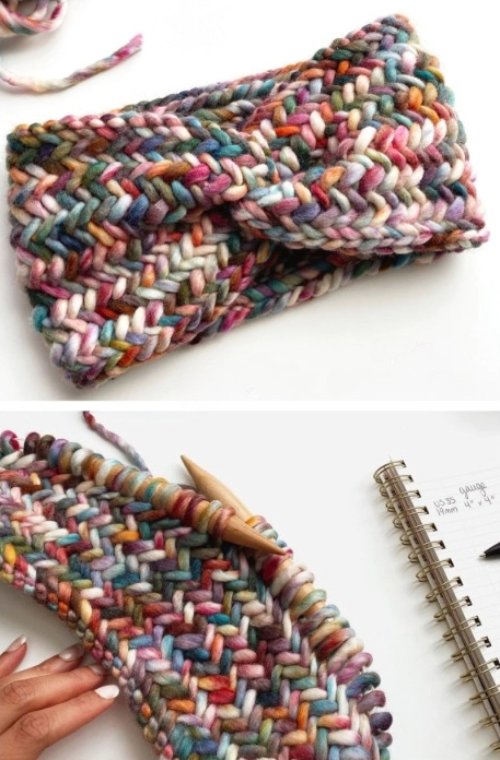
Amina Earwarmer – Free Herringbone Knit Headband Pattern

Amina Earwarmer free herringbone knit headband pattern by Krysten Grymes

Amina Earwarmer. Photo © Krysten Grymes / yarnTh3ory

The Amina Earwarmer by Krysten Grymes of yarnTh3ory is a beautifully textured knit headband featuring an eye-catching herringbone stitch and a stylish twisted front.

Worked with super bulky yarn, the free adult version requires only about 68 yards (62 m), making it a quick winter accessory, market project or last-minute handmade gift.

Best of all, the adult-size knitting pattern is still available free from the designer. An expanded paid version is also available with four sizes and two yarn-weight options.

Amina Earwarmer Knitting Pattern Details

  • Designer: Krysten Grymes
  • Brand: yarnTh3ory
  • Published: November 2022
  • Craft: Knitting
  • Category: Earwarmer / knit headband
  • Free version: Adult size in super bulky yarn
  • Yarn weight: #6 Super Bulky
  • Suggested yarn: Malabrigo Rasta
  • Yardage: 68 yards (62 m)
  • Main needles: US 35 (19 mm)
  • Bind-off needles: US 17 (12 mm)
  • Gauge: 12 stitches × 9 rows = 4 inches (10 cm)
  • Finished adult circumference: 21 inches
  • Finished width: 5.75 inches
  • Skill level: Intermediate
  • Main texture: Herringbone knit stitch
  • Construction: Worked flat and seamed into a twisted earwarmer

What Makes the Amina Earwarmer Special?

The standout feature of this design is its herringbone knit texture.

Instead of a simple ribbed or garter-stitch headband, the fabric has a dense diagonal appearance that gives the finished accessory a polished, almost woven look.

The folded join at the front adds another design element, creating the fashionable twisted shape seen in the finished earwarmer.

The Free Amina Earwarmer Pattern

There are currently two versions of the knitting pattern, so it is useful to understand the difference before starting.

The designer's free version provides the instructions for the adult size using super bulky yarn.

This is a complete free pattern published directly on the yarnTh3ory website, not simply a preview of the paid PDF.

What Is Included in the Paid Version?

Knitters who need additional sizing or want to use a different yarn weight can choose the designer's expanded paid version.

The expanded pattern includes:

  • Baby size
  • Child size
  • Teen size
  • Adult size
  • Super bulky yarn instructions
  • Worsted-weight yarn instructions

If you only want to make the adult super-bulky version shown here, however, the designer continues to provide those instructions free.

Super Bulky Yarn Makes It Quick

The free version uses #6 super bulky yarn.

Krysten Grymes made her sample with Malabrigo Rasta in the color Molino.

Rasta is a thick merino wool yarn with excellent stitch definition, making it particularly effective for showing the strong diagonal lines of the herringbone texture.

Only 68 Yards of Yarn

One of the biggest attractions of the Amina Earwarmer is its modest yarn requirement.

The free adult version calls for approximately:

68 yards / 62 meters
of #6 super bulky yarn

That makes it a useful project for a partial skein left over from another super-bulky project, provided you have enough yardage and can achieve the required gauge.

Choosing Substitute Yarn

You do not have to use the original Malabrigo Rasta to make the earwarmer.

Look for a #6 super bulky yarn that produces a fabric close to the designer's gauge.

Because the herringbone texture is the main visual feature, a relatively smooth yarn with good stitch definition can help the diagonal pattern remain clearly visible.

Solid, tonal and gently variegated colors can all work well, although highly contrasting multicolored yarn may make the herringbone texture less obvious.

Needles

The free pattern uses two unusually large needle sizes:

  • US 35 (19 mm) circular needles for the main fabric
  • US 17 (12 mm) circular needles for binding off

The smaller needle is used at the finishing stage rather than for knitting the main herringbone fabric.

Gauge and Finished Size

The designer's gauge is:

12 stitches × 9 rows = 4 inches (10 cm)

The finished adult earwarmer measures approximately:

  • Circumference: 21 inches
  • Width: 5.75 inches

The free pattern also explains that the size can be adjusted by changing the number of stitches cast on, while the width can be changed by working more or fewer rows.

What Is Herringbone Knit Stitch?

Herringbone knitting creates a distinctive diagonal texture that resembles the classic herringbone pattern found in woven fabrics.

In the Amina Earwarmer, adjacent stitches are worked together in a special way while retaining one of the stitches to continue the sequence.

This creates the dense overlapping appearance that makes the finished headband look much more intricate than an ordinary stockinette accessory.

Is the Amina Earwarmer Beginner Friendly?

The designer rates the knitting pattern as intermediate.

The overall construction is simple, but the herringbone stitch requires more attention than standard knit and purl fabric.

If you are already comfortable handling needles and following a stitch sequence, this can be an excellent small project for learning a new texture without committing to a sweater or large blanket.

Learn the Herringbone Stitch First

Krysten Grymes provides a separate tutorial explaining the basics of the herringbone knit stitch.

It is worth practicing the technique on a small swatch before beginning the earwarmer.

Once your hands become accustomed to the movement, the repeated texture becomes much easier to work consistently.

Worked Flat

Although circular needles are listed, the earwarmer itself is worked flat.

You create a rectangular strip of herringbone fabric and then join the two ends during finishing.

This means you do not need to manage a small circumference in the round, which keeps the overall construction straightforward.

Creating the Twisted Front

The stylish front twist is created during finishing rather than through complicated shaping while knitting.

The ends of the completed strip are folded into position and sewn together. When the earwarmer is turned to the correct side, the folded seam forms the characteristic twist at the front.

The designer includes a demonstration of this finishing technique with the free pattern.

Why Use Smaller Needles for the Bind-Off?

The main fabric is worked on 19 mm needles, while the designer specifies 12 mm needles for the bind-off.

Following the designer's needle change helps reproduce the intended finishing behavior of the original sample.

Herringbone fabric behaves differently from ordinary stockinette, so it is worth following the specified finishing method before making your own adjustments.

Adjusting the Width

The free adult version is approximately 5.75 inches wide.

If you prefer a narrower earwarmer, the designer notes that you can work fewer rows. For additional coverage, work more rows before binding off.

Keep in mind that changing the dimensions will also change the amount of yarn required.

Adjusting the Circumference

The free adult sample finishes at approximately 21 inches in circumference.

The designer notes that the size can be adjusted by changing the number of stitches cast on.

If you make a substantial size adjustment, check your gauge and allow enough yarn before starting.

A Great Quick-Gift Project

The combination of super bulky yarn, a small finished size and only 68 yards of yarn makes the Amina Earwarmer especially appealing for gift knitting.

The designer specifically recommends it for market season and last-minute gifts.

Once you are comfortable with herringbone stitch, making several earwarmers in different colors can be an efficient way to turn small amounts of yarn into finished accessories.

A Useful Market-Knitting Project

Small accessories can be practical projects for craft markets because they require much less yarn and knitting time than full garments.

The strong texture and twisted front give the Amina Earwarmer a distinctive handmade appearance even though the overall construction remains relatively compact.

If you sell finished items, always check the designer's current terms before offering products made from a pattern.

Knitting vs Crochet Amina Earwarmer

Be aware that Krysten Grymes has designed both knit and crochet versions of the Amina Earwarmer.

They share the Amina name and a herringbone-inspired appearance, but they are separate patterns using different techniques and materials.

The pattern featured on this Amazing Knitting page is specifically the knit version published in November 2022.

Why Knit the Amina Earwarmer?

The Amina Earwarmer is a good choice when you want a small project that teaches something more interesting than basic ribbing or garter stitch.

Its herringbone fabric creates striking texture, the super bulky yarn helps the project progress quickly, and the twisted finishing technique gives the simple rectangular construction a stylish final shape.

With the adult instructions still available free from the designer, it is also an accessible way to try herringbone knitting before deciding whether you want the expanded multi-size pattern.

Get the Free Amina Earwarmer Knitting Pattern

The Amina Earwarmer (knit version) by Krysten Grymes is available free for the adult super-bulky version directly from yarnTh3ory.

Get the Free Amina Earwarmer Pattern →

The free designer version currently includes the adult size in super bulky yarn. An expanded paid version includes additional sizes and yarn-weight options. Pattern availability may change over time. Amazing Knitting does not reproduce or distribute the designer's copyrighted pattern instructions.

Little Bonnie Cabled Earwarmer – Free Baby & Kids Headband Knitting Pattern

Little Bonnie Cabled Earwarmer free baby and kids headband knitting pattern

Little Bonnie Cabled Earwarmer Headband by marianna mel is a sweet, quick-knit accessory featuring a single decorative cable down the center.

The design is especially flexible because the length can be adjusted easily, making it suitable for babies from around 3 months old through older children. It can also be knitted in either DK or Aran-weight yarn depending on how light or cozy you want the finished earwarmer to be.

The complete pattern is currently available free from Marianna's Lazy Daisy Days, the designer's original website.

Design and original pattern © marianna mel / Marianna's Lazy Daisy Days.

Little Bonnie Cabled Earwarmer Pattern Overview

  • Designer: marianna mel
  • Source: Marianna's Lazy Daisy Days
  • Pattern: Little Bonnie Cabled Earwarmer Headband
  • Craft: Knitting
  • Category: Baby and children's headband / earwarmer
  • Published: January 2021
  • Age range: Approximately 3 months upwards
  • Yarn options: DK or Aran weight
  • DK needles: 4 mm
  • Aran needles: 5 mm
  • Additional tool: Cable needle
  • DK yarn amount: Approximately 20 g
  • Aran yarn amount: Approximately 30 g
  • DK width: Approximately 2¾ in / 7 cm
  • Aran width: Approximately 3½ in / 9 cm
  • Length: Approximately 12–17 in, adjustable
  • Main techniques: Knit, purl, cable knitting, seaming
  • Pattern availability: Free from the designer

A Simple Single-Cable Headband

The defining feature of Little Bonnie is the single cable running along the center of the headband.

The cable adds just enough texture to make the project feel more interesting than a basic ribbed or garter-stitch band, while keeping the construction simple enough for knitters who are new to cables.

Because the headband is worked as a narrow strip rather than in the round, it is also an approachable way to practice cable knitting without managing a large project.

Two Yarn Options

The designer provides instructions for both DK and Aran-weight yarn.

Using DK yarn creates a lighter, narrower earwarmer, while Aran yarn produces a thicker and warmer version.

This gives you some control over the final look and warmth without changing the basic cable design.

DK Version

For the lighter DK version, the designer recommends:

  • DK-weight yarn
  • Approximately 20 g of yarn
  • 4 mm knitting needles
  • Cable needle

The finished width is approximately 2¾ in / 7 cm.

The published tension is approximately:

22 stitches = 4 in / 10 cm in stockinette stitch.

Aran Version

For a warmer version, the designer suggests:

  • Aran-weight yarn
  • Approximately 30 g of yarn
  • 5 mm knitting needles
  • Cable needle

The finished width is approximately 3½ in / 9 cm.

The published tension is approximately:

18 stitches = 4 in / 10 cm in stockinette stitch.

Adjustable Length

One of the best features of this pattern is that the length is very easy to customize.

The designer gives a general range of approximately 12–17 inches, depending on the age and head size of the child.

The suggested guide is:

  • 0–3 months: about 12 in
  • 3–6 months: about 13 in
  • 6–12 months: about 14 in
  • 1–3 years: about 15 in
  • 3–12 years: about 17 in

These are rough guidelines, so measuring the child's head is always the most reliable approach.

How the Headband Is Constructed

Little Bonnie is worked flat as a long narrow strip.

The cable pattern repeats along the length until the band reaches the desired size.

After binding off, the cast-on and cast-off edges are joined with a short seam, creating the finished circular headband.

This construction is straightforward and avoids the need to knit on a small circumference.

The Cable Pattern

The central cable is worked over four stitches.

The designer explains that the cable can be crossed either to the front or to the back, as long as you remain consistent throughout the project.

That means you can choose the cable direction you find easiest or prefer visually.

A Good First Cable Project

Because the design uses only one repeating cable, Little Bonnie is an excellent small project for learning how cable stitches work.

You do not need to manage multiple crossing directions or complicated cable charts.

Once you understand how to move two stitches onto the cable needle and work them in the new order, the repeat becomes very easy to recognize.

Skills You'll Use

  • Casting on
  • Knit stitches
  • Purl stitches
  • Working flat
  • Using a cable needle
  • Working a 4-stitch cable
  • Repeating a short row sequence
  • Binding off
  • Seaming
  • Weaving in ends

Is Little Bonnie Beginner Friendly?

Little Bonnie is a good project for an advanced beginner who already knows how to knit and purl.

The only major new technique is the cable.

Because the project is small and uses a short repeating sequence, it is much less intimidating than learning cables on a sweater or large blanket.

Tips for Neater Cables

Use the same cable direction every time. The designer notes that you can hold the cable needle at the front or back, but consistency is important.

Do not pull too tightly after the cable cross. Tight tension can make the cable section narrower than the surrounding fabric.

Check the cable immediately after working it. It is easier to correct a mistake before several more rows have been knitted.

Use a row counter if needed. The repeat is short, but counting helps prevent accidental extra rows between cable crossings.

Choosing Yarn

This pattern is ideal for leftover yarn because it requires only a small amount.

A smooth yarn with good stitch definition will show the cable more clearly than a very fuzzy yarn.

For children's accessories, also consider softness and washability when choosing the fiber.

Why This Is a Good Scrap-Yarn Project

The DK version needs only around 20 g of yarn, while the Aran version uses roughly 30 g.

That makes Little Bonnie a practical way to use small leftover amounts from larger sweaters, blankets or cardigan projects.

You can also make several headbands in different colors from partial balls of yarn.

Finishing the Headband

Once the band reaches the desired length, bind off and join the two short ends.

Use a neat seam that is secure but not excessively bulky, since this area will sit against the head.

After seaming, weave in the yarn tails carefully.

Want an Adult Version?

Marianna also designed a larger version called Bonnie Cabled Earwarmer Headband.

The adult version uses a wider band and additional cables while keeping the same general style.

View the Adult Bonnie Earwarmer Pattern →

Is Little Bonnie a Free Knitting Pattern?

Yes. Little Bonnie Cabled Earwarmer Headband is currently available free directly from Marianna's Lazy Daisy Days.

The designer's page includes the complete instructions for both DK and Aran versions.

Amazing Knitting therefore links directly to the original designer source rather than reproducing the complete pattern or using an unofficial copy.

View the Free Little Bonnie Earwarmer Pattern →

Why This Headband Is Worth Knitting

Little Bonnie is a quick, practical project that teaches a useful cable technique without requiring much yarn.

The adjustable length makes it easy to customize for different ages, while the choice between DK and Aran yarn gives you control over the weight and warmth of the finished earwarmer.

It is especially useful as a small gift project, stash buster or first introduction to cable knitting.

Pattern Availability

Amazing Knitting links readers to legitimate designer or publisher sources whenever possible. Pattern prices, download locations and availability can change after an article is published.

Read Our Pattern Availability Policy →

Amazing Knitting is an independent pattern discovery and project-guide site. The Little Bonnie Cabled Earwarmer Headband design, photos and complete knitting instructions remain the intellectual property of marianna mel / Marianna's Lazy Daisy Days. This guide does not reproduce the designer's complete row-by-row pattern instructions.

Knitted Slipper Socks - Tutorial

Knitted Slipper Socks - Tutorial
Photos above © Таня Федас Дом вязания
What beautiful knitted slipper socks (Free knitting pattern)! I found it on Pinterest. Knitted slipper socks for babies and kids are the cutest things! These socks will look adorable on your newborn nieces and nephews, grandchildren, or any sweet child in your life!

Full Post: Slipper Socks 

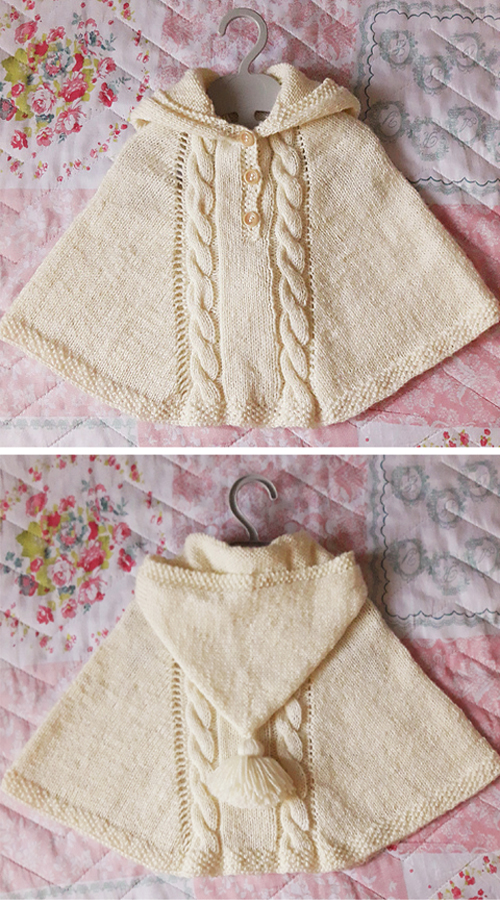
Lolo Poncho – Free Hooded Baby Poncho Knitting Pattern

Lolo Poncho free hooded baby poncho knitting pattern by Noura Sabbagh

Lolo Poncho. Photo © Noura Sabbagh

Lolo Poncho by Noura Sabbagh is a charming free hooded baby poncho knitting pattern featuring cable braids, seed stitch details and a cozy buttoned neckline.

Designed for little ones approximately 8–18 months, this sweet poncho is worked from the top down in DK-weight yarn. A pointed hood finished with a tassel and decorative cables along the sides give the design its distinctive storybook look.

Lolo Poncho Pattern Details

  • Designer: Noura Sabbagh
  • Published: January 2019
  • Craft: Knitting
  • Category: Baby / toddler poncho
  • Pattern availability: Free download
  • Size: 8–18 months
  • Yarn weight: DK / Light Weight #3
  • Suggested yarn: Nako Elit Baby
  • Yardage: Approximately 246–273 yards (225–250 m)
  • Needles: 3.5 mm (US 4) circular needles
  • Gauge: 20 stitches × 32 rows = 4 inches (10 cm) in stockinette stitch
  • Construction: Top down, one piece, worked in the round
  • Features: Hood, cables, seed stitch, buttons and tassel
  • Languages: English and Arabic

A Cozy Hooded Baby Poncho

Lolo Poncho combines the relaxed shape of a knitted poncho with several details normally associated with more structured children's garments.

The hood provides extra warmth around the head and neck, while a short buttoned opening at the front makes the poncho easier to put on and take off.

A tassel at the top of the hood adds a playful finishing touch that works especially well with the vintage-inspired shape of the design.

Beautiful Cable and Seed Stitch Details

Although much of the poncho uses simple stockinette stitch, Noura Sabbagh adds texture with seed stitch and cable braids.

The cable details run along both sides of the poncho, providing a strong decorative feature without covering the entire garment in cables.

This combination allows the smooth stockinette sections, textured seed stitch and raised cable braids to complement one another.

Lolo Poncho Size

The free pattern is written for one baby/toddler size: approximately 8–18 months.

Because children's proportions can vary considerably at the same age, check the designer's pattern information and your gauge before beginning rather than choosing the project based only on age.

Yarn Requirements

The original Lolo Poncho uses Nako Elit Baby, a DK-weight acrylic yarn.

The designer specifies approximately 100 g of lightweight #3 acrylic yarn. The pattern listing gives an estimated yardage of around 246–273 yards (225–250 m).

If you substitute another yarn, choose a suitable DK-weight option and make sure you can achieve the required gauge.

For a garment intended for a young child, softness and practical care are also useful considerations when selecting yarn.

Needles and Gauge

Lolo Poncho calls for 3.5 mm (US 4) circular needles, approximately 80 cm or longer, or the needle size needed to achieve the designer's gauge.

The specified gauge is: 20 stitches and 32 rows = 4 inches (10 cm) in stockinette stitch.

Making a gauge swatch is particularly useful for a children's garment because a difference of only a few stitches can noticeably change the finished dimensions.

Top-Down One-Piece Construction

Lolo Poncho is constructed from the top down and is primarily worked in the round as one piece.

This construction allows the poncho to grow outward and downward from the neckline while incorporating the decorative sections into the garment.

It also reduces the amount of traditional garment seaming compared with a poncho made from several large separate panels.

A Buttoned Neckline

Three buttons at the upper front add both decoration and function. They create a short opening near the neckline, making the hooded poncho easier to dress over a baby's head.

Choosing contrasting buttons can make this feature stand out, while buttons close to the yarn color create a more understated finish.

Skills Used in the Lolo Poncho

This project combines several knitting techniques, including:

  • Knitting and purling
  • Working in the round
  • Top-down construction
  • Seed stitch
  • Cable knitting
  • Reading a chart
  • Buttonholes
  • Shaping
  • Finishing a hood and tassel

For that reason, Lolo Poncho is more interesting as a skill-building project than a completely basic first knitting project.

Why Knit the Lolo Poncho?

Lolo Poncho has a distinctive look without requiring an elaborate all-over stitch pattern. The hood, cable braids, seed stitch, buttons and tassel provide plenty of visual interest while leaving large areas of simpler knitting.

The poncho shape also makes it a fun alternative to knitting another conventional baby cardigan or pullover.

It could make a lovely handmade gift for a baby or toddler, especially for cooler autumn and winter days.

About the Lolo Poncho Design

Noura Sabbagh named the pattern after her daughter. It was also her first written knitting pattern.

The pattern is available in both English and Arabic, which makes it especially useful to knitters looking for an Arabic-language version of a baby garment pattern.

Get the Free Lolo Poncho Knitting Pattern

The complete Lolo Poncho by Noura Sabbagh is currently available as a free downloadable knitting pattern from the designer's Ravelry store.

Get the Free Lolo Poncho Knitting Pattern

Pattern availability was checked when this article was updated. Availability on external websites may change over time.

Perky Little Hat Knitting Pattern

Perky Little Hat knitting pattern by Sharon Lentsch
Photo © GretchenHam

The Perky Little Hat by Sharon Lentsch is a quick, chunky knitted beanie designed for super bulky yarn. Its simple shape, textured brim and oversized pom-pom make it a fun cold-weather project for both children and adults.

With only about 80–85 yards of yarn required, this is also a practical one-skein project and a good choice when you want to knit a handmade gift without committing to a long project.

Perky Little Hat Pattern at a Glance

Designer: Sharon Lentsch

Craft: Knitting

Category: Beanie / Toque

Yarn Weight: Super Bulky

Suggested Yarn: Malabrigo Rasta

Yardage: 80–85 yd (73–78 m)

Needles: US 15 (10 mm)

Gauge: 2 sts and 3 rows = 1 in

Sizes: Child and Adult

Construction: Worked in the round

Instructions: Written pattern

Current Availability: Paid PDF pattern

About the Perky Little Hat

Perky Little Hat is designed as a fast, satisfying knit with a playful finished look. The super bulky yarn creates a thick fabric quickly, while the decorative brim and pom-pom give the hat its distinctive personality.

The original designer describes it as a quick project and a good gift idea. Because the pattern includes both child and adult sizing, it can also work well for coordinating family hats.

Yarn and Yardage

The pattern recommends Malabrigo Rasta, a super bulky 100% merino yarn. The listed requirement is approximately 80–85 yards (73–78 meters).

A smooth or lightly spun super bulky yarn will help preserve the definition of the brim while keeping the hat warm and substantial. Always compare your substitute yarn with the pattern gauge before beginning.

Needles and Gauge

The recommended needle size is US 15 (10 mm).

The pattern gauge is approximately 2 stitches and 3 rows per inch. Because super bulky yarn can vary considerably between brands, a gauge swatch is useful if you want the finished hat to match the intended size.

Sizes

The original pattern includes both Child and Adult sizes.

This makes Perky Little Hat useful for gift knitting, especially when you need a quick project in more than one size.

Construction and Skills

The hat is worked in the round, so familiarity with circular knitting is useful. The pattern is written rather than charted.

Its combination of super bulky yarn and straightforward construction makes it a relatively fast project, while the finished brim and pom-pom add enough detail to keep the design visually interesting.

Is the Perky Little Hat Pattern Free?

No. Although older pages around the web may describe Perky Little Hat as a free knitting pattern, the current authorized Ravelry listing is a paid PDF pattern.

Pattern pricing can change over time, so use the original designer's listing below for the latest price and availability.

Get the Perky Little Hat Pattern

Visit Sharon Lentsch's official Ravelry listing to see the complete pattern details and current purchase options.

Amazing Knitting provides project information and links readers to the authorized source rather than reproducing the designer's complete copyrighted instructions.

The Hudson Hat – Earflap Knitting Pattern

The Hudson Hat earflap knitting pattern by Lindsay Baker

The Hudson Hat by Lindsay Baker is a classic earflap hat worked seamlessly in the round, with i-cord ties, optional stripes and sizes ranging from newborn through adult.

The design begins at the lower ties and grows upward through the earflaps and body before closing at the crown. Its simple worsted-weight construction makes it a practical cold-weather project with plenty of room for color customization.

The Hudson Hat pattern is currently available as a paid download from Lindsay Baker's Ravelry store.

Design and original pattern © Lindsay Baker.

The Hudson Hat Pattern Overview

  • Designer: Lindsay Baker
  • Pattern: The Hudson Hat!
  • Craft: Knitting
  • Category: Earflap hat
  • Published: November 2007
  • Construction: Bottom up and worked in the round
  • Finishing: Seamless
  • Style: Unisex
  • Sizes: 0–6 months, 6–18 months, Toddler, Child and Adult
  • Yarn weight: Worsted
  • Suggested yarns: Family Roots Cestari Fine Merino, Willow Merino and Mountain Meadow Wool
  • Yardage: Approximately 100–300 yd / 91–274 m
  • Needles: US 7 / 4.5 mm circular and DPNs; US 5 circular for smaller sections
  • Gauge: Approximately 5 stitches × 7 rows = 1 in in stockinette
  • Main techniques: Knitting in the round, i-cord, earflap shaping, decreases and tassel finishing
  • Skill level: Advanced beginner and up
  • Language: English
  • Pattern availability: Paid pattern

A Classic Seamless Earflap Hat

The Hudson Hat is designed as a practical cold-weather earflap hat with a simple silhouette and flexible styling.

The earflaps extend downward to provide extra coverage, while the i-cord ties allow the hat to be secured comfortably.

Because the hat is worked seamlessly in the round, there is no long vertical seam to sew at the end.

Worked From the I-Cord Ties Up

One of the most distinctive construction details is that the hat begins with the i-cord ties.

From there, the earflaps are built and then joined into the main body of the hat.

The knitting continues upward in the round toward the crown.

Why I-Cord Works Well for Earflap Hats

I-cord creates a narrow, rounded knitted cord that is stronger and more finished-looking than a simple chain of yarn.

On The Hudson Hat, the ties are integrated into the overall construction rather than being added as an afterthought.

They can also be finished with tassels for a classic winter-hat appearance.

Five Sizes From Baby to Adult

The current pattern includes:

  • 0–6 months
  • 6–18 months
  • Toddler
  • Child
  • Adult

This wide size range makes the same pattern useful for family knitting and gift projects.

Worsted-Weight Yarn

The Hudson Hat is designed for worsted-weight yarn.

The pattern currently lists several Family Roots wool and merino yarns as suggested options.

A smooth worsted-weight wool is a natural choice for this project because it provides warmth, elasticity and good stitch definition.

Yardage

The published yarn requirement ranges from approximately:

100–300 yards / 91–274 meters.

Smaller baby sizes naturally require less yarn, while adult sizes and multi-color versions may need more.

If you plan to add multiple stripes or large tassels, allow a little extra yarn for finishing.

Needles

The current pattern information lists:

  • US 7 / 4.5 mm circular needle
  • US 7 / 4.5 mm double-pointed needles
  • US 5 circular needle for smaller sections

Double-pointed needles become useful as the crown circumference decreases.

Gauge

The published stockinette gauge is approximately:

5 stitches × 7 rows = 1 inch.

Because this is a fitted hat, gauge affects the final circumference and overall comfort.

Check your gauge before starting, especially if you substitute a different worsted-weight yarn.

Stripe-Friendly Construction

The Hudson Hat works particularly well with stripes.

The designer notes that the construction is easy to customize with color changes, so you can use:

  • Two-color stripes
  • Scrap-yarn stripes
  • Gradient color sequences
  • A single solid color

This also makes the pattern useful for using special leftover yarns that are too small for a larger project.

A Good Scrap-Yarn Hat

Smaller sizes need relatively little yarn, making the Hudson Hat a practical way to use partial skeins.

You can combine coordinating worsted-weight colors for the body, earflaps, ties and tassels.

Try to keep the yarn weights and fiber behavior reasonably similar so the finished hat has consistent tension.

Tassel Finishing

The i-cord ties can be finished with tassels for a traditional earflap-hat look.

The current pattern includes a tassel tutorial with step-by-step photos.

Tassels are optional from a practical point of view, but they add a decorative finish and can help visually balance the long ties.

Skills You'll Use

  • Casting on
  • Working i-cord
  • Knitting in the round
  • Working with circular needles
  • Using double-pointed needles
  • Increasing and shaping earflaps
  • Joining sections in the round
  • Stockinette stitch
  • Changing colors for stripes
  • Crown decreases
  • Making tassels
  • Weaving in ends

Is The Hudson Hat Beginner Friendly?

The designer describes the pattern as suitable for an advanced beginner and up.

The individual techniques are not unusually difficult, but the project does combine several useful skills: i-cord, small-circumference knitting, shaping and joining sections into the round.

A knitter who already knows basic knit stitches and has some experience working in the round should find this a manageable next project.

Can You Knit It Without Earflaps?

Some knitters have adapted The Hudson Hat by omitting the earflaps and using a ribbed brim instead.

This creates a more conventional beanie while preserving the general shape and crown construction.

However, this is a project modification rather than the standard pattern construction, so follow the original instructions first if you are new to the design.

Tips for a Better Fit

Check gauge before casting on. Small differences in gauge can change hat circumference significantly.

Choose the size from head measurements when possible. Age labels are useful guides, but actual head size is more reliable.

Keep i-cord tension consistent. Very tight ties can become stiff, while very loose i-cord may look uneven.

Try the hat on before finishing the crown if possible. This helps confirm the body depth.

Is The Hudson Hat a Free Knitting Pattern?

No. The Hudson Hat by Lindsay Baker is currently a paid knitting pattern.

The current Ravelry listing prices the pattern at $4.50 USD.

Amazing Knitting previously featured the design as a pattern-discovery post, but prices and availability can change. We therefore identify its current paid status clearly.

View The Hudson Hat Pattern →

Why This Hat Is Worth Considering

The Hudson Hat has remained popular because it combines a practical winter shape with flexible sizing and easy color customization.

Its seamless construction keeps finishing relatively simple, while the earflaps, i-cord ties and tassels give the project enough detail to remain interesting.

The five-size range also makes it a useful family pattern rather than a single-age baby hat.

Pattern Availability

Amazing Knitting links readers to legitimate designer or publisher sources whenever possible. Pattern prices, download locations and availability can change after an article is published.

Read Our Pattern Availability Policy →

Amazing Knitting is an independent pattern discovery and project-guide site. The Hudson Hat design and complete knitting instructions remain the intellectual property of Lindsay Baker. This guide does not reproduce the designer's complete row-by-row pattern instructions.

Odeta Baby Jacket – Free Lace Cardigan Knitting Pattern

Odeta Baby Jacket free lace cardigan knitting pattern by DROPS Design

Odeta Baby Jacket. Photos © DROPS Design & © khc805

Odeta by DROPS Design is a beautiful free baby and toddler cardigan knitting pattern combining delicate lace with classic garter stitch.

The pattern includes an impressive range of sizes from premature through 3–4 years, and the complete Odeta set also includes a pair of matching knitted slippers.

Odeta Baby Jacket Pattern Details

  • Designer: DROPS Design
  • Pattern: DROPS Baby 31-3 / bm-084-by
  • Published: March 2018
  • Craft: Knitting
  • Category: Baby and toddler cardigan
  • Pattern availability: Free from DROPS Design
  • Sizes: Premature, 0/1, 1/3, 6/9, 12/18 months, 2 years and 3/4 years
  • Yarn: DROPS BabyMerino
  • Yarn group: A
  • Yarn required for jacket: 100–200 g depending on size
  • Main needles: 3 mm circular needle
  • Crochet hook: 2.5 mm for edging and cord
  • Gauge: 24 stitches × 48 rows = 4 inches (10 cm) in garter stitch
  • Construction: Bottom up and worked flat
  • Features: Lace, garter stitch, V-neck and crochet edging
  • Matching pattern: Odeta Slippers included in the set

A Free Baby Cardigan from Premature to 4 Years

One of the most useful features of the Odeta pattern is its unusually wide size range.

DROPS provides instructions for premature babies, newborns, babies, toddlers and children up to approximately 3–4 years old.

The corresponding child heights range from approximately 40/44 cm through 98/104 cm, making it possible to use the same design at several stages of a child's early years.

Lace and Garter Stitch

Odeta combines two very different textures: decorative lace and simple garter stitch.

The lace creates the beautiful openwork detail along the lower part of the cardigan, while the garter stitch gives the rest of the jacket a soft, textured appearance.

This contrast is one of the features that makes the design look elaborate without covering the entire garment in lace.

Bottom-Up Construction

The Odeta Jacket is worked from the bottom up.

DROPS begins by working the body back and forth on a circular needle. After the initial lace section is completed, the cardigan continues in garter stitch.

Later, the work is divided for the fronts and back and stitches are added for the sleeves.

How the Sleeves Are Constructed

Odeta does not use the common method of knitting two completely separate sleeves and sewing them into armholes.

Instead, after the body has reached the required length, stitches are cast on for the sleeves as the front and back sections are completed separately.

This creates the characteristic integrated sleeve construction visible in the finished jacket.

V-Neck Shaping

The cardigan has an elegant V-shaped neckline.

Neck decreases are worked along the front edges while the upper sections of the cardigan and sleeves are being formed.

The open neckline works particularly well with the delicate lace and gives Odeta a light wrap-style appearance.

Crocheted Edging and Tie Cord

Although Odeta is primarily a knitting project, a small amount of crochet is used for the finishing.

DROPS specifies a 2.5 mm crochet hook for the decorative edging and cord.

The crocheted finish adds a delicate detail around the cardigan and complements the knitted lace pattern.

DROPS BabyMerino Yarn

The original jacket is knitted in DROPS BabyMerino, a 100% merino wool yarn from DROPS Yarn Group A.

For the jacket alone, the official pattern calls for approximately:

  • 100 g for the premature size
  • 150 g for sizes from 0/1 through 12/18 months
  • 200 g for sizes 2 years and 3/4 years

The original sample is shown in the color Light Sea Green (43).

Choosing an Alternative Yarn

DROPS also allows the design to be knitted with a suitable alternative from Yarn Group A.

When substituting yarn, matching the pattern gauge is more important than simply choosing a yarn with a similar label.

For a baby garment, also consider softness, washability and how the yarn feels against delicate skin.

Needles and Gauge

The jacket uses a 3 mm circular needle, or the needle size required to obtain the correct gauge.

The official gauge is: 24 stitches and 48 rows = 4 inches (10 cm) in garter stitch.

Even though the cardigan is worked back and forth, the circular needle is useful for comfortably holding the large number of stitches across the body and sleeves.

Why Gauge Matters for Baby Clothes

Gauge is particularly important when knitting a fitted garment such as a baby cardigan.

If your stitches are significantly larger than the specified gauge, the jacket can finish too large. If they are too small, the finished garment may be tighter than intended.

Make a swatch in garter stitch before beginning and change needle size if necessary.

Charts and Written Instructions

The Odeta Jacket uses DROPS diagrams for its lace sections together with written construction instructions.

The official pattern includes different diagrams according to size, so make sure you follow the chart specified for the size you are knitting.

DROPS also provides supporting tutorials and videos on its website for many of the techniques used in its patterns.

Skills Used in the Odeta Jacket

This project uses a combination of garment construction, lace and finishing techniques, including:

  • Garter stitch
  • Working back and forth
  • Reading a lace chart
  • Yarn overs and lace decreases
  • Increasing and decreasing
  • V-neck shaping
  • Casting on stitches for sleeves
  • Seaming
  • Picking up stitches
  • Basic crochet for the edging and cord

Is Odeta a Beginner Knitting Pattern?

Odeta is probably better suited to a knitter who is already comfortable with basic knitting and wants to move into lace and baby garment construction.

The individual techniques are manageable, but the project requires you to follow size-specific instructions, work from lace diagrams, shape the neckline and sleeves, and complete the crocheted finishing.

Taking the pattern one section at a time makes the construction much easier to understand.

The Matching Odeta Slippers

The official DROPS Baby 31-3 pattern is actually a coordinated baby set rather than only a cardigan.

It also includes Odeta Slippers, knitted with the same BabyMerino yarn and designed with lace and garter-stitch details to coordinate with the jacket.

Slipper sizes are provided across the same general age range, from premature through approximately 3–4 years.

A Lovely Handmade Baby Gift

The matching jacket and slippers make Odeta especially suitable for a handmade baby gift.

You can knit only the cardigan or make the complete coordinated set. The wide size range also means you are not limited to newborn sizing when knitting for an older baby or toddler.

Tips Before You Start

Choose your size first and mark the corresponding numbers throughout the DROPS instructions before casting on.

Pay particular attention to the section where neck decreases, division of the body and sleeve construction begin to overlap. Reading that entire section before knitting it will make the construction much easier to follow.

It is also useful to check your stitch count after completing each lace section before continuing into the garter-stitch body.

Why Knit the Odeta Baby Jacket?

Odeta combines the practicality of garter stitch with enough lace to make the finished cardigan feel special.

Its premature-to-4-years size range is particularly useful, and the matching slippers give you the option of turning the cardigan into a complete handmade baby set.

Best of all, DROPS provides the full pattern, diagrams and supporting resources free on its official website.

Get the Free Odeta Baby Jacket Pattern

The complete Odeta / DROPS Baby 31-3 pattern, including the baby jacket and matching slippers, is currently available free from DROPS Design.

Get the Free Odeta Baby Jacket Knitting Pattern

Pattern availability was checked when this article was updated. Availability on external websites may change over time.

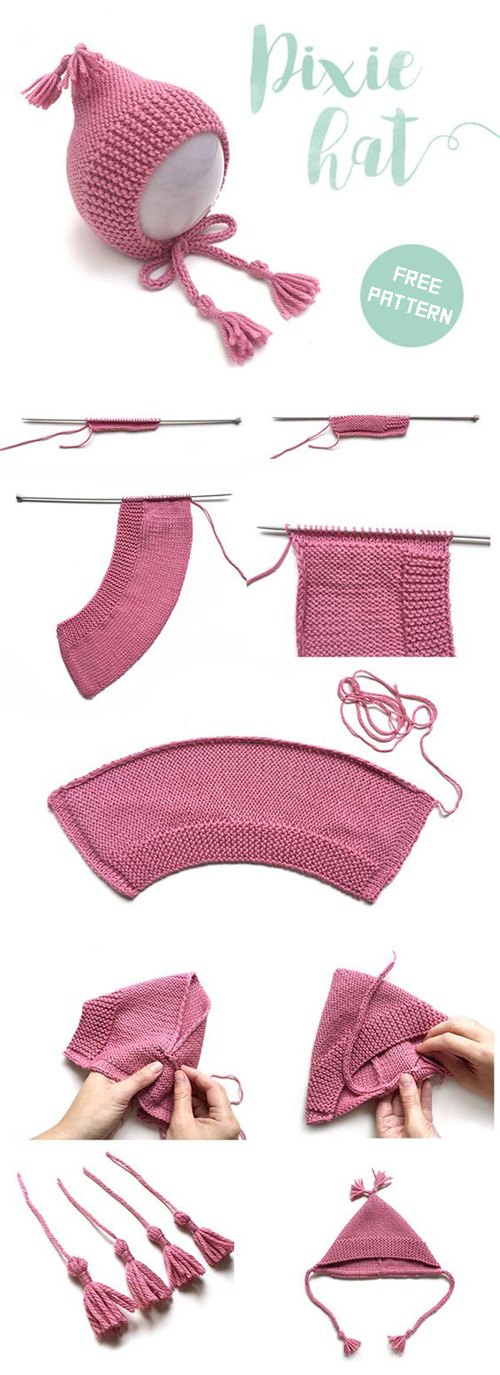
Pixie Baby Hat – Free Easy Baby Bonnet Knitting Pattern

Pixie Baby Hat free easy baby bonnet knitting pattern by Marta Porcel of Creativa Atelier

Pixie Baby Hat. Pattern, tutorial and photo © Marta Porcel / Creativa Atelier

This adorable Pixie Baby Hat by Marta Porcel of Creativa Atelier is a free baby bonnet knitting pattern with a charming pointed shape, adjustable cord and playful tassels.

The hat is worked flat on straight needles, making it especially appealing if you prefer not to knit small circumferences in the round. The knitted piece is folded and seamed at the back to create the distinctive pixie shape.

The original tutorial is written for approximately 1–3 months, but the designer also explains how the basic construction can be adjusted for larger sizes.

Pixie Baby Hat Pattern at a Glance

  • Designer: Marta Porcel
  • Source: Creativa Atelier
  • Published: November 2021
  • Craft: Knitting
  • Category: Baby bonnet / pixie hat
  • Original size: Approximately 1–3 months
  • Yarn weight: DK / Light
  • Suggested yarn: Katia Merino Classic
  • Main needles: 4 mm straight knitting needles
  • Optional crochet hook: 2.75 mm for the cord
  • Construction: Worked flat and seamed
  • Finishing: Adjustable cord and tassels
  • Current availability: Free web-based tutorial

A Classic Pointed Pixie Bonnet

The most recognizable feature of this little bonnet is its pointed pixie silhouette.

Instead of shaping a conventional rounded crown, the flat knitted fabric is folded and joined at the back. This simple construction produces the distinctive point at the top of the hat.

Tassels add even more character and give the finished bonnet a playful, traditional handmade appearance.

Worked Flat on Straight Needles

One of the best features of this pattern is that you do not need to knit the bonnet in the round.

The main fabric is worked back and forth on 4 mm straight needles.

This makes the project particularly useful for knitters who enjoy baby hats but are not yet comfortable using double-pointed needles, Magic Loop or other small-circumference techniques.

Original Size: 1–3 Months

Marta Porcel designed the tutorial specifically for a baby of approximately 1–3 months.

Rather than pretending that the free tutorial contains a complete multi-size grading system, it is important to note that the published stitch and row counts correspond to this original size.

The designer does, however, explain how the simple construction can be adapted if you want to make a larger bonnet.

How the Size Can Be Adjusted

Because the hat is based on a relatively simple flat construction, the designer suggests increasing both the initial number of stitches and the number of rows when making a larger size.

Taking the child's actual head measurements is the best approach whenever possible.

For gift knitting, the original tutorial also provides approximate head circumference references by age to help with planning.

Yarn for the Pixie Baby Hat

The original sample uses Katia Merino Classic in color 26.

The yarn is listed at approximately:

100 grams = 240 meters
DK / Light weight

The yarn was chosen to coordinate with a matching baby cardigan from Creativa Atelier.

Choosing Substitute Yarn

A smooth, soft DK-weight yarn is a sensible starting point when substituting for the original yarn.

Because this is a baby accessory, pay particular attention to softness and care requirements as well as yarn weight.

A washable wool, merino blend or another baby-friendly DK yarn can work well if it produces fabric with dimensions comparable to the designer's sample.

Needles and Other Materials

The original 1–3 month version uses:

  • 4 mm straight knitting needles
  • 2.75 mm crochet hook for the designer's preferred cord method
  • Tapestry needle for seaming and finishing
  • DK / Light yarn

The crochet hook is optional because the cord can be created using other methods if you prefer.

The Main Knitted Fabric

The bonnet is based largely on simple stockinette fabric.

The designer changes the direction of the stockinette at strategic points to create the sections that will later be folded during finishing.

This is a clever way to build useful construction lines directly into a simple rectangular piece of knitting.

A Simple Flat Construction

Instead of relying on complicated crown decreases, the Pixie Hat gets its shape from the way the knitted fabric is folded and seamed.

After completing the main piece, the fabric is folded in half and the appropriate edges are joined at the back.

The result is the characteristic pointed bonnet shape without having to shape a traditional rounded crown.

Seaming the Back

Because the bonnet is knitted flat, one of the main finishing steps is joining the back edges.

The designer notes that you can use a normal seam or an invisible seaming technique.

Taking a little extra time over this seam will help the finished point look neat and keep the inside comfortable.

The Adjustable Cord

A cord runs through the lower section of the bonnet and allows the hat to be adjusted around the baby's head.

Marta's sample uses approximately 55 cm of I-cord.

She demonstrates a crochet-hook method for making the cord, but also notes that there are several alternatives, including knitting or making a cord by hand.

Tassels or Pom-Poms

The original Pixie Hat is finished with four tassels.

Two decorate the ends of the cord and two are attached to the pointed area of the bonnet.

The designer also suggests replacing the tassels with pom-poms if you prefer a different look.

Customize the Pixie Hat

The simple construction gives you plenty of opportunities to personalize the finished bonnet.

You might choose a soft neutral for a traditional look, a bright color for a playful baby accessory, or coordinate the yarn with another handmade garment.

Tassels and cords can also be made in contrasting colors for an extra decorative touch.

Make the Matching Baby Set

Creativa Atelier also provides tutorials for a matching knitted baby cardigan and baby booties.

The Pixie Hat can therefore be made on its own as a quick accessory or combined with the coordinating pieces to create a complete handmade baby outfit.

This also makes the design especially attractive for baby-shower or newborn gift knitting.

Skills Used in the Pixie Baby Hat

Useful skills for this project include:

  • Casting on
  • Knitting and purling
  • Stockinette stitch
  • Working flat on straight needles
  • Binding off
  • Blocking
  • Basic seaming
  • Picking up stitches for finishing
  • Making a cord or I-cord
  • Making tassels or optional pom-poms

Is the Pixie Baby Hat Beginner Friendly?

The construction is relatively approachable because the main bonnet is worked flat and relies heavily on basic knit and purl techniques.

You do not need to manage circular knitting or complicated crown shaping.

The finishing introduces useful skills such as seaming, picking up stitches and making a cord, making this a nice progression beyond a simple scarf or square.

A Good First Baby Hat on Straight Needles

Many baby hat patterns are knitted in the round, which can be intimidating if you have only worked on straight needles.

This Pixie Hat provides a different route: knit the main shape flat and create the three-dimensional bonnet during finishing.

That makes it an interesting choice for newer knitters who want to make their first baby hat without immediately learning Magic Loop or double-pointed needles.

Blocking Before Assembly

The designer recommends blocking the knitted fabric before completing the seams.

This helps control the natural curling of stockinette stitch and makes the finishing process easier.

Always use a blocking method appropriate for the fiber in your chosen yarn rather than automatically applying heat or steam to every fiber.

A Quick Handmade Baby Gift

Small baby accessories are excellent projects when you want to make a thoughtful handmade gift without committing to a full blanket or sweater.

The pointed silhouette makes this bonnet more distinctive than a basic beanie, while the tassels give it plenty of handmade charm.

Pair it with knitted booties or the matching cardigan for a more complete gift set.

Baby Hat Safety

Because this design includes an adjustable cord and decorative tassels, it should be used appropriately and under adult supervision.

Check all finishing details regularly and make sure tassels and other decorative pieces remain securely attached.

Remove hats and accessories with cords or ties before sleep and follow current infant safe-sleep recommendations.

Why Knit the Pixie Baby Hat?

The Pixie Baby Hat combines a memorable shape with surprisingly simple construction.

It is knitted flat, uses familiar stockinette fabric and requires no complicated rounded crown shaping, yet the finished bonnet has a distinctive pointed silhouette.

The free tutorial, adjustable construction and matching baby garments also make it a useful pattern to keep bookmarked for future baby gifts.

Get the Free Pixie Baby Hat Pattern

Knitted PIXIE Hat by Marta Porcel of Creativa Atelier is still available as a free step-by-step knitting tutorial from the designer's website.

Get the Free Pixie Baby Hat Pattern →

Pattern availability was checked when this article was updated. Pattern, tutorial and original images belong to Marta Porcel / Creativa Atelier. Amazing Knitting does not reproduce the designer's complete instructions; please use the official tutorial above.

Boy Sweater - Knitting Pattern

Boy Sweater - Knitting Pattern
Photos above © milainemicoton

Looking for a stylish boy sweater knitting pattern with practical cold-weather details? Boy Sweater by Lisa Chemery is a seamless top-down pullover for babies and children, featuring a cozy shawl collar, buttoned neck opening, raglan shaping, and textured stitch details.

The close-fitting design is intended to sit comfortably under a jacket, while the shawl collar provides extra warmth around the neck — especially useful for children who do not enjoy wearing scarves.

Boy Sweater at a Glance

Pattern: Boy Sweater

Designer: Lisa Chemery

Craft: Knitting

Category: Baby & Child Pullover

Construction: Top-down and seamless

Yarn Weight: Worsted / DK

Needles: US 6 / 4.0 mm and US 8 / 5.0 mm

Main Gauge: 20 stitches × 30 rounds = 4 inches / 10 cm in stockinette

Yardage: Approximately 275–700 yards / 251–640 m

Sizes: 3 months to 8 years

Languages: English and French

Pattern Availability: Paid pattern

About the Boy Sweater

Designed by Lisa Chemery, Boy Sweater combines the practicality of a children's pullover with several details that give it a more polished look.

The most recognizable feature is the shawl collar, which wraps softly around the neck and is paired with a small buttoned opening.

Textured knitting and twisted-rib details add visual interest without turning the sweater into a heavily decorated garment, making the design suitable for both boys and girls.

Seamless Top-Down Construction

The sweater is knitted seamlessly from the top down. The upper section begins flat, after which stitches are added for the neck placket and the body continues in the round.

The sleeves are also worked in the round, reducing the amount of garment seaming required at the end.

Top-down construction has another practical advantage: it allows knitters to see the garment taking shape from the neckline toward the hem.

The Shawl Collar

The shawl collar is one of the defining features of this sweater. After the body is completed, stitches are picked up around the neckline and the collar is worked flat.

Short rows are used to create the characteristic shawl shape, and the lower edges of the collar are then attached to the sweater body.

Besides giving the sweater its classic appearance, the collar provides extra knitted fabric around the child's neck without requiring a separate scarf.

Baby and Child Sizes

The current pattern includes a particularly useful range of sizes:

  • 3 months
  • 6 months
  • 12 months
  • 18 months
  • 2 years
  • 4 years
  • 6 years
  • 8 years

The designer provides finished garment measurements as well as intended chest measurements, so check the original pattern carefully when deciding which size to knit.

Yarn Requirements

Boy Sweater is designed for approximately:

275–700 yards / 251–640 meters

The exact amount depends on size. The designer recommends a worsted-to-DK-weight merino or merino-blend yarn.

Suggested yarns listed with the pattern include Malabrigo Rios and several DK and worsted options.

Needles and Gauge

The pattern uses two main needle sizes:

  • US 6 / 4.0 mm
  • US 8 / 5.0 mm

The published stockinette gauge after blocking is:

20 stitches × 30 rounds = 4 inches / 10 cm

The textured portion has a separate row gauge, so use the designer's current pattern instructions when swatching and selecting needle sizes.

Knitting Skills Used

This project involves more than basic stockinette knitting. Techniques used in the design include:

  • Knitting and purling
  • Increasing and decreasing
  • Top-down raglan construction
  • Knitting in the round
  • Picking up stitches
  • Short rows
  • Twisted stitches
  • Textured stitch patterns
  • Buttonholes and finishing

The combination makes Boy Sweater an interesting project for knitters who already understand the basics and want to develop their garment-knitting skills.

Is the Boy Sweater Pattern Free?

No. Boy Sweater by Lisa Chemery is currently a paid knitting pattern.

The pattern is sold through the designer's Ravelry listing. Amazing Knitting does not reproduce the designer's copyrighted instructions.

Visit the original listing below for the current price, complete sizing, materials, and purchase information.

View the Original Boy Sweater Pattern →

Pattern credit: Boy Sweater was designed by Lisa Chemery. Pattern pricing, availability, sizing, and technical information are controlled by the designer and may change over time.

Prefer a Free Alternative?

If you love the cozy shawl-collar style but would prefer a free knitting pattern, Amazing Knitting has a similar baby and child project in our archive.

Double Breasted Jacket with Shawl Collar — Free Knitting Pattern

This is a different design — not a free copy of Boy Sweater — but it offers a similar cozy shawl-collar look for babies and children and is available as a free knitting pattern.

View the Free Shawl Collar Pattern →

You can also browse our free baby sweater patterns for more no-cost options.

More Baby and Child Sweaters

Explore more boy sweater knitting patterns, baby sweater knitting patterns, and children's sweater knitting patterns from the Amazing Knitting archive.

Before You Start

If you choose the original Boy Sweater, check Lisa Chemery's current Ravelry listing before purchasing yarn. Confirm your chosen size, yarn requirement, needle sizes, gauge, notions, and any current pattern updates before casting on.

Discover More From the Archive

A fresh mix of knitting patterns and tutorials from the Amazing Knitting archive.

Finding patterns from the archive…