Skip to content

...

Showing posts sorted by date for query baby hat knitting pattern. Sort by relevance Show all posts

Glasgow Baby Cardigan and Hat Knitting Pattern

Glasgow Baby Cardigan and Hat Knitting Pattern

If you love beautifully textured baby knits, the Glasgow Baby Cardigan and Hat is a charming project to add to your knitting list. Designed by Donna Anderson, this coordinated set combines a classic baby cardigan with a matching hat and a distinctive linked cable detail that gives the finished pieces plenty of character.

The design is worked in Aran-weight yarn, making it a lovely choice for creating a warm and cozy outfit for babies and young children. The pattern includes five sizes and instructions for both the cardigan and matching hat.

Glasgow Baby Cardigan and Hat Knitting Pattern

One of the most eye-catching features of Glasgow is the unusual cable motif running across the cardigan and hat. The raised interlocking shapes create a bold textured effect while the ribbed borders and buttoned front give the cardigan a neat, traditional finish.

The same textured motif is carried onto the matching hat, finished with a pompom for an especially cute coordinated look.

Pattern Details

  • Pattern: Glasgow
  • Designer: Donna Anderson – Designed by Donna
  • Projects included: Cardigan and matching hat
  • Yarn weight: Aran
  • Sizes: 5 sizes
  • Pattern sizing: 16–24 inches
  • Finished sizes: approximately 17–27 inches
  • Approximate age range: Birth to 4 years
  • Needles: 4 mm and 5 mm
  • Cable needles: 2 required
  • Other supplies: Buttons and optional pompom

Yarn Requirements

The original sample uses Stylecraft Special Aran. According to the designer, the cardigan requires approximately 2 (2:2:3:3) 100g balls, depending on the size you choose. The matching hat requires approximately one 100g ball.

Donna also recommends Paintbox Aran as another suitable yarn option for this design. As always, checking your gauge before beginning is a good idea, particularly when knitting garments where the finished measurements matter.

A Beautiful Linked Cable Design

The feature that really makes Glasgow stand out is its linked cable texture. Instead of a simple traditional cable running vertically through the garment, the design creates large interlocking shapes that become an important part of the overall look.

Two cable needles are used to create the distinctive motif. That may sound challenging if you have only worked basic cables before, but the designer describes the technique as straightforward when the pattern instructions are followed carefully. It is a great opportunity for knitters who want to try something a little different from standard baby cardigan textures.

Five Sizes for Babies and Toddlers

The Glasgow pattern provides five sizes from 16 to 24 inches, with finished measurements ranging from approximately 17 to 27 inches. The designer gives an approximate age range from birth to four years.

Because children can vary considerably in size, it is best to choose the pattern size according to the child's measurements rather than age alone.

Why We Love This Knitting Pattern

Glasgow has a wonderful balance between traditional baby knitting and a more unusual contemporary texture. The cardigan has a practical button-front construction, while the deep ribbed borders provide a polished finish.

The coordinating hat makes the project particularly appealing if you are knitting a complete handmade outfit or looking for a special baby gift. Knit the two pieces in the same shade for a classic matching set, or experiment with different colors to create your own version.

Get the Glasgow Knitting Pattern

The Glasgow pattern is an original design by Donna Anderson of Designed by Donna. It is a paid knitting pattern and is available directly from the designer.

Get the Glasgow Knitting Pattern

The designer currently offers the pattern as an instant PDF download or as a printed and posted pattern. Please check the designer's page for current pricing and availability.

Pattern credit: Glasgow was designed by Donna Anderson of Designed by Donna. Amazing Knitting does not reproduce the pattern instructions. This page is an independent pattern guide intended to help knitters discover the design and find the original pattern from its designer.

8 Free Sock & Slipper Knitting Patterns for Cozy Feet

8 Free Sock & Slipper Knitting Patterns for Cozy Feet

Looking for a cozy free sock or slipper knitting pattern? This collection brings together eight fun and practical footwear projects, from lightweight no-show socks and classic cable designs to warm dorm boots, easy house slippers and playful baby socks.

The patterns include projects for different skill levels and yarn weights, so you can choose something quick and chunky or settle in with a finer sock-yarn project.

Most importantly, each design below has been checked for a currently available legitimate free pattern or authorized free pattern source.

8 Free Sock & Slipper Knitting Patterns

1. Shark Socks

Shark Socks by Fiona Goble may be the most unforgettable project in this collection. Instead of looking like ordinary socks, each one is shaped to resemble a shark swallowing your foot.

The socks are worked in worsted-weight yarn and combine traditional sock construction with knitted fins, teeth, button eyes and a small amount of crochet finishing.

They are best suited to an intermediate knitter, but the finished pair makes a fantastic novelty gift for anyone who loves sharks or playful handmade accessories.

Best for: Fun gifts, novelty knitting and intermediate sock knitters.

See the Free Shark Socks Pattern →


2. Christmas Robin Socks / Blitzen

Christmas Robin Socks by Winwick Mum, now known as Blitzen Socks, feature a beautiful paper-chain-inspired cable running down the leg.

The socks are worked from the top down in fingering-weight yarn with a traditional heel and gusset construction. Four foot-circumference sizes are included.

Although originally designed for a Christmas colorway, the cable pattern works beautifully in solid, tonal and self-striping sock yarns throughout the year.

Best for: Cable lovers, Christmas gifts and knitters ready for an intermediate sock project.

See the Free Christmas Robin / Blitzen Socks Pattern →


3. Skimmer Socks Revisited

Skimmer Socks Revisited by Sheila Toy Stromberg are clever toe-up no-show socks designed to sit low inside shoes.

The pattern includes six sizes, from Extra Small through Extra-Extra Large, and uses fingering-weight sock yarn.

Their low profile makes them particularly useful when you want the comfort of hand-knit socks without a cuff showing above sneakers, loafers or other low-cut shoes.

Best for: Toe-up sock knitting, leftover sock yarn and practical everyday footwear.

See the Free Skimmer Socks Revisited Pattern →


4. Alaskan Cables Ankle Socks

Alaskan Cables / DROPS 125-15 are warm, short cable socks worked in much heavier yarn than a traditional pair of fingering-weight socks.

DROPS Alaska and 4.5 mm needles produce a thick fabric that is particularly well suited to lounging at home or wearing inside roomy winter boots.

Three adult sizes are included, and the short ankle length keeps the project relatively quick despite the decorative cable work.

Best for: Warm winter socks, cable practice and knitters who prefer heavier yarn.

See the Free Alaskan Cables Socks Pattern →


5. Better Dorm Boots

Better Dorm Boots by Kris Basta are substantial knitted slippers with a ribbed ankle cuff and a shaped sole.

The slippers are worked flat and seamed, using two strands of worsted-weight yarn held together. This creates a warm, sturdy fabric without requiring small-circumference sock knitting.

Separate sizing is available for women, and the designer also provides a men's version.

Best for: Cold floors, college gifts and knitters who prefer flat knitting to DPNs.

See the Free Better Dorm Boots Pattern →


6. Easy Cuffed Slippers

Cuffed Slippers by Barbara Breiter are one of the simplest adult footwear options in this collection.

They use ordinary worsted-weight yarn and 5 mm needles and are worked flat before being shaped and seamed.

A comfortable folded cuff gives them a classic house-slipper appearance, and the design can fit either men or women.

Best for: Advanced beginners, stash yarn and a straightforward pair of everyday slippers.

See the Free Easy Cuffed Slippers Pattern →


7. Mini Snow Boots

Mini Snow Boots / DROPS Baby 31-25 are adorable knitted baby socks with cables, ribbing and a tall winter-boot appearance.

The pattern includes sizes from approximately 1 month through 4 years and is worked in the round using DK-weight DROPS Puna.

The combination of cables and ribbing makes these much more decorative than a basic baby sock while still keeping the finished footwear cozy and practical.

Best for: Baby gifts, cable practice and warm little winter socks.

See the Free Mini Snow Boots Pattern →


8. Duck Feet Baby Socks

Duck by Jeny Staiman turns a tiny knitted baby sock into a wonderfully exaggerated webbed duck foot.

Originally published by Knitty, the design was created for babies who are not yet walking, allowing the designer to have much more fun with the shape than would be possible with ordinary adult socks.

The updated free pattern uses fingering-weight yarn and creates an unforgettable little pair for baby photos, shower gifts or anyone who loves whimsical knitting.

Best for: Unique baby gifts, novelty knitting and small sock-yarn projects.

See the Free Duck Feet Baby Socks Pattern →

Which Sock or Slipper Pattern Should You Knit First?

  • For the most fun project: Shark Socks
  • For traditional sock cables: Christmas Robin / Blitzen
  • For everyday shoes: Skimmer Socks Revisited
  • For thick winter socks: Alaskan Cables
  • For warm house boots: Better Dorm Boots
  • For an easier slipper: Easy Cuffed Slippers
  • For a classic baby gift: Mini Snow Boots
  • For the cutest novelty baby project: Duck Feet Socks

Socks vs. Slippers: Which Project Is Easier?

Traditional socks often involve knitting in the round, shaping a heel, working a gusset and finishing a toe. They can be extremely satisfying, but there are several construction stages to learn.

Flat-knitted slippers such as Better Dorm Boots and Easy Cuffed Slippers can be more approachable if you are not yet comfortable with double-pointed needles or Magic Loop.

If you already know basic sock construction, patterns such as Christmas Robin, Skimmer Socks and Alaskan Cables give you a chance to add new techniques without learning an entirely new project shape.

Choosing Yarn for Socks

Not every sock in this collection uses traditional fingering-weight sock yarn.

Skimmer Socks and Christmas Robin use finer yarn for a more conventional wearable sock, while Alaskan Cables and Shark Socks use significantly heavier yarns.

Always follow the original pattern's yarn weight and gauge when possible. Changing yarn thickness can dramatically affect foot circumference, length and comfort.

Choosing Yarn for Slippers

Slippers usually benefit from a thicker and more durable fabric than ordinary socks.

For house footwear, consider warmth, abrasion resistance and washability as well as softness. A very delicate yarn may feel wonderful but wear through quickly when repeatedly rubbed against floors.

Hand-Knit Footwear Makes a Great Gift

Socks and slippers are practical handmade presents because they combine useful everyday wear with plenty of opportunity for personalization.

Color is one of the easiest ways to customize a project. You can use neutral shades for classic slippers, festive yarn for Christmas socks or bright colors for playful baby footwear.

More Free Knitting Collections

If you enjoy small wearable projects, continue with our scarf collection:

Explore 7 Free Scarf Knitting Patterns →

For more small baby projects:

Explore 9 Free Baby Hat & Booties Patterns →

And if you want projects designed around a limited amount of yarn:

Explore 7 Free One-Skein Knitting Patterns →

Free Pattern Availability

The patterns featured in this collection were reviewed for legitimate free availability when this article was prepared.

Pattern locations and availability can change over time. Designers and publishers may move a pattern, update it or change its pricing.

Each project above therefore links first to its Amazing Knitting guide, where you can find project information and the current authorized source.

Read Our Pattern Availability & Editorial Policy →

Amazing Knitting is an independent pattern discovery and project-guide site. The knitting patterns featured in this collection remain the intellectual property of their respective designers and publishers. Amazing Knitting does not reproduce complete copyrighted row-by-row instructions or charts.

9 Free Baby Hat & Booties Knitting Patterns for Quick Handmade Gifts

9 free baby hat and booties knitting patterns for quick handmade gifts


Looking for a small and thoughtful project to knit for a new baby? These 9 free baby hat and booties knitting patterns include cozy newborn hats, an adorable pixie bonnet, classic baby booties, tiny cables and sweet ballerina-style shoes.

These projects are much quicker to make than a full baby blanket or sweater, making them especially useful for baby showers, newborn gifts and last-minute handmade presents.

Every pattern in this collection has been reviewed by Amazing Knitting, and each project below links to our updated pattern guide where you can find yarn, needle, sizing and construction information together with the current original free pattern source.

✓ All 9 patterns in this collection are currently free

1. Hello Baby Hat

Hello Baby Hat by Susan B. Anderson is a charming newborn hat designed to coordinate with the designer's Hello Baby Cardigan.

It uses worsted-weight yarn and US 7 (4.5 mm) needles and is sized for approximately newborn to 3 months. The smooth stockinette fabric keeps the design simple, while an optional tiny strawberry charm adds a playful finishing touch.

This is an especially nice choice when you want a classic baby hat that can be knitted on its own or turned into part of a matching handmade set.

See the Free Hello Baby Hat Pattern →

2. Little Eyes Baby Booties

If you enjoy tiny projects with beautiful stitch detail, Little Eyes by Inma Gijón is one of the most distinctive bootie patterns in this collection.

These newborn booties feature a decorative cable across the upper foot and are worked flat using light fingering yarn and 2 mm needles.

They require only about 30–60 yards (27–55 m), making them a wonderful project for a small amount of fine yarn left over from another baby knit.

See the Free Little Eyes Baby Booties Pattern →

3. Pixie Baby Hat

For something a little different from a traditional round baby beanie, try the Pixie Baby Hat by Marta Porcel of Creativa Atelier.

This adorable pointed bonnet is worked flat on straight needles, then folded and seamed to create its characteristic pixie shape.

The original tutorial is designed for approximately 1–3 months and uses DK/light yarn with 4 mm needles. An adjustable cord and tassels complete the playful look.

Because there is no need to knit a tiny circumference in the round, it can also be an appealing baby-hat project for knitters who prefer straight needles.

See the Free Pixie Baby Hat Pattern →

4. Baby Ballerina Booties

Baby Ballerina Booties by Marta Porcel of Creativa Atelier turn simple knitting into a sweet pair of ballerina-style baby shoes.

The design uses garter stitch and is worked on straight needles, making it an attractive option if you enjoy simple flat knitting and finishing.

The finished shoes have a delicate wraparound ballerina appearance, making them especially pretty for a baby shower or newborn gift.

See the Free Baby Ballerina Booties Tutorial →

5. Calming Baby Knit Hat

Calming Baby Knit Hat by Stacey Winklepleck is one of the most practical patterns in the collection because it includes Preemie, Baby and Toddler sizes.

The hat uses worsted-weight yarn, US 6 (4 mm) needles and approximately 109 yards (100 m) of yarn.

Its simple stockinette body and cozy folded cuff create a classic baby hat without complicated lace, cables or colorwork.

The range of sizes also makes this a useful pattern to keep for future baby gifts or suitable charity-knitting projects.

See the Free Calming Baby Knit Hat Pattern →

6. Saartje's Bootees

Saartje's Bootees by Saartje de Bruijn have become a classic among knitted baby-shoe patterns.

Originally published in 2007, these little booties are worked flat in fingering-weight yarn and feature distinctive crossover straps with buttons.

Garter stitch gives the shoes a beautifully textured handmade look, while the strap construction makes them immediately recognizable.

This is a particularly lovely choice if you want a vintage-inspired baby project rather than a conventional knitted sock or slipper.

See the Free Saartje's Bootees Pattern →

7. Hat for Hugs

Hat for Hugs by marianna mel is a simple DK-weight baby hat designed to coordinate with the designer's Baby Hug Boots.

The free pattern includes Large Preemie, 0–3 month and 6–9 month sizes.

Unlike many small baby hats, Hat for Hugs is worked flat and seamed, so you do not need to use double-pointed needles or Magic Loop.

Its straightforward construction and multiple baby sizes make it a useful little pattern for gifts and appropriate charity knitting.

See the Free Hat for Hugs Pattern →

8. Newborn Booties

Newborn Booties by Priscillia Uloho are a quick, traditional pair of knitted baby booties suitable for boys or girls.

The pattern uses DK-weight yarn and is worked flat before being seamed, with needle sizes of 2.75 mm and 3.25 mm used for different sections of the project.

Sizes include newborn and 0–6 months, making these a useful basic bootie pattern to keep bookmarked whenever you need a small handmade baby present.

See the Free Newborn Booties Pattern →

9. Dreamy Baby Booties

Our final project offers the widest age range among the booties in this collection.

Dreamy Baby Booties by Dream in Color are written in three sizes: 0–3, 3–6 and 6–9 months.

The pattern uses worsted-weight yarn and US 6 (4 mm) needles, making it a good option if you prefer working with a slightly heavier yarn than the fine yarn used for some traditional baby booties.

The original yarn includes merino, cashmere and nylon, but another soft worsted-weight yarn that produces the correct gauge can be considered when substituting.

See the Free Dreamy Baby Booties Pattern →

Which Baby Hat or Booties Should You Knit First?

If you want a simple classic hat, start with Hello Baby Hat or Calming Baby Knit Hat. If you prefer working flat on straight needles, Hat for Hugs and the Pixie Baby Hat are particularly interesting choices.

For booties, choose Little Eyes if you want to practice a small cable project, Baby Ballerina Booties for a delicate shoe-style design, or Saartje's Bootees for a classic crossover-strap look.

Dreamy Baby Booties are useful when you want several age options, while Newborn Booties make a practical traditional baby gift.

Tips for Knitting Baby Hats and Booties

  • Check the size carefully. Baby sizes vary considerably, so use the designer's measurements and gauge rather than relying only on an age label.
  • Choose soft yarn. Baby accessories are worn close to sensitive skin, so avoid yarn that feels rough or scratchy.
  • Think about washability. Easy-care yarn can make a handmade baby gift much more practical for parents.
  • Check your gauge. A small gauge difference can have a surprisingly large effect on tiny hats and booties.
  • Finish securely. Weave in ends carefully and make sure any buttons or decorative elements required by a design are securely attached.
  • Check donation rules first. Hospitals and charities may have their own requirements for yarn fibers, sizes, embellishments and construction.

Make a Matching Baby Gift Set

One of the easiest ways to turn these small projects into a more substantial handmade gift is to pair a hat with a set of booties.

A simple worsted-weight hat and booties in coordinating colors can make a beautiful newborn set, while a pixie bonnet paired with ballerina shoes creates a more decorative combination.

You can also combine one of these projects with a baby cardigan or blanket if you want to make a larger gift.

More Free Baby Knitting Patterns

If you enjoyed these small baby projects, explore our other curated collections of free knitting patterns on Amazing Knitting.

9 Free Baby Sweater & Cardigan Knitting Patterns →

7 Free Baby Blanket Knitting Patterns →

7 Free One-Skein Knitting Patterns →

Free Pattern Availability

All nine patterns in this collection were checked as free patterns when this article was prepared.

Pattern availability on external designer and publisher websites can change over time. Each link in the collection takes you first to our Amazing Knitting guide, where we maintain the pattern details and direct readers to the current authorized source whenever one is available.

Amazing Knitting does not reproduce designers' copyrighted pattern instructions. Pattern ownership remains with the credited designers and publishers.

Read Our Pattern Availability & Editorial Policy →

7 Free One-Skein Knitting Patterns to Make from Your Yarn Stash

7 Free One-Skein Knitting Patterns to Make from Your Yarn Stash

Have a beautiful single skein of yarn sitting in your stash and no idea what to make with it? You don't always need a sweater-sized quantity of yarn to start a satisfying knitting project.

These 7 free one-skein knitting patterns include shawls, a hat, cozy slippers, newborn booties and useful dishcloths. Some use nearly a full skein, while others leave plenty of yarn for another small project.

They are also a great way to use special hand-dyed yarn, leftover cotton, sock yarn or that single ball you bought simply because the color was too beautiful to leave behind.

1. Reyna Shawl

Reyna by Noora Backlund may be one of the best examples of a true one-skein stash project.

The triangular shawl was specifically designed for that single skein of variegated sock yarn that can be difficult to match with the right pattern.

Simple garter-stitch sections alternate with airy mesh, allowing the changing colors of hand-dyed yarn to remain visible rather than disappearing inside complicated stitchwork.

Reyna uses approximately 380–420 yards (347–384 m) of light fingering yarn and is worked from the top down in one seamless piece.

Another useful feature is its flexibility: the garter and mesh sections can be adjusted if your skein contains slightly more or less yarn than the original.

See the Free Reyna Shawl Pattern →

2. The Simple Thing

The Simple Thing by Melina Brell sits somewhere between a small shawl and a scarf, and its flexible construction makes it especially useful for stash yarn.

The original sample uses just one skein of DK yarn, approximately 219–273 yards (200–250 m).

It is worked sideways in relaxing garter stitch, beginning at one narrow tip and finishing at the other, with neat I-cord edges along the sides.

Best of all, the designer explains that the pattern can easily be made longer, shorter, wider or narrower depending on how much yarn you have.

That makes The Simple Thing an excellent choice when you want to use nearly every bit of a special skein instead of leaving a small amount behind.

See The Simple Thing Free Knitting Pattern →

3. Irma Hat

If you would rather turn your single skein into a practical winter accessory, try the Irma Hat by Aneta Gasiorowska.

This free textured beanie uses only about 142–153 yards (130–140 m) of DK-weight yarn.

Irma is worked from the bottom up and seamlessly in the round. Its distinctive swirling texture gives the finished hat a much more elaborate appearance than a basic stockinette beanie.

The pattern provides one adult size with instructions for adjusting the fit, making it a useful candidate for a treasured skein of DK yarn in your stash.

See the Free Irma Hat Knitting Pattern →

4. Cloud Slippers

Cloud Slippers by Adrienne Sullivan are a particularly satisfying option when your stash contains one ball of super bulky yarn.

The designer states that just one ball of Lion Brand Wool-Ease Thick & Quick or an equivalent super bulky yarn is enough to make any of the four available adult sizes.

Depending on size, the slippers require only 55–90 yards (50–82 m).

Each slipper is knitted flat in one piece using garter stitch, then folded and seamed from toe to heel.

With large 10 mm needles and very little yarn required, this is also one of the quickest projects in this collection.

See the Free Cloud Slippers Knitting Pattern →

5. Little Eyes Baby Booties

Tiny baby projects are another excellent way to use small quantities of beautiful yarn.

Little Eyes by Inma Gijón is a free newborn booties pattern requiring only 30–60 yards (27–55 m) of light fingering yarn.

The little boots feature decorative cable detail and are worked flat. The original newborn version uses 2 mm needles, and the designer notes that 2.5 mm needles can be used if you want a slightly larger pair.

Because the yarn requirement is so small, Little Eyes can be an especially good project for leftover fingering yarn from a larger shawl or sock project.

See the Free Little Eyes Baby Booties Pattern →

6. Copycat Dishcloth

Not every special skein needs to become something wearable. Copycat Dishcloth by Michelle Krause is a quick, practical project that uses approximately 80 yards (73 m) of worsted-weight cotton yarn.

The simple square design combines garter and stockinette textures and uses slipped edge stitches to help create neat sides without adding a separate border.

Cotton works particularly well for a kitchen dishcloth, while a soft cotton chenille can turn the same design into a gentle washcloth.

This is a useful pattern to keep bookmarked whenever a partial or single skein of cotton is left in your stash.

See the Free Copycat Dishcloth Knitting Pattern →

7. Easy as Pie Dishcloth

Easy as Pie Dishcloth by Emily E. Williams takes the stash-busting idea even further.

Each circular dishcloth uses only about 40 yards (37 m) of worsted cotton yarn, and the designer notes that you can knit two dishcloths from one ball of Sugar 'n Cream.

The pattern is also a fun introduction to short rows or knitting backward. The finished piece measures approximately 6 inches (15 cm) across.

Beyond dishcloths and washcloths, the designer suggests using them as coasters, trivets or padding between dishes and pots.

See the Free Easy as Pie Dishcloth Pattern →

What Can You Knit With Just One Skein of Yarn?

A single skein can go surprisingly far when you choose a pattern designed around a limited amount of yarn.

Fingering-weight yarn can become a lightweight shawl or tiny baby booties. A skein of DK can become a textured hat or small scarf-shawl. Super bulky yarn can turn into cozy slippers, while leftover cotton is ideal for dishcloths and washcloths.

Before starting, always compare the yardage or meterage of your skein with the amount required by the pattern. Two skeins with the same yarn weight can contain very different lengths of yarn.

Tips for Choosing a One-Skein Knitting Project

Start by checking the yarn label for its weight, total yardage and fiber content. Then choose a pattern that leaves a small safety margin rather than requiring every last yard in your skein.

Fiber matters too. Wool is a natural choice for warm hats, shawls and slippers, while washable cotton is generally more practical for dishcloths.

And if you have only a partial skein left, don't overlook the smallest projects in this collection. Little Eyes Baby Booties, Copycat Dishcloth and Easy as Pie Dishcloth all require relatively small quantities of yarn.

Turn Your Yarn Stash Into Something Useful

That lonely skein in your stash doesn't have to wait for a matching ball.

Whether you choose the colorful Reyna Shawl, the adaptable Simple Thing, a textured Irma Hat, cozy Cloud Slippers, tiny baby booties or a useful cotton dishcloth, these free patterns show how much you can make with a surprisingly small amount of yarn.

Choose the yarn you want to use first, check its yardage, and then pick the project that makes the best match.

Happy knitting—and happy stash busting!

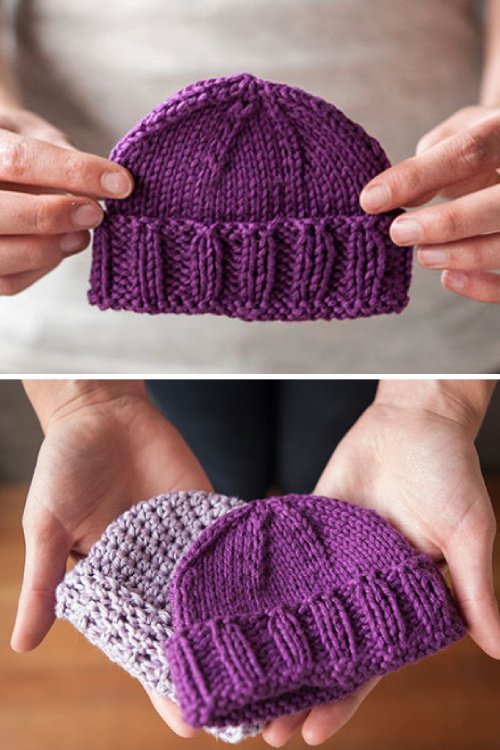
Calming Baby Knit Hat – Free Preemie to Toddler Hat Pattern

Calming Baby Knit Hat free preemie baby and toddler hat knitting pattern by Stacey Winklepleck

Calming Baby Knit Hat. Pattern design © Stacey Winklepleck

The Calming Baby Knit Hat by Stacey Winklepleck is a simple and practical free baby hat knitting pattern available in three sizes from preemie through toddler.

Worked in worsted-weight yarn with a cozy folded cuff and classic stockinette body, this little hat uses only about 109 yards (100 m) of yarn. That makes it an appealing quick knit for a new baby, charity knitting or a small handmade gift.

The pattern was originally published in the Helping Hands collection from Knit Picks and remains available as a free knitting pattern.

Calming Baby Knit Hat Pattern at a Glance

  • Designer: Stacey Winklepleck
  • Published: June 2015
  • Original publication: Helping Hands / Knit Picks
  • Craft: Knitting
  • Category: Baby beanie / toque
  • Sizes: Preemie, Baby and Toddler
  • Yarn weight: Worsted
  • Suggested yarn: Knit Picks Comfy
  • Yardage: Approximately 109 yards (100 m)
  • Needles: US 6 (4 mm)
  • Gauge: 20 stitches × 24 rows = 4 inches (10 cm)
  • Gauge pattern: Stockinette stitch in the round, blocked
  • Construction: Bottom up and worked in the round
  • Brim: Folded cuff
  • Language: English
  • Availability: Free

Three Sizes: Preemie, Baby and Toddler

One of the most useful features of the Calming Baby Knit Hat is that the pattern includes three sizes rather than only a single newborn size.

The listed finished measurements are approximately:

  • Preemie: up to 12 inches circumference × 6 inches high
  • Baby: up to 14 inches circumference × 6.5 inches high
  • Toddler: up to 16 inches circumference × 7 inches high

This makes the pattern useful for everything from a tiny preemie hat to a larger hat for a growing toddler.

A Simple Classic Baby Hat

The Calming Baby Knit Hat proves that a baby project does not need complicated lace, cables or colorwork to look beautiful.

Its design relies on a clean stockinette body and a folded brim, creating a classic shape that works well in almost any color.

The simplicity also makes the hat easy to personalize through yarn choice, stripes or carefully chosen colors.

The Cozy Folded Brim

The folded cuff is one of the most practical details in the design.

Folding the lower portion creates an extra layer of knitted fabric around the ears and forehead, adding warmth without requiring a complicated stitch pattern.

It also gives the otherwise simple stockinette hat a neat, finished appearance.

Bottom-Up Construction

The hat is worked from the bottom up.

You begin at the lower edge, establish the cuff and then continue upward through the body of the hat before shaping the crown.

This is a familiar construction method for many basic knitted hats and can be a useful introduction to hat knitting for someone already comfortable with basic knitting techniques.

Worked in the Round

Calming Baby Knit Hat is worked in the round, so the main hat does not require a traditional seam up the back.

Working stockinette in the round is especially straightforward because the smooth fabric is produced primarily by knitting each round.

As the crown becomes smaller, use your preferred method for knitting small circumferences as required by the original pattern.

Yarn for the Calming Baby Hat

The suggested yarn is Knit Picks Comfy Worsted.

This worsted-weight yarn is a blend of 75% Pima cotton and 25% acrylic, combining the softness of cotton with the practicality of an easy-care blend.

The yarn is listed at approximately 109 yards per 50 grams.

Only About 109 Yards

The pattern lists approximately:

109 yards / 100 meters
of worsted-weight yarn

That modest requirement makes this an attractive small project when you have a suitable partial skein in your stash.

Actual usage can vary with size, gauge and any modifications you make, so having a little extra yarn is always useful.

Choosing Substitute Yarn

You do not have to use the original Knit Picks yarn.

Look for a soft worsted-weight yarn that allows you to achieve the required gauge and produces a comfortable fabric.

For baby knitting, softness and washability are especially useful. Cotton blends, washable wool blends and other baby-friendly worsted yarns can all be worth considering.

Needles and Gauge

The pattern specifies US 6 (4 mm) needles.

The documented gauge is:

20 stitches × 24 rows = 4 inches (10 cm)
in stockinette stitch in the round, blocked

Gauge matters on a fitted baby hat. Even a small difference in stitches per inch can noticeably change the finished circumference.

Make a gauge swatch with your chosen yarn and change needle size if necessary.

Why Swatching Is Worthwhile

A baby hat may be small, but checking gauge is still useful because the intended sizes are based on specific finished measurements.

Blocking the swatch also shows how your yarn behaves after washing and whether the fabric remains soft enough for comfortable wear.

This is particularly useful when substituting a yarn with a different fiber composition from the original cotton-acrylic blend.

Stockinette Stitch Keeps It Simple

Most of the hat uses classic stockinette stitch.

That makes the design a good canvas for beautiful yarn while keeping the knitting itself relatively uncomplicated.

A smooth yarn will emphasize the clean surface, while a gently tonal yarn can add subtle color variation without hiding the simple shape.

Skills Used in the Calming Baby Knit Hat

Useful skills for this project include:

  • Casting on
  • Joining to knit in the round
  • Knitting and purling
  • Stockinette stitch in the round
  • Creating a folded cuff
  • Working decreases
  • Crown shaping
  • Working a small circumference
  • Basic finishing

Is the Calming Baby Hat Beginner Friendly?

The straightforward construction makes this a very approachable small project for a knitter who already understands the basic stitches and is ready to work in the round.

There are no elaborate cable or lace charts to manage. Most of the visual appeal comes from the classic shape and folded cuff.

If you are new to circular knitting, the small size also means you can practice the technique without committing to a large project.

A Quick Stash-Busting Project

With approximately 109 yards required, this little hat can be a useful way to turn leftover worsted yarn into a finished project.

Before using leftovers, weigh or measure your remaining yarn when possible and make sure you have enough for the size you intend to knit.

A contrasting cuff can also be a creative way to combine smaller amounts of compatible yarn.

A Practical Charity-Knitting Pattern

Calming Baby Knit Hat originally appeared in Helping Hands, a collection created around projects suitable for charitable giving.

Its small yarn requirement, straightforward construction and range from preemie to toddler make it particularly relevant for knitters interested in making baby hats for donation.

Always contact the hospital, charity or organization before knitting a donation. Requirements can differ for yarn fiber, colors, dimensions and finishing.

Knitting the Preemie Size

The smallest version is designed for a circumference of up to approximately 12 inches.

If you are making the preemie size specifically for donation, check the recipient organization's current requirements before starting.

Hospitals and neonatal programs may have specific rules about fiber, embellishments and acceptable hat dimensions.

Make It as a Baby Gift

A simple knitted hat can make a thoughtful addition to a larger handmade baby gift.

Pair it with baby booties, a cardigan or a blanket, or knit the hat by itself when you need a smaller project.

Because the design is simple, choosing a beautiful yarn color can make even a quick version feel special.

A Good Gender-Neutral Baby Knit

The classic beanie shape works easily as a gender-neutral baby project.

Soft neutrals, natural shades, pastels or brighter colors can all suit the design without requiring any change to the construction.

This can be useful when knitting a gift before parents have chosen colors or when making hats in advance for charity.

Baby Hat Safety

Keep baby hats simple and securely finished.

Avoid loose embellishments, cords or decorations that could detach, and check the finished hat regularly for damaged yarn or loose ends.

Baby hats and other loose accessories should be removed when appropriate for sleep. Follow current infant safe-sleep recommendations and use the hat under suitable adult supervision.

Why Knit the Calming Baby Hat?

Calming Baby Knit Hat combines several qualities that make a small knitting pattern genuinely useful: three sizes, worsted-weight yarn, simple construction and a modest yarn requirement.

The folded brim adds warmth without complicating the design, while the smooth stockinette body makes it easy to adapt through color and yarn choice.

Whether you are knitting for a new baby, using leftover yarn or making hats for charity, it is a practical pattern worth keeping in your project library.

Get the Free Calming Baby Knit Hat Pattern

Calming Baby Knit Hat by Stacey Winklepleck remains available as a free knitting pattern.

Get the Free Calming Baby Knit Hat Pattern →

Pattern availability was checked when this article was updated. Amazing Knitting does not reproduce the designer's complete copyrighted instructions. Please use the authorized pattern page above for the original free download.

Knitted Overall and Hat - Free Pattern

Knitted Overall and Hat - Free Pattern
The photo above © DROPS Design

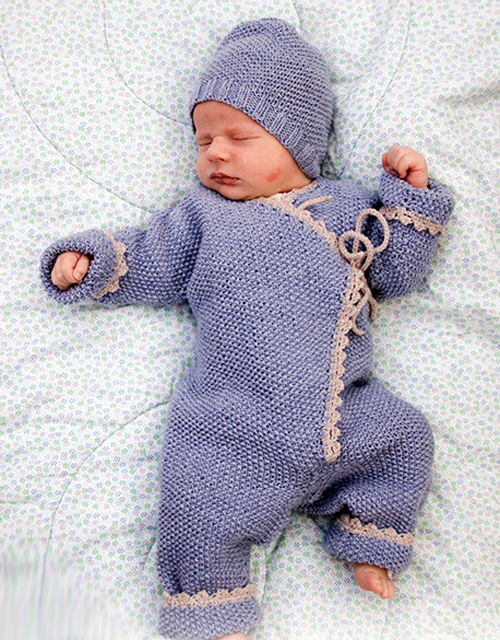
What a beautiful knitted baby overall and hat pattern! I found it on Pinterest. "Baby Talk" knitting & designed by DROPS Design. This knit pattern/tutorial is available for free. Knitted overall and hat for baby with moss stitch, garter stitch, and crochet edge. Size overall: 1 month to 2 years Size hat: Premature to 4 years

Full Post: Baby Talk

In my dreams (Knitted Baby Hat) - Free Pattern

In my dreams (Knitted Baby Hat) - Free Pattern
The photo above © DROPS Design

What a beautiful knitted baby hat pattern! I found it on Pinterest. In my dreams (Knitted Baby Hat) knitting & designed by DROPS Design. This knit pattern/tutorial is available for free. Knitted baby hat Size premature - 4 years

Full Post: In my dreams

Baby Aviator Hat - Knitting Pattern

Baby Aviator Hat - Knitting Pattern
Photos above © lovefibres
What beautiful knitting pattern! Aviator hats look so cute on babies! 
It is an easy pattern, which has instructions for both knitting flat and knitting in the round.
The earflaps are button fastening under the chin to keep little heads from wriggling out of it, and tiny toddler hands from pulling it off after two seconds, but if you are knitting for an older child and want the earflaps to hang freely just make two of the left earflap and don't add a button.

Full Post: Baby Aviator Hat 

The Hudson Hat – Earflap Knitting Pattern

The Hudson Hat earflap knitting pattern by Lindsay Baker

The Hudson Hat by Lindsay Baker is a classic earflap hat worked seamlessly in the round, with i-cord ties, optional stripes and sizes ranging from newborn through adult.

The design begins at the lower ties and grows upward through the earflaps and body before closing at the crown. Its simple worsted-weight construction makes it a practical cold-weather project with plenty of room for color customization.

The Hudson Hat pattern is currently available as a paid download from Lindsay Baker's Ravelry store.

Design and original pattern © Lindsay Baker.

The Hudson Hat Pattern Overview

  • Designer: Lindsay Baker
  • Pattern: The Hudson Hat!
  • Craft: Knitting
  • Category: Earflap hat
  • Published: November 2007
  • Construction: Bottom up and worked in the round
  • Finishing: Seamless
  • Style: Unisex
  • Sizes: 0–6 months, 6–18 months, Toddler, Child and Adult
  • Yarn weight: Worsted
  • Suggested yarns: Family Roots Cestari Fine Merino, Willow Merino and Mountain Meadow Wool
  • Yardage: Approximately 100–300 yd / 91–274 m
  • Needles: US 7 / 4.5 mm circular and DPNs; US 5 circular for smaller sections
  • Gauge: Approximately 5 stitches × 7 rows = 1 in in stockinette
  • Main techniques: Knitting in the round, i-cord, earflap shaping, decreases and tassel finishing
  • Skill level: Advanced beginner and up
  • Language: English
  • Pattern availability: Paid pattern

A Classic Seamless Earflap Hat

The Hudson Hat is designed as a practical cold-weather earflap hat with a simple silhouette and flexible styling.

The earflaps extend downward to provide extra coverage, while the i-cord ties allow the hat to be secured comfortably.

Because the hat is worked seamlessly in the round, there is no long vertical seam to sew at the end.

Worked From the I-Cord Ties Up

One of the most distinctive construction details is that the hat begins with the i-cord ties.

From there, the earflaps are built and then joined into the main body of the hat.

The knitting continues upward in the round toward the crown.

Why I-Cord Works Well for Earflap Hats

I-cord creates a narrow, rounded knitted cord that is stronger and more finished-looking than a simple chain of yarn.

On The Hudson Hat, the ties are integrated into the overall construction rather than being added as an afterthought.

They can also be finished with tassels for a classic winter-hat appearance.

Five Sizes From Baby to Adult

The current pattern includes:

  • 0–6 months
  • 6–18 months
  • Toddler
  • Child
  • Adult

This wide size range makes the same pattern useful for family knitting and gift projects.

Worsted-Weight Yarn

The Hudson Hat is designed for worsted-weight yarn.

The pattern currently lists several Family Roots wool and merino yarns as suggested options.

A smooth worsted-weight wool is a natural choice for this project because it provides warmth, elasticity and good stitch definition.

Yardage

The published yarn requirement ranges from approximately:

100–300 yards / 91–274 meters.

Smaller baby sizes naturally require less yarn, while adult sizes and multi-color versions may need more.

If you plan to add multiple stripes or large tassels, allow a little extra yarn for finishing.

Needles

The current pattern information lists:

  • US 7 / 4.5 mm circular needle
  • US 7 / 4.5 mm double-pointed needles
  • US 5 circular needle for smaller sections

Double-pointed needles become useful as the crown circumference decreases.

Gauge

The published stockinette gauge is approximately:

5 stitches × 7 rows = 1 inch.

Because this is a fitted hat, gauge affects the final circumference and overall comfort.

Check your gauge before starting, especially if you substitute a different worsted-weight yarn.

Stripe-Friendly Construction

The Hudson Hat works particularly well with stripes.

The designer notes that the construction is easy to customize with color changes, so you can use:

  • Two-color stripes
  • Scrap-yarn stripes
  • Gradient color sequences
  • A single solid color

This also makes the pattern useful for using special leftover yarns that are too small for a larger project.

A Good Scrap-Yarn Hat

Smaller sizes need relatively little yarn, making the Hudson Hat a practical way to use partial skeins.

You can combine coordinating worsted-weight colors for the body, earflaps, ties and tassels.

Try to keep the yarn weights and fiber behavior reasonably similar so the finished hat has consistent tension.

Tassel Finishing

The i-cord ties can be finished with tassels for a traditional earflap-hat look.

The current pattern includes a tassel tutorial with step-by-step photos.

Tassels are optional from a practical point of view, but they add a decorative finish and can help visually balance the long ties.

Skills You'll Use

  • Casting on
  • Working i-cord
  • Knitting in the round
  • Working with circular needles
  • Using double-pointed needles
  • Increasing and shaping earflaps
  • Joining sections in the round
  • Stockinette stitch
  • Changing colors for stripes
  • Crown decreases
  • Making tassels
  • Weaving in ends

Is The Hudson Hat Beginner Friendly?

The designer describes the pattern as suitable for an advanced beginner and up.

The individual techniques are not unusually difficult, but the project does combine several useful skills: i-cord, small-circumference knitting, shaping and joining sections into the round.

A knitter who already knows basic knit stitches and has some experience working in the round should find this a manageable next project.

Can You Knit It Without Earflaps?

Some knitters have adapted The Hudson Hat by omitting the earflaps and using a ribbed brim instead.

This creates a more conventional beanie while preserving the general shape and crown construction.

However, this is a project modification rather than the standard pattern construction, so follow the original instructions first if you are new to the design.

Tips for a Better Fit

Check gauge before casting on. Small differences in gauge can change hat circumference significantly.

Choose the size from head measurements when possible. Age labels are useful guides, but actual head size is more reliable.

Keep i-cord tension consistent. Very tight ties can become stiff, while very loose i-cord may look uneven.

Try the hat on before finishing the crown if possible. This helps confirm the body depth.

Is The Hudson Hat a Free Knitting Pattern?

No. The Hudson Hat by Lindsay Baker is currently a paid knitting pattern.

The current Ravelry listing prices the pattern at $4.50 USD.

Amazing Knitting previously featured the design as a pattern-discovery post, but prices and availability can change. We therefore identify its current paid status clearly.

View The Hudson Hat Pattern →

Why This Hat Is Worth Considering

The Hudson Hat has remained popular because it combines a practical winter shape with flexible sizing and easy color customization.

Its seamless construction keeps finishing relatively simple, while the earflaps, i-cord ties and tassels give the project enough detail to remain interesting.

The five-size range also makes it a useful family pattern rather than a single-age baby hat.

Pattern Availability

Amazing Knitting links readers to legitimate designer or publisher sources whenever possible. Pattern prices, download locations and availability can change after an article is published.

Read Our Pattern Availability Policy →

Amazing Knitting is an independent pattern discovery and project-guide site. The Hudson Hat design and complete knitting instructions remain the intellectual property of Lindsay Baker. This guide does not reproduce the designer's complete row-by-row pattern instructions.

Itty Bitty Bear Cubs – Free Preemie Baby Hat Knitting Pattern

Itty Bitty Bear Cubs free preemie baby hat knitting pattern by Carolyn Ingram

Photos © ThornwoodKnits & © Carolyn Ingram

Itty Bitty Bear Cubs by Carolyn Ingram is an adorable free preemie baby hat knitting pattern featuring tiny bear ears and a simple rolled brim.

Originally designed for the designer's premature twin grandsons during their stay in the NICU, these little bear hats come in two preemie sizes. They use sport-weight yarn and require only a small amount of yarn, making them a sweet little project for a new baby or charity knitting.

Itty Bitty Bear Cubs Pattern Details

  • Designer: Carolyn Ingram
  • Published: March 2015
  • Craft: Knitting
  • Category: Preemie baby hat / beanie
  • Pattern availability: Free download
  • Sizes: Small Preemie and Large Preemie
  • Yarn weight: Sport
  • Suggested yarn: Malabrigo Arroyo
  • Yardage: Approximately 45–60 yards (41–55 m)
  • Needles: 3.25 mm (US 3) and 3.5 mm (US 4)
  • Gauge: 26.5 stitches × 33 rows = 4 inches
  • Construction: Bottom up, worked in the round
  • Features: Rolled brim and knitted bear ears
  • Language: English

A Tiny Bear Hat Designed for Preemies

There is a particularly sweet story behind the Itty Bitty Bear Cubs pattern. Carolyn Ingram originally created these tiny hats after her daughter asked for something for her twin sons to wear during their stay in the NICU.

The result is a simple little knitted beanie transformed into a bear-cub hat with the addition of two small ears.

Because the original sizes were designed specifically for premature babies, this pattern can also be useful for knitters looking for small projects for appropriate neonatal charity programs. Always check the current requirements of the hospital or organization before donating handmade baby items.

Two Preemie Hat Sizes

The original free pattern includes two preemie sizes:

  • Small Preemie: approximately 9-inch finished circumference and 4 inches high, designed for an approximately 11-inch head.
  • Large Preemie: approximately 10.5-inch finished circumference and 4.75 inches high, designed for an approximately 12.5-inch head.

The designer also provides notes with the pattern for making larger versions for newborn and 0–3 month babies.

Sport-Weight Yarn and Small Yardage

The original Itty Bitty Bear Cubs hats use Malabrigo Arroyo, a sport-weight merino yarn.

Each hat requires approximately 45–60 yards (41–55 m), so this can be a useful small-yardage project if you already have a suitable amount of sport-weight yarn.

If the hat is intended for a baby, consider softness and practical care requirements when choosing a substitute yarn.

Needles and Gauge

The pattern calls for 3.25 mm (US 3) and 3.5 mm (US 4) needles.

The specified gauge is approximately 26.5 stitches and 33 rows = 4 inches (10 cm).

Because the original hats are designed for very small babies, getting close to the intended gauge is especially important when you want the finished dimensions to match one of the preemie sizes.

How Are the Bear Cub Hats Constructed?

The hat is worked in the round from the bottom up, beginning with a simple rolled edge and continuing toward the crown.

Crown decreases shape the top of the hat. The little bear ears are then created separately from stitches picked up on the finished hat, giving the otherwise simple beanie its unmistakable bear-cub appearance.

The pattern was written for double-pointed needles, although knitters comfortable with other methods of small-circumference knitting may prefer their usual technique.

Skills Used in This Pattern

Although these hats are small, they provide an opportunity to practice several useful knitting techniques, including:

  • Knitting in the round
  • Stockinette stitch
  • Basic decreases
  • Picking up stitches
  • Working small circumferences
  • Simple finishing and seaming for the ears

If you already know basic knitting and want to become more comfortable with knitting in the round, a tiny hat can be a much smaller commitment than starting with a full-size garment.

Can You Make the Bear Hat in Larger Baby Sizes?

Yes. Although the two primary sizes are designed for preemies, Carolyn Ingram also includes notes for adapting the idea for newborn and 0–3 month sizes.

The designer has also made larger versions using heavier yarn and larger needles as her grandsons grew.

Follow the designer's current sizing notes rather than simply adding stitches at random, particularly when knitting for a very young baby.

A Great Little Stash-Buster

With only 45–60 yards required for the original preemie sizes, Itty Bitty Bear Cubs can be a charming way to use a small quantity of suitable leftover yarn.

Neutral browns and creams create the classic teddy-bear look, but the simple design can work in many colors. A soft blue, pink, gray, yellow or another baby-friendly shade can give the same little hat a completely different personality.

Get the Free Itty Bitty Bear Cubs Pattern

The complete Itty Bitty Bear Cubs by Carolyn Ingram is currently available as a free downloadable knitting pattern.

Get the Free Itty Bitty Bear Cubs Knitting Pattern

Pattern availability was checked when this article was updated. Availability on external websites may change over time.

Pixie Baby Hat – Free Easy Baby Bonnet Knitting Pattern

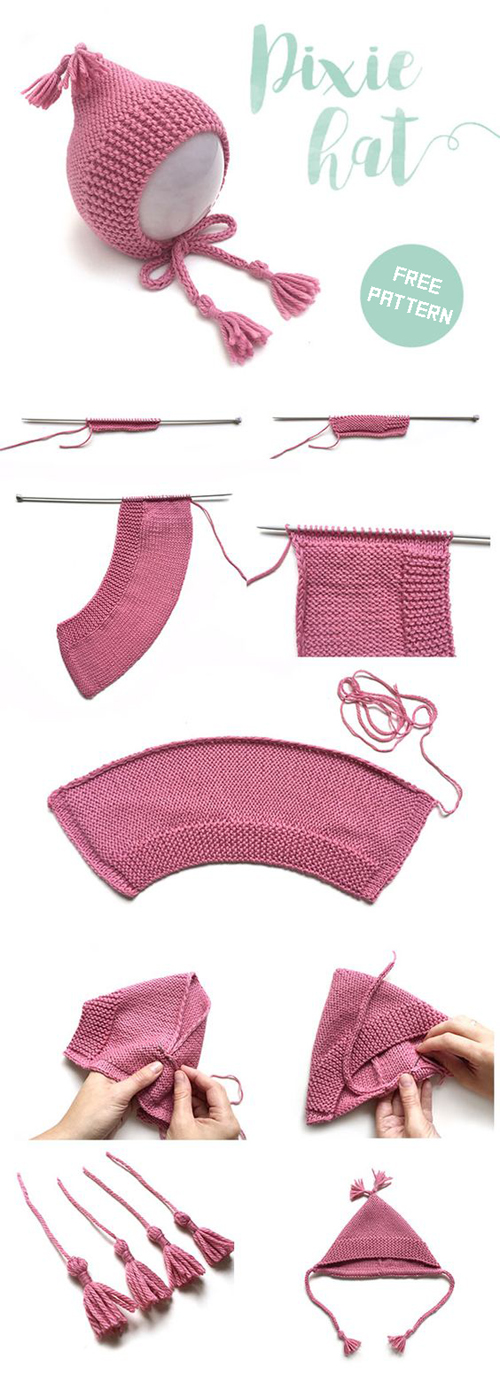
Pixie Baby Hat free easy baby bonnet knitting pattern by Marta Porcel of Creativa Atelier

Pixie Baby Hat. Pattern, tutorial and photo © Marta Porcel / Creativa Atelier

This adorable Pixie Baby Hat by Marta Porcel of Creativa Atelier is a free baby bonnet knitting pattern with a charming pointed shape, adjustable cord and playful tassels.

The hat is worked flat on straight needles, making it especially appealing if you prefer not to knit small circumferences in the round. The knitted piece is folded and seamed at the back to create the distinctive pixie shape.

The original tutorial is written for approximately 1–3 months, but the designer also explains how the basic construction can be adjusted for larger sizes.

Pixie Baby Hat Pattern at a Glance

  • Designer: Marta Porcel
  • Source: Creativa Atelier
  • Published: November 2021
  • Craft: Knitting
  • Category: Baby bonnet / pixie hat
  • Original size: Approximately 1–3 months
  • Yarn weight: DK / Light
  • Suggested yarn: Katia Merino Classic
  • Main needles: 4 mm straight knitting needles
  • Optional crochet hook: 2.75 mm for the cord
  • Construction: Worked flat and seamed
  • Finishing: Adjustable cord and tassels
  • Current availability: Free web-based tutorial

A Classic Pointed Pixie Bonnet

The most recognizable feature of this little bonnet is its pointed pixie silhouette.

Instead of shaping a conventional rounded crown, the flat knitted fabric is folded and joined at the back. This simple construction produces the distinctive point at the top of the hat.

Tassels add even more character and give the finished bonnet a playful, traditional handmade appearance.

Worked Flat on Straight Needles

One of the best features of this pattern is that you do not need to knit the bonnet in the round.

The main fabric is worked back and forth on 4 mm straight needles.

This makes the project particularly useful for knitters who enjoy baby hats but are not yet comfortable using double-pointed needles, Magic Loop or other small-circumference techniques.

Original Size: 1–3 Months

Marta Porcel designed the tutorial specifically for a baby of approximately 1–3 months.

Rather than pretending that the free tutorial contains a complete multi-size grading system, it is important to note that the published stitch and row counts correspond to this original size.

The designer does, however, explain how the simple construction can be adapted if you want to make a larger bonnet.

How the Size Can Be Adjusted

Because the hat is based on a relatively simple flat construction, the designer suggests increasing both the initial number of stitches and the number of rows when making a larger size.

Taking the child's actual head measurements is the best approach whenever possible.

For gift knitting, the original tutorial also provides approximate head circumference references by age to help with planning.

Yarn for the Pixie Baby Hat

The original sample uses Katia Merino Classic in color 26.

The yarn is listed at approximately:

100 grams = 240 meters
DK / Light weight

The yarn was chosen to coordinate with a matching baby cardigan from Creativa Atelier.

Choosing Substitute Yarn

A smooth, soft DK-weight yarn is a sensible starting point when substituting for the original yarn.

Because this is a baby accessory, pay particular attention to softness and care requirements as well as yarn weight.

A washable wool, merino blend or another baby-friendly DK yarn can work well if it produces fabric with dimensions comparable to the designer's sample.

Needles and Other Materials

The original 1–3 month version uses:

  • 4 mm straight knitting needles
  • 2.75 mm crochet hook for the designer's preferred cord method
  • Tapestry needle for seaming and finishing
  • DK / Light yarn

The crochet hook is optional because the cord can be created using other methods if you prefer.

The Main Knitted Fabric

The bonnet is based largely on simple stockinette fabric.

The designer changes the direction of the stockinette at strategic points to create the sections that will later be folded during finishing.

This is a clever way to build useful construction lines directly into a simple rectangular piece of knitting.

A Simple Flat Construction

Instead of relying on complicated crown decreases, the Pixie Hat gets its shape from the way the knitted fabric is folded and seamed.

After completing the main piece, the fabric is folded in half and the appropriate edges are joined at the back.

The result is the characteristic pointed bonnet shape without having to shape a traditional rounded crown.

Seaming the Back

Because the bonnet is knitted flat, one of the main finishing steps is joining the back edges.

The designer notes that you can use a normal seam or an invisible seaming technique.

Taking a little extra time over this seam will help the finished point look neat and keep the inside comfortable.

The Adjustable Cord

A cord runs through the lower section of the bonnet and allows the hat to be adjusted around the baby's head.

Marta's sample uses approximately 55 cm of I-cord.

She demonstrates a crochet-hook method for making the cord, but also notes that there are several alternatives, including knitting or making a cord by hand.

Tassels or Pom-Poms

The original Pixie Hat is finished with four tassels.

Two decorate the ends of the cord and two are attached to the pointed area of the bonnet.

The designer also suggests replacing the tassels with pom-poms if you prefer a different look.

Customize the Pixie Hat

The simple construction gives you plenty of opportunities to personalize the finished bonnet.

You might choose a soft neutral for a traditional look, a bright color for a playful baby accessory, or coordinate the yarn with another handmade garment.

Tassels and cords can also be made in contrasting colors for an extra decorative touch.

Make the Matching Baby Set

Creativa Atelier also provides tutorials for a matching knitted baby cardigan and baby booties.

The Pixie Hat can therefore be made on its own as a quick accessory or combined with the coordinating pieces to create a complete handmade baby outfit.

This also makes the design especially attractive for baby-shower or newborn gift knitting.

Skills Used in the Pixie Baby Hat

Useful skills for this project include:

  • Casting on
  • Knitting and purling
  • Stockinette stitch
  • Working flat on straight needles
  • Binding off
  • Blocking
  • Basic seaming
  • Picking up stitches for finishing
  • Making a cord or I-cord
  • Making tassels or optional pom-poms

Is the Pixie Baby Hat Beginner Friendly?

The construction is relatively approachable because the main bonnet is worked flat and relies heavily on basic knit and purl techniques.

You do not need to manage circular knitting or complicated crown shaping.

The finishing introduces useful skills such as seaming, picking up stitches and making a cord, making this a nice progression beyond a simple scarf or square.

A Good First Baby Hat on Straight Needles

Many baby hat patterns are knitted in the round, which can be intimidating if you have only worked on straight needles.

This Pixie Hat provides a different route: knit the main shape flat and create the three-dimensional bonnet during finishing.

That makes it an interesting choice for newer knitters who want to make their first baby hat without immediately learning Magic Loop or double-pointed needles.

Blocking Before Assembly

The designer recommends blocking the knitted fabric before completing the seams.

This helps control the natural curling of stockinette stitch and makes the finishing process easier.

Always use a blocking method appropriate for the fiber in your chosen yarn rather than automatically applying heat or steam to every fiber.

A Quick Handmade Baby Gift

Small baby accessories are excellent projects when you want to make a thoughtful handmade gift without committing to a full blanket or sweater.

The pointed silhouette makes this bonnet more distinctive than a basic beanie, while the tassels give it plenty of handmade charm.

Pair it with knitted booties or the matching cardigan for a more complete gift set.

Baby Hat Safety

Because this design includes an adjustable cord and decorative tassels, it should be used appropriately and under adult supervision.

Check all finishing details regularly and make sure tassels and other decorative pieces remain securely attached.

Remove hats and accessories with cords or ties before sleep and follow current infant safe-sleep recommendations.

Why Knit the Pixie Baby Hat?

The Pixie Baby Hat combines a memorable shape with surprisingly simple construction.

It is knitted flat, uses familiar stockinette fabric and requires no complicated rounded crown shaping, yet the finished bonnet has a distinctive pointed silhouette.

The free tutorial, adjustable construction and matching baby garments also make it a useful pattern to keep bookmarked for future baby gifts.

Get the Free Pixie Baby Hat Pattern

Knitted PIXIE Hat by Marta Porcel of Creativa Atelier is still available as a free step-by-step knitting tutorial from the designer's website.

Get the Free Pixie Baby Hat Pattern →

Pattern availability was checked when this article was updated. Pattern, tutorial and original images belong to Marta Porcel / Creativa Atelier. Amazing Knitting does not reproduce the designer's complete instructions; please use the official tutorial above.

Charlie Baby Cardigan - Free Knitting Pattern

Charlie Baby Cardigan - Free Knitting Pattern
The photo above @ peterlinzi

Looking for a sweet and practical free baby cardigan knitting pattern? The Charlie Baby Cardigan Jacket by marianna mel is a classic little knitted cardigan designed for newborns and young babies.

With its simple styling and DK-weight yarn, Charlie works beautifully for both baby boys and girls. The pattern includes several small baby sizes and also offers options for different front styles, making it a versatile project for baby gifts, coming-home outfits, and everyday wear.

Charlie Baby Cardigan Pattern at a Glance

Pattern: Charlie Baby Cardigan Jacket

Designer: marianna mel

Published by: Marianna's Lazy Daisy Days

Craft: Knitting

Category: Baby Cardigan / Jacket

Yarn Weight: DK

Suggested Needle Size: US 6 / 4.0 mm

Gauge: 22 stitches = 4 inches in stocking stitch

Sizes: Newborn, 0–3 months, 3–6 months

Pattern Availability: Free

About the Charlie Baby Cardigan

Charlie is a charming baby cardigan designed by marianna mel of Marianna's Lazy Daisy Days. Its classic shape makes it suitable for either a baby boy or girl, and the smallest size was designed especially with newborn babies in mind.

This is also a useful pattern for knitters who enjoy making handmade baby gifts. The small dimensions keep the project manageable, while the straightforward styling makes it easy to personalize through your choice of yarn color and buttons.

Charlie Baby Cardigan Sizes

The pattern currently includes three baby sizes:

  • Newborn
  • 0–3 months – approximately 17-inch chest
  • 3–6 months – approximately 18½-inch chest

The original newborn version has approximate finished measurements of 16 inches (41 cm) wide, 8½ inches (21.5 cm) long, and a 5-inch (13 cm) sleeve length.

Always check the designer's current pattern instructions before choosing a size, since the original pattern page is the authoritative source for measurements and any later updates.

Yarn for the Charlie Baby Cardigan

Charlie is designed for DK-weight yarn, sometimes also described as 8-ply depending on where you live.

A soft, comfortable yarn suitable for baby garments is a practical choice. Since baby clothes are frequently worn directly over lightweight clothing, consider softness, washability, and care requirements when selecting your yarn.

You can also change the personality of this little cardigan simply through color: classic white and cream create a traditional look, while soft pastels or brighter modern shades can make the same design feel completely different.

Needles and Gauge

The pattern lists:

  • US 6 / 4.0 mm knitting needles
  • Gauge: 22 stitches = 4 inches in stocking stitch

Matching the designer's gauge is particularly important for a small baby garment, where even a relatively small difference in tension can noticeably affect the finished size.

Different Front Options

One interesting feature of the Charlie pattern is that it has developed over time. In addition to the original cardigan, the designer added instructions for a fully buttoned front version in all of the available sizes.

There is also an option for making a shorter cropped version, which the designer suggests can work especially well when worn over a little dress.

Check the current original pattern page to see the available variations before deciding which version you would like to knit.

A Lovely Baby Gift Project

Small cardigans are especially useful projects for baby showers, newborn gifts, and handmade keepsakes. Charlie's simple styling also means that it can be made ahead of time when you do not yet know whether the new baby will be a boy or girl.

Pairing the cardigan with coordinating baby accessories can also turn a single knitted garment into a complete handmade gift set.

Matching Charlie Baby Knits

The designer has created other pieces to coordinate with the Charlie cardigan, including matching baby booties, a hat, mittens, and a blanket.

This makes Charlie particularly useful if you enjoy creating coordinated newborn sets rather than knitting just one garment.

Is the Charlie Baby Cardigan Pattern Free?

Yes. The Charlie Baby Cardigan Jacket by marianna mel is currently available as a free knitting pattern.

Amazing Knitting does not reproduce the designer's knitting instructions. Please visit the original pattern source to view the complete instructions, measurements, variations, and any updates from the designer.

Get the Free Charlie Baby Cardigan Pattern

Visit Marianna's original Charlie Baby Cardigan page for the complete free knitting pattern.

Get the Free Charlie Baby Cardigan Pattern →

Pattern credit: Charlie Baby Cardigan Jacket was designed by marianna mel and published through Marianna's Lazy Daisy Days. Pattern availability, sizing, and technical details are controlled by the designer and may change over time.

More Baby Knitting Inspiration

Looking for another small project? Explore more baby cardigan knitting patterns, baby sweater knitting patterns, and baby booties knitting patterns from the Amazing Knitting archive.

Before You Start

Visit the designer's original pattern page before buying yarn or beginning your project. Confirm the latest size information, gauge, materials, button requirements, and instructions for the version of Charlie you plan to knit.

Little Eyes Baby Booties – Free Newborn Knitting Pattern

Little Eyes Baby Booties free newborn knitting pattern by Inma Gijon

Little Eyes Baby Booties. Photos © Irisgc & © oranereuland

Little Eyes Baby Booties, originally called Little-Eyes, is a free newborn booties knitting pattern by Inma Gijón. These tiny knitted boots feature a beautiful cable detail across the top of the foot and require only a small amount of light fingering-weight yarn.

The pattern is designed for newborn babies and is worked flat rather than in the round. If you would like a slightly larger pair, the designer suggests changing from 2 mm needles to 2.5 mm needles.

Little Eyes Baby Booties Pattern Details

  • Designer: Inma Gijón
  • Original pattern name: Little-Eyes
  • Published: December 2016
  • Craft: Knitting
  • Category: Baby booties
  • Pattern availability: Free download
  • Size: Newborn
  • Yarn weight: Light Fingering / 3 ply
  • Suggested yarn: Lanas Stop Bambini
  • Yardage: Approximately 30–60 yards (27–55 m)
  • Needles: 2 mm (US 0)
  • Gauge: 8 stitches × 12 rows = 1 inch (2.5 cm) in stockinette stitch
  • Construction: Worked flat
  • Features: Decorative cable detail
  • Pattern format: Written instructions and chart
  • Languages: English and Spanish

Sweet Knitted Booties for a Newborn

Little Eyes is designed specifically as a pair of newborn baby booties. Their tiny size makes them a lovely project when you want to knit something special for a new baby without committing to a larger blanket, cardigan or sweater.

They can also make a charming handmade baby-shower gift, especially when paired with another small knitted accessory such as a hat.

Beautiful Cable Detail

The feature that gives Little Eyes its distinctive appearance is the decorative cable motif across the upper foot.

The raised stitches create an intricate-looking focal point while the rest of the bootie remains relatively simple, allowing the cable texture to stand out clearly.

A solid or lightly tonal yarn is particularly effective if you want the stitch definition to remain visible.

Worked Flat Instead of in the Round

Little Eyes Baby Booties are worked flat. This means you knit back and forth rather than working continuously around the foot on double-pointed needles.

This construction can be appealing if you enjoy baby booties but prefer flat knitting to working very small circumferences in the round.

The knitted piece is shaped and finished according to the designer's instructions to form the final bootie.

Light Fingering Yarn

The pattern is designed for Light Fingering / 3-ply yarn. The suggested yarn is Lanas Stop Bambini.

Bambini is a fine merino and acrylic blend, providing the lightweight fabric needed for these delicate newborn booties.

If the original yarn is unavailable, look for a suitable light fingering-weight substitute and use the designer's gauge as your main guide.

A Tiny Stash-Busting Project

One of the advantages of Little Eyes is the very small amount of yarn required.

The pattern listing gives approximately 30–60 yards (27–55 metres), making these booties a useful project for small amounts of fine yarn left over from another baby project.

You may already have enough yarn in your stash to make a pair without purchasing a full new skein.

Needles and Gauge

The newborn version uses 2 mm (US 0) knitting needles.

The specified gauge is: 8 stitches and 12 rows = 1 inch (2.5 cm) in stockinette stitch.

Gauge is especially important for tiny baby items because even a small difference in stitch size can noticeably change the finished dimensions.

How to Make the Booties a Little Bigger

The free pattern is written for newborns, but Inma Gijón provides a simple suggestion if you need a slightly larger pair: use 2.5 mm needles instead of 2 mm needles.

The larger needle size produces a somewhat larger bootie without requiring a completely different set of pattern instructions.

This should be treated as the designer's method for making the original bootie slightly larger rather than as a separate standardized baby size.

English and Spanish Pattern

Little Eyes is available in both English and Spanish, making the free pattern accessible to a wider range of knitters.

The download also includes both written and charted pattern information, so knitters who prefer following a chart can use that format for the decorative section.

Skills Used in Little Eyes Baby Booties

Useful knitting techniques for this project include:

  • Knitting and purling
  • Working flat
  • Stockinette stitch
  • Cable knitting
  • Reading a cable chart
  • Basic shaping
  • Decreases
  • Finishing small knitted pieces

Because the project is so small, it can be a fun way to practice cable knitting without committing to a large cable sweater, blanket or scarf.

Choosing Yarn for Newborn Booties

When choosing a substitute yarn for a newborn project, softness is an important consideration. The booties will be worn close to a baby's skin, so avoid yarn that feels rough or scratchy.

Easy-care yarn can also be useful for baby knits. Whatever fiber you choose, make sure it produces the required gauge and a comfortable fabric.

A Lovely Handmade Baby Gift

Small projects like Little Eyes are particularly useful when you need a handmade gift but don't have time to knit a complete baby garment.

The decorative cable gives the booties a special finished appearance, while their small yarn requirement makes them practical for using a favorite leftover yarn.

You could also coordinate the booties with a simple newborn hat or cardigan in a matching or complementary color to create a handmade baby gift set.

About the Little Eyes Pattern

Inma Gijón originally published Little-Eyes in December 2016. The pattern's instep section was subsequently updated by the designer in January 2017.

When downloading the pattern, use the current version supplied by the designer so you have the updated instructions.

Get the Free Little Eyes Baby Booties Pattern

The complete Little-Eyes by Inma Gijón is currently available as a free downloadable knitting pattern from the designer's Ravelry store.

Get the Free Little Eyes Baby Booties Pattern

Pattern availability was checked when this article was updated. Availability on external websites may change over time.

Discover More From the Archive

A fresh mix of knitting patterns and tutorials from the Amazing Knitting archive.

Finding patterns from the archive…