Skip to content

...

Showing posts sorted by date for query ankle socks knitting. Sort by relevance Show all posts

8 Free Sock & Slipper Knitting Patterns for Cozy Feet

8 Free Sock & Slipper Knitting Patterns for Cozy Feet

Looking for a cozy free sock or slipper knitting pattern? This collection brings together eight fun and practical footwear projects, from lightweight no-show socks and classic cable designs to warm dorm boots, easy house slippers and playful baby socks.

The patterns include projects for different skill levels and yarn weights, so you can choose something quick and chunky or settle in with a finer sock-yarn project.

Most importantly, each design below has been checked for a currently available legitimate free pattern or authorized free pattern source.

8 Free Sock & Slipper Knitting Patterns

1. Shark Socks

Shark Socks by Fiona Goble may be the most unforgettable project in this collection. Instead of looking like ordinary socks, each one is shaped to resemble a shark swallowing your foot.

The socks are worked in worsted-weight yarn and combine traditional sock construction with knitted fins, teeth, button eyes and a small amount of crochet finishing.

They are best suited to an intermediate knitter, but the finished pair makes a fantastic novelty gift for anyone who loves sharks or playful handmade accessories.

Best for: Fun gifts, novelty knitting and intermediate sock knitters.

See the Free Shark Socks Pattern →


2. Christmas Robin Socks / Blitzen

Christmas Robin Socks by Winwick Mum, now known as Blitzen Socks, feature a beautiful paper-chain-inspired cable running down the leg.

The socks are worked from the top down in fingering-weight yarn with a traditional heel and gusset construction. Four foot-circumference sizes are included.

Although originally designed for a Christmas colorway, the cable pattern works beautifully in solid, tonal and self-striping sock yarns throughout the year.

Best for: Cable lovers, Christmas gifts and knitters ready for an intermediate sock project.

See the Free Christmas Robin / Blitzen Socks Pattern →


3. Skimmer Socks Revisited

Skimmer Socks Revisited by Sheila Toy Stromberg are clever toe-up no-show socks designed to sit low inside shoes.

The pattern includes six sizes, from Extra Small through Extra-Extra Large, and uses fingering-weight sock yarn.

Their low profile makes them particularly useful when you want the comfort of hand-knit socks without a cuff showing above sneakers, loafers or other low-cut shoes.

Best for: Toe-up sock knitting, leftover sock yarn and practical everyday footwear.

See the Free Skimmer Socks Revisited Pattern →


4. Alaskan Cables Ankle Socks

Alaskan Cables / DROPS 125-15 are warm, short cable socks worked in much heavier yarn than a traditional pair of fingering-weight socks.

DROPS Alaska and 4.5 mm needles produce a thick fabric that is particularly well suited to lounging at home or wearing inside roomy winter boots.

Three adult sizes are included, and the short ankle length keeps the project relatively quick despite the decorative cable work.

Best for: Warm winter socks, cable practice and knitters who prefer heavier yarn.

See the Free Alaskan Cables Socks Pattern →


5. Better Dorm Boots

Better Dorm Boots by Kris Basta are substantial knitted slippers with a ribbed ankle cuff and a shaped sole.

The slippers are worked flat and seamed, using two strands of worsted-weight yarn held together. This creates a warm, sturdy fabric without requiring small-circumference sock knitting.

Separate sizing is available for women, and the designer also provides a men's version.

Best for: Cold floors, college gifts and knitters who prefer flat knitting to DPNs.

See the Free Better Dorm Boots Pattern →


6. Easy Cuffed Slippers

Cuffed Slippers by Barbara Breiter are one of the simplest adult footwear options in this collection.

They use ordinary worsted-weight yarn and 5 mm needles and are worked flat before being shaped and seamed.

A comfortable folded cuff gives them a classic house-slipper appearance, and the design can fit either men or women.

Best for: Advanced beginners, stash yarn and a straightforward pair of everyday slippers.

See the Free Easy Cuffed Slippers Pattern →


7. Mini Snow Boots

Mini Snow Boots / DROPS Baby 31-25 are adorable knitted baby socks with cables, ribbing and a tall winter-boot appearance.

The pattern includes sizes from approximately 1 month through 4 years and is worked in the round using DK-weight DROPS Puna.

The combination of cables and ribbing makes these much more decorative than a basic baby sock while still keeping the finished footwear cozy and practical.

Best for: Baby gifts, cable practice and warm little winter socks.

See the Free Mini Snow Boots Pattern →


8. Duck Feet Baby Socks

Duck by Jeny Staiman turns a tiny knitted baby sock into a wonderfully exaggerated webbed duck foot.

Originally published by Knitty, the design was created for babies who are not yet walking, allowing the designer to have much more fun with the shape than would be possible with ordinary adult socks.

The updated free pattern uses fingering-weight yarn and creates an unforgettable little pair for baby photos, shower gifts or anyone who loves whimsical knitting.

Best for: Unique baby gifts, novelty knitting and small sock-yarn projects.

See the Free Duck Feet Baby Socks Pattern →

Which Sock or Slipper Pattern Should You Knit First?

  • For the most fun project: Shark Socks
  • For traditional sock cables: Christmas Robin / Blitzen
  • For everyday shoes: Skimmer Socks Revisited
  • For thick winter socks: Alaskan Cables
  • For warm house boots: Better Dorm Boots
  • For an easier slipper: Easy Cuffed Slippers
  • For a classic baby gift: Mini Snow Boots
  • For the cutest novelty baby project: Duck Feet Socks

Socks vs. Slippers: Which Project Is Easier?

Traditional socks often involve knitting in the round, shaping a heel, working a gusset and finishing a toe. They can be extremely satisfying, but there are several construction stages to learn.

Flat-knitted slippers such as Better Dorm Boots and Easy Cuffed Slippers can be more approachable if you are not yet comfortable with double-pointed needles or Magic Loop.

If you already know basic sock construction, patterns such as Christmas Robin, Skimmer Socks and Alaskan Cables give you a chance to add new techniques without learning an entirely new project shape.

Choosing Yarn for Socks

Not every sock in this collection uses traditional fingering-weight sock yarn.

Skimmer Socks and Christmas Robin use finer yarn for a more conventional wearable sock, while Alaskan Cables and Shark Socks use significantly heavier yarns.

Always follow the original pattern's yarn weight and gauge when possible. Changing yarn thickness can dramatically affect foot circumference, length and comfort.

Choosing Yarn for Slippers

Slippers usually benefit from a thicker and more durable fabric than ordinary socks.

For house footwear, consider warmth, abrasion resistance and washability as well as softness. A very delicate yarn may feel wonderful but wear through quickly when repeatedly rubbed against floors.

Hand-Knit Footwear Makes a Great Gift

Socks and slippers are practical handmade presents because they combine useful everyday wear with plenty of opportunity for personalization.

Color is one of the easiest ways to customize a project. You can use neutral shades for classic slippers, festive yarn for Christmas socks or bright colors for playful baby footwear.

More Free Knitting Collections

If you enjoy small wearable projects, continue with our scarf collection:

Explore 7 Free Scarf Knitting Patterns →

For more small baby projects:

Explore 9 Free Baby Hat & Booties Patterns →

And if you want projects designed around a limited amount of yarn:

Explore 7 Free One-Skein Knitting Patterns →

Free Pattern Availability

The patterns featured in this collection were reviewed for legitimate free availability when this article was prepared.

Pattern locations and availability can change over time. Designers and publishers may move a pattern, update it or change its pricing.

Each project above therefore links first to its Amazing Knitting guide, where you can find project information and the current authorized source.

Read Our Pattern Availability & Editorial Policy →

Amazing Knitting is an independent pattern discovery and project-guide site. The knitting patterns featured in this collection remain the intellectual property of their respective designers and publishers. Amazing Knitting does not reproduce complete copyrighted row-by-row instructions or charts.

Easy Cuffed Slippers – Free Knitting Pattern for Men & Women

Free Knitting Patterns You Can Make With One Skein

Looking for a simple pair of warm, handmade slippers? Cuffed Slippers by Barbara Breiter is a classic free knitting pattern with an uncomplicated construction, a comfortable stretchy fit and a cozy folded cuff.

The slippers are designed to fit either men or women and use ordinary worsted-weight yarn with US 8 (5 mm) knitting needles. That makes this a practical project for using yarn already in your stash and a nice introduction to knitted slipper construction.

The original pattern is still available free from the designer's Knitting on the Net website. Below you'll find an overview of the materials, construction and techniques you'll encounter before following the complete instructions at the original source.

Pattern design © Barbara Breiter.

Cuffed Slippers Pattern Overview

  • Designer: Barbara Breiter
  • Pattern: Cuffed Slippers
  • Craft: Knitting
  • Category: Slippers / House Shoes
  • Fit: Men or women
  • Yarn weight: Worsted
  • Needles: US 8 / 5 mm
  • Gauge: 16 stitches = 4 inches
  • Construction: Worked flat and seamed
  • Pattern availability: Free

An Easy Knitted Slipper Design

One of the nicest things about this pattern is how much shape is created with relatively straightforward knitting.

Instead of requiring complicated sock construction or knitting on double-pointed needles, the slippers are worked flat. Simple shaping transforms the knitted fabric into the foot and toe, and the slipper is finished with seaming.

The prominent folded cuff gives the finished slipper its cozy, traditional appearance while also helping it sit comfortably around the ankle.

Yarn and Needles

The original pattern calls for worsted-weight yarn and US 8 (5 mm) knitting needles.

According to the designer, one skein of many worsted-weight yarns should be sufficient for a pair, although the exact amount naturally depends on the yardage of the yarn you choose.

This makes the slippers a particularly useful stash project. A smooth, comfortable yarn with enough durability for regular wear is a sensible choice.

Gauge

The published gauge is 16 stitches = 4 inches.

Gauge matters because the slippers are designed to stretch around the foot. If your stitches are considerably tighter or looser than the pattern gauge, the finished size can change.

If you're substituting yarn, knit a small gauge swatch before beginning and adjust your needle size if necessary.

How the Slippers Are Constructed

The project begins as a flat piece of knitting. The pattern uses knit and purl stitches to establish the structure of the slipper before the work narrows toward the foot.

Decreases then shape the toe. At the end, the remaining stitches are gathered to close the front, and the heel is seamed.

Because the project is worked on ordinary straight needles rather than constructed like a conventional sock, it can be an approachable option for knitters who haven't yet tried knitting socks in the round.

Skills You'll Use

  • Casting on
  • Knit stitches
  • Purl stitches
  • Binding off
  • Knitting two stitches together (k2tog)
  • Simple shaping
  • Gathering remaining stitches
  • Seaming the heel
  • Weaving in yarn ends

Why This Is a Good Beginner Slipper Project

Traditional sock knitting can introduce several new techniques at once: working in the round, heel turns, gussets and small-circumference knitting.

These slippers take a different approach. The flat construction allows you to concentrate on basic stitches and shaping while still producing a useful wearable project.

If you're comfortable with knit and purl stitches and ready to practice simple decreases and finishing, this can be a satisfying next project.

Ideas for Customizing Your Slippers

A simple slipper design is also easy to personalize. Try a neutral yarn for a traditional look or use a brighter shade for a more playful pair.

You could also experiment with contrasting cuffs or make several pairs in different colors as practical handmade gifts.

Because slippers experience more friction than many knitted accessories, consider durability when choosing your yarn.

Finishing Tips

Take a little extra time when sewing the heel seam. A neat, secure seam will improve both the appearance and comfort of the finished slipper.

When gathering the toe, make sure the remaining stitches close securely before fastening the yarn.

Finally, weave in all yarn ends carefully so loose tails don't become uncomfortable inside the slipper.

Get the Free Cuffed Slippers Knitting Pattern

The complete Cuffed Slippers pattern by Barbara Breiter is currently available free from Knitting on the Net.

Amazing Knitting does not reproduce the designer's row-by-row instructions here. Use the original pattern page below for the complete casting-on, shaping, toe and finishing directions.

Get the Original Free Cuffed Slippers Pattern →

A Practical One-Skein Style Project

Small useful projects are often some of the most enjoyable things to knit. These slippers combine straightforward construction, inexpensive materials and a finished item you can actually wear around the house.

They're also a good project to keep in mind when you have a skein of worsted-weight yarn left over and want something more substantial than a swatch or small accessory.

Pattern Availability

Amazing Knitting links to legitimate designer and publisher sources whenever possible. Free-pattern availability can change over time, so the original source should always be checked for the latest information.

Read Our Pattern Availability Policy →

Cuffed Slippers and the original pattern instructions are © Barbara Breiter. Amazing Knitting provides this independent project guide and does not reproduce the copyrighted row-by-row instructions.

Free Knitting Tutorial: Double Ankle Baby Booties

Knit Double Ankle Baby Booties
Easy Step-by-Step Pattern

Looking for a cute pair of knitted baby booties with a double ankle cuff? This cozy design combines a snug ribbed upper with a classic knitted baby-bootie shape, creating a practical little project for keeping tiny feet warm.

We already have a dedicated Double Ankle Baby Booties page in the Amazing Knitting archive, so rather than duplicate the same tutorial here, we've linked you directly to our main guide below.

Double Ankle Baby Booties at a Glance

Project: Double Ankle Baby Booties

Craft: Knitting

Category: Baby Booties

Feature: Double ankle / ribbed cuff

Format: Video Tutorial

Tutorial Credit: Gülümseten Marifetler

Why the Double Ankle Design?

The most recognizable feature of these knitted baby booties is the taller, doubled ankle section. It gives the booties a cozy appearance while adding extra knitted fabric around the ankle.

The design can also be personalized easily through yarn color. Soft neutrals create a traditional baby look, while brighter colors can turn the same construction into a more playful handmade gift.

A Lovely Small Baby Knitting Project

Baby booties are useful projects when you want to knit something much smaller than a sweater or blanket. A matching pair can make a sweet handmade baby-shower gift or become part of a larger knitted baby set.

They are also useful practice projects for knitters who want to become more comfortable working small garment shapes before moving on to larger baby clothing.

Follow Our Main Double Ankle Baby Booties Guide

Amazing Knitting has an earlier page dedicated to this same Double Ankle Baby Booties tutorial. To keep everything organized and avoid repeating the same tutorial in two places, we use that article as our main page for this project.

View the Double Ankle Baby Booties Guide →

Before You Start

Visit the main guide above for the tutorial source and project information. If you plan to make the booties for a specific baby, check the finished measurements carefully and choose yarn that is comfortable and appropriate for baby wear.

More Baby Booties to Explore

You can also browse more baby booties knitting patterns, newborn booties, and baby socks knitting patterns from the Amazing Knitting archive.

Editorial note: Amazing Knitting does not claim ownership of the original video tutorial. This page is an editorial discovery page directing readers to our main article about the project.

Knit Double Ankle Baby Booties

Knit Double Ankle Baby Booties
Photos above © Gülümseten Marifetler 

Want to knit a cozy pair of Double Ankle Baby Booties? This cute two-needle baby booties project features a tall, textured ankle section that gives the finished pair their distinctive look.

The project is demonstrated in a video tutorial by Gülümseten Marifetler. On this page, we've organized the essential project information, explained what makes the design interesting, and linked directly to the original tutorial so you can follow the creator's instructions.

Double Ankle Baby Booties at a Glance

Project: Double Ankle Baby Booties

Craft: Knitting

Category: Baby Booties / Baby Socks

Construction: Two-needle knitting

Feature: Tall double-ankle section

Tutorial Format: Video

Tutorial Credit: Gülümseten Marifetler

About the Double Ankle Baby Booties

These knitted baby booties combine a compact foot with a taller ankle section, giving them a cozy sock-like appearance.

The ankle is the feature that makes this project stand out from many traditional short baby booties. The extra knitted section creates more visual texture around the ankle and gives you another area where yarn color and stitch definition can become part of the design.

Knitted with Two Needles

One useful feature of this tutorial is its two-needle construction. That makes the project particularly interesting for knitters who prefer working back and forth rather than knitting small circumferences in the round.

If you've been looking at knitted baby socks but aren't ready to work with double-pointed needles or other small-circumference techniques, a two-needle bootie tutorial can be an approachable alternative.

What Makes the Double Ankle Different?

Traditional knitted baby booties often finish relatively close to the ankle. This design extends the upper section, creating the characteristic double-ankle look.

Besides changing the silhouette of the bootie, the taller upper gives the project a cozy appearance that works especially well with soft baby yarns.

A Small Project for Practicing Your Knitting

Baby booties are compact projects, which makes them useful when you want to practice garment shaping without committing to an entire sweater or blanket.

Because you need to make two matching pieces, booties also provide useful practice in keeping your tension and shaping consistent from one piece to the next.

Choosing Yarn and Color

The original tutorial should be your guide for the materials needed to reproduce the demonstrated booties. We have intentionally not added an unverified yarn weight, needle size, gauge, or stitch count here.

If you choose to experiment with another yarn, remember that changing yarn thickness or needle size can significantly change the finished dimensions of a small project like baby booties.

Color is an easy way to personalize the design. Soft neutrals can create a classic look, while brighter colors can turn the same booties into a cheerful handmade baby gift.

Before Knitting for a Baby

Baby feet vary considerably in size, so don't rely on appearance alone when choosing a project for a particular age.

Follow the measurements and materials provided by the original tutorial where available, and compare the finished size with the baby you are knitting for.

For baby projects, choose comfortable yarn and make sure all finishing is secure. Avoid adding loose decorative pieces that could detach during use.

Watch the Original Double Ankle Baby Booties Tutorial

The original video tutorial demonstrates how the booties are made. Use the creator's tutorial for the actual knitting sequence and construction details.

Watch the Baby Booties Tutorial →

Tutorial credit: Gülümseten Marifetler. Amazing Knitting does not reproduce the creator's video instructions. Please use the original tutorial for the complete knitting process.

More Baby Booties Knitting Ideas

Explore more baby booties knitting patterns, newborn booties, and baby socks knitting patterns from the Amazing Knitting archive.

Before You Start

Watch through the original tutorial before casting on so you understand the overall construction. Prepare the materials demonstrated by the creator and check the intended finished size before making the pair for a specific baby.

Mini Snow Boots – Free Baby Booties Knitting Pattern

Mini Snow Boots free baby booties knitting pattern by DROPS Design with cables and ribbing

Mini Snow Boots by DROPS Design are cozy knitted baby booties with a charming combination of cables, ribbing and a snug sock-style fit. Designed for babies and young children, the pattern includes sizes ranging from approximately 1 month all the way to 4 years.

The tall ribbed cuff gives these little boots their winter-ready appearance, while the cable detail running down the front adds texture and makes the finished pair look much more elaborate than a basic knitted baby sock.

Best of all, the complete Mini Snow Boots pattern is still available free from DROPS Design, so knitters can follow the current official instructions directly from the original publisher.

Design and original pattern © DROPS Design / Garnstudio.

Mini Snow Boots Pattern Overview

  • Designer: DROPS Design
  • Pattern: Mini Snow Boots / DROPS Baby 31-25
  • Pattern number: pu-002-by
  • Craft: Knitting
  • Category: Baby socks / booties
  • Published: March 2018
  • Sizes: 1–3 months, 6–9 months, 12–18 months, 2 years and 3–4 years
  • Foot length: Approximately 10, 11, 12, 14 and 16 cm
  • Yarn group: DROPS Yarn Group B
  • Suggested yarn: DROPS Puna
  • Fiber: 100% alpaca
  • Yarn amount: Approximately 50 g for each listed size
  • Needles: 2.5 mm double-pointed needles
  • Additional tool: Cable needle
  • Gauge: 24 stitches and 34 rows = 10 × 10 cm in stockinette stitch
  • Construction: Worked in the round
  • Main techniques: Ribbing, cables, decreases and sock shaping
  • Pattern availability: Free official web pattern

Cozy Baby Boots With Classic Cable Detail

The feature that gives the Mini Snow Boots their distinctive look is the decorative cable running along the front of each boot.

Instead of relying only on plain stockinette stitch, the pattern combines ribbed texture and cables to create a pair of baby socks that looks almost like miniature winter boots.

The cable motif adds structure and visual interest without covering the entire piece, so the finished booties still retain a soft and comfortable appearance.

Sizes From Baby to Preschool Age

One particularly useful feature of this DROPS pattern is the wide size range. It is not limited to newborns.

The official pattern includes the following five sizes:

  • 1–3 months: approximately 10 cm foot length
  • 6–9 months: approximately 11 cm foot length
  • 12–18 months: approximately 12 cm foot length
  • 2 years: approximately 14 cm foot length
  • 3–4 years: approximately 16 cm foot length

This makes Mini Snow Boots useful for several stages of early childhood and also makes the pattern a good option for handmade baby gifts when you want more than a newborn-only size.

How the Mini Snow Boots Are Constructed

The Mini Snow Boots are worked in the round on double-pointed needles.

The knitting begins at the upper cuff and continues downward, with the decorative cable and rib structure worked according to the DROPS charts. As the piece develops, decreases shape the leg and foot.

Working the booties in the round means there is no long side seam running down the finished sock, helping create a smoother and more comfortable result.

The Ribbed Cuff

The upper section combines ribbed stitches with the central cable design. Ribbing is especially useful for baby socks because it allows the fabric to stretch while still helping the boot stay comfortably around the ankle.

When knitting the cuff, try to avoid pulling the stitches too tightly. A very firm cast-on edge can reduce the stretch of the opening and make the finished boot harder to put on.

Working the Cable Pattern

The cable detail is one of the main decorative elements in this pattern. DROPS provides charts for the patterned sections, so being comfortable reading a simple knitting chart will make the project easier to follow.

You will also need a cable needle to move stitches while creating the crossed cable sections.

If cables are still new to you, work slowly through the first repeat and check the orientation of each cable crossing before continuing. Once the repeat becomes familiar, the pattern becomes much easier to recognize.

Yarn for Mini Snow Boots

The original pattern uses DROPS Puna, a soft 100% alpaca yarn from DROPS Yarn Group B.

The official pattern calls for approximately 50 grams for each of the listed sizes, making this a relatively small-yarn project.

DROPS also allows compatible Yarn Group B alternatives, so you do not necessarily have to use the exact original yarn. The important point is to choose a substitute that allows you to obtain the required gauge and produces a comfortable fabric suitable for baby feet.

Why Gauge Matters for Baby Booties

The official gauge is:

24 stitches and 34 rows = 10 × 10 cm in stockinette stitch.

Gauge matters particularly on footwear because even a small difference can noticeably change the finished foot length and circumference.

If your stitches are larger than the pattern gauge, the booties may turn out too large. If your gauge is tighter, they may become too small or less stretchy.

For that reason, it is worth checking your tension before knitting the pair, especially if you are substituting yarn.

Needles and Tools

  • 2.5 mm double-pointed knitting needles
  • Cable needle
  • DK / DROPS Yarn Group B yarn
  • Tapestry needle for finishing
  • Stitch markers if you find them helpful for working in the round

The 2.5 mm needle size is a recommendation. As DROPS notes, you may need to adjust needle size to achieve the correct gauge for your individual knitting tension.

Skills You'll Use

  • Knitting in the round
  • Using double-pointed needles
  • Knit and purl stitches
  • Ribbing
  • Reading knitting charts
  • Working cables
  • Using a cable needle
  • Decreasing stitches
  • Shaping a sock or bootie
  • Finishing and weaving in ends

Is This a Beginner Knitting Pattern?

Mini Snow Boots are better suited to an advanced beginner or intermediate knitter than to someone making their very first knitting project.

The basic stitches themselves are familiar, but the project combines several techniques: knitting in the round, working with double-pointed needles, following cable charts and shaping a small sock.

If you already know how to knit and purl and would like to learn cables or small circular knitting, this can be an excellent next-step project.

Tips for Knitting a Neater Pair

Check your gauge first. Baby footwear is small enough that even a modest gauge difference can significantly change the final size.

Keep cable tension consistent. Cable crossings can sometimes become tighter than surrounding stitches, so avoid pulling the working yarn too firmly immediately after a cable.

Watch the joins between double-pointed needles. Moving the needle divisions occasionally can help reduce visible ladders in the fabric.

Count your decreases carefully. Correct stitch counts are important when shaping such a small piece.

Make both boots under similar conditions. Using the same needles and tension helps the finished pair match in size.

Is Mini Snow Boots a Free Knitting Pattern?

Yes. Mini Snow Boots / DROPS Baby 31-25 is currently available as a free knitting pattern directly from DROPS Design.

The official DROPS page includes the complete written instructions, pattern charts, size selection and supporting knitting resources.

Because DROPS Design is the original publisher of this pattern, we link directly to that official source rather than to third-party copies.

View the Free Mini Snow Boots Pattern at DROPS Design →

Why These Baby Boots Are Worth Knitting

Mini Snow Boots combine the practicality of warm knitted baby socks with the look of miniature cable-knit winter boots.

The small scale makes them a satisfying project when you want to practice cables without committing to a large sweater or blanket, while the five-size range gives the design much more flexibility than many newborn-only bootie patterns.

They can also make a thoughtful handmade baby gift, especially when knitted in a soft neutral yarn or a color chosen to coordinate with a baby's winter wardrobe.

Pattern Availability

Amazing Knitting links readers to legitimate designer or publisher sources whenever possible. Pattern prices, download locations and availability can change after an article is published.

Read Our Pattern Availability Policy →

Amazing Knitting is an independent pattern discovery and project-guide site. The Mini Snow Boots design and knitting pattern remain the intellectual property of DROPS Design / Garnstudio. This guide does not reproduce the publisher's complete row-by-row pattern instructions or charts.

Adult Knitted Slippers – Free Pattern

Adult Knitted Slippers free knitting pattern by Aglaé Laser

Adult Knitted Slippers, originally published as Chaussons pour les adultes – Slippers by Aglaé Laser, are cozy house slippers designed for adults who want warm feet without complicated sock construction.

The slippers are worked flat with yarn held double and use three familiar knitted fabrics: garter stitch for the sole, stockinette for the upper foot and ribbing around the ankle.

Once the knitting is finished, a small amount of seaming transforms the flat piece into the finished slipper.

Best of all, the original pattern is still available as a free download from the designer's Ravelry store.

Pattern and featured photo: Aglaé Laser.

Adult Knitted Slippers Pattern Overview

  • Original pattern: Chaussons pour les adultes – Slippers
  • Designer: Aglaé Laser
  • Published: October 2016
  • Category: Adult slippers / house shoes
  • Construction: Worked flat and seamed
  • Yarn: Yarn held double
  • Suggested yarn: Bergère de France Cho'7
  • Yarn weight: Sport
  • Yardage: Approximately 273–328 yd / 250–300 m
  • Needles: 5.5 mm and 6 mm
  • Gauge: 14 sts × 22 rows = 4 in / 10 cm in stockinette
  • Sizes: 36/37, 38/40 and 40/42
  • Languages: English, French and Italian
  • Pattern availability: Free

About the Adult Knitted Slippers

Aglaé Laser designed these slippers as a simple and practical way to make comfortable knitted footwear for adults.

Rather than using traditional sock construction with a heel turn, gusset and small-circumference knitting, the slippers are built as a flat piece.

The shaping is created while knitting, and the piece is then folded and seamed to form the finished slipper.

Three Simple Knitted Sections

One of the clever features of this pattern is the way three familiar stitch patterns are used for different parts of the slipper.

  • Garter stitch forms the sole section.
  • Stockinette stitch creates the upper part of the foot.
  • Ribbing forms the stretchy ankle cuff.

The combination creates a surprisingly shaped finished project from straightforward flat knitting.

Worked Flat Instead of in the Round

These slippers are particularly interesting for knitters who like the idea of handmade footwear but do not yet want to tackle traditional socks.

The project is worked back and forth, so you do not need to manage several double-pointed needles or use Magic Loop to knit the main slipper.

After the knitting is complete, the slipper is folded and the sole is seamed to create its final shape.

Adult Sizes

The original pattern includes several adult foot sizes:

  • 36–37
  • 38–40
  • 40–42

The pattern includes adjustments for making the slippers smaller or larger. Follow the designer's current instructions for the exact cast-on and shaping numbers for your chosen size.

Yarn

The original pattern suggests Bergère de France Cho'7, a sport-weight yarn.

Approximately 250–300 meters / 273–328 yards are listed for the project.

An important feature of the design is that the yarn is held double while knitting.

Using two strands together produces a thicker and warmer fabric than working with a single strand of the same yarn.

Needles

The published pattern information lists:

  • US 9 / 5.5 mm needles
  • US 10 / 6 mm needles

Needle choice can also be used as part of the sizing adjustments described by the designer, so consult the original pattern before casting on.

Gauge

The documented gauge is:

14 stitches × 22 rows = 4 inches / 10 cm in stockinette stitch.

Gauge matters for knitted slippers because the finished piece needs to fit closely enough to remain comfortably on the foot.

If your stitches are substantially tighter or looser than the pattern gauge, the finished dimensions can change even when you follow the same stitch counts.

Garter Stitch Sole

The first main section of the slipper uses garter stitch.

Garter stitch creates a flexible fabric with pronounced horizontal ridges and is one of the simplest knitted fabrics to work flat.

Its elasticity makes it useful in this construction before the slipper transitions into the shaped upper-foot section.

Stockinette Upper

The upper part of the foot transitions into stockinette stitch.

Decreases gradually change the shape of the knitted piece, creating the narrower section that will eventually wrap around the foot.

The exact decrease sequence varies with the sizing instructions, so use the original designer pattern for the complete row-by-row directions.

Ribbed Ankle Cuff

The final knitted section uses ribbing around the ankle.

Ribbing naturally stretches and contracts, making it well suited to the opening of a slipper where some flexibility helps the finished footwear sit comfortably around the ankle.

The designer also notes that the ribbed section can be knitted in a different color if you are running short of the original yarn, making this a useful stash-friendly detail.

Finishing the Slippers

After the knitting is complete, the flat piece is folded into its slipper shape and seamed.

A neat, reasonably flat seam is particularly important for house slippers because bulky finishing underneath the foot may become uncomfortable during wear.

Once the first slipper is complete, repeat the same process for the second slipper.

Useful Skills for This Pattern

The project uses a useful combination of basic knitting and simple shaping skills:

  • Casting on
  • Knit stitches
  • Purl stitches
  • Garter stitch
  • Stockinette stitch
  • K1, P1 ribbing
  • Working with two strands of yarn held together
  • Decrease stitches
  • Binding off
  • Folding and seaming knitted fabric
  • Weaving in yarn ends

A Good Alternative to Traditional Sock Knitting

Traditional socks often introduce several techniques at once, including working in the round, turning a heel, creating a gusset and shaping the toe.

These slippers take a different approach.

Because they are worked flat, knitters can concentrate on shaping and stitch changes while using ordinary back-and-forth knitting.

That makes the project an appealing introduction to knitted footwear before moving on to more traditional sock construction.

Tips for Better Knitted Slippers

Check your gauge. Footwear is more sensitive to size differences than a scarf or blanket.

Use the correct sizing adjustment. Follow the designer's current instructions rather than estimating the stitch count from the photograph.

Keep both slippers consistent. Write down any changes you make while knitting the first slipper so you can repeat them on the second.

Make the sole seam comfortable. Avoid creating an unnecessarily bulky ridge underneath the foot.

Slipper Safety

Hand-knitted slippers can be slippery on polished wood, tile and other smooth flooring.

If the slippers will be worn regularly on smooth surfaces, consider adding a suitable non-slip sole or fabric treatment designed for footwear.

Why These Adult Slippers Are Worth Knitting

Aglaé Laser's design turns basic knitted fabrics into practical handmade footwear without requiring conventional sock construction.

The combination of flat knitting, yarn held double and simple shaping makes the project approachable while still teaching useful techniques.

And because the original pattern includes multiple adult sizes, you can make pairs for different members of the family.

Get the Free Adult Knitted Slippers Pattern

The complete Chaussons pour les adultes – Slippers pattern by Aglaé Laser is currently available as a free download.

Use the designer's current pattern listing for the complete stitch counts, sizing adjustments, decrease sequence and finishing instructions.

Get the Free Adult Slippers Pattern →

More Free Sock & Slipper Knitting Patterns

If you enjoy knitted footwear projects, explore our recently reviewed collection of free socks, slippers and booties:

Explore 8 Free Sock & Slipper Knitting Patterns →

Pattern Availability

Amazing Knitting links readers to legitimate designer or publisher sources whenever possible. Pattern prices, download locations and availability can change after an article is published.

Read Our Pattern Availability Policy →

Amazing Knitting is an independent pattern discovery and project-guide site. Chaussons pour les adultes – Slippers and its original knitting instructions remain the intellectual property of Aglaé Laser. This guide provides project information and directs knitters to the designer's authorized pattern source rather than reproducing the complete pattern.

Two Needle Socks - Knitting Pattern Guide

Two Needle Socks - Free Knitting Pattern
Photos above © Katerina Mushyn

Two Needle Socks by Katerina Mushyn is a simple flat-knit sock design created for knitters who prefer working back and forth on two straight needles rather than using double-pointed needles or circular needles.

The socks are worked flat and then seamed, making the construction approachable for knitters who are comfortable with ordinary straight needles.

Pattern Availability Update

The original Two Needle Socks pattern was previously available free through the Prjaga website. Ravelry now lists that original source as no longer available. We have updated this page so readers are not sent to an unavailable pattern source.

Two Needle Socks at a Glance

Pattern: Two Needle Socks

Designer: Katerina Mushyn

First Published: July 2019

Craft: Knitting

Category: Ankle Socks

Yarn Weight: DK / 8 ply

Needle Size: US 4 / 3.5 mm

Construction: Worked flat and seamed

Languages: English and Russian

Current Availability: Original source unavailable

About the Two Needle Socks

Many sock patterns are knitted in the round with double-pointed needles, magic loop, or a small circular needle. This design takes a different approach by allowing the sock to be knitted back and forth on two needles.

Once the knitting is complete, the flat piece is seamed to form the finished sock. This style of construction can be appealing to knitters who enjoy straight needles or who are not yet comfortable knitting small circumferences in the round.

Yarn and Needles

The original pattern lists Alize Lanagold, a DK-weight wool/acrylic yarn, and recommends:

US 4 / 3.5 mm knitting needles

If you substitute another DK yarn, choose one that will produce a comfortable sock fabric rather than relying only on the yarn label's recommended needle size.

Worked Flat Instead of in the Round

The main feature of this design is its two-needle construction. The sock is knitted in rows rather than continuously in the round and is then joined with a seam.

This can make flat-knit sock patterns useful for knitters who want to learn the basic shape of a sock without immediately learning double-pointed needles or magic loop.

Skills That Help

Useful knitting skills for this type of project include:

  • Casting on
  • Knit and purl stitches
  • Working back and forth in rows
  • Basic shaping
  • Binding off
  • Seaming knitted fabric
  • Weaving in yarn ends

Is the Original Free Pattern Still Available?

Unfortunately, the original free source linked to this pattern is no longer available.

Ravelry still keeps the pattern listing for reference, but identifies the former Prjaga website source as unavailable.

For that reason, Amazing Knitting does not provide or reproduce an archived copy of the designer's instructions. The pattern remains the work of Katerina Mushyn.

View the Original Pattern Record on Ravelry →

Looking for a Free Two-Needle Sock Pattern?

If you came here specifically because you want to knit socks on two straight needles, there is still a good free option.

Free Alternative: Easy Flat Knit Two Needle Socks

Designed by Hanna Gough, this sock pattern is also worked flat on two straight needles. It uses fingering-weight sock yarn and includes an integrated heel before the sock is seamed together.

A free web version is currently available from the designer.

Get the Free Two-Needle Sock Alternative →

More Flat-Knit Socks and Slippers

Explore more two-needle sock patterns, flat-knit socks, and free knitted slipper patterns from the Amazing Knitting archive.

Before You Start

If you already saved the original Katerina Mushyn pattern while it was available, use the designer's copy you obtained legitimately. If you do not already have it, choose a currently available pattern rather than downloading an unauthorized reproduction from another website.

Pattern credit: Two Needle Socks was designed by Katerina Mushyn. The project photos on this Amazing Knitting page are credited to Katerina Mushyn. This editorial guide does not reproduce the designer's copyrighted knitting instructions.

Better Dorm Boots - Free Knitting Pattern

Better Dorm Boots - Free Knitting Pattern
Photos above © AlliH & © Amethyst05

Looking for a cozy pair of free knitted slipper boots? Better Dorm Boots Slippers by Kris Basta of Kriskrafter are warm, practical house slippers worked flat and seamed at the end.

The design uses two strands of worsted-weight yarn held together to create a thick, cozy fabric, while the ribbed cuff gives the slippers their recognizable dorm-boot shape. They are a great choice for cold floors, relaxing at home, or making a practical handmade gift.

Better Dorm Boots at a Glance

Pattern: Better Dorm Boots Slippers

Designer: Kris Basta – Kriskrafter, LLC

Craft: Knitting

Category: Adult Slippers / Dorm Boots

Construction: Worked flat and seamed

Yarn: Two strands of worsted-weight yarn held together

Fabric Weight: Approximately bulky

Needle Size: US 9 / 5.5 mm

Gauge: 14 stitches = 4 inches in stockinette with yarn held double

Yardage: Approximately 184–240 yards / 168–219 m

Sizes: Women's Small, Medium/Large and XL

Pattern Availability: Free

About the Better Dorm Boots

Better Dorm Boots were designed by Kris Basta as a cozy variation on the traditional knitted dorm boot.

The designer had noticed knitters modifying another of her slipper designs by replacing its decorative cuff with simple ribbing. Better Dorm Boots turned that popular idea into its own dedicated pattern.

The result is a straightforward knitted slipper with a comfortable foot, shaped toe, and tall ribbed cuff.

Worked Flat and Seamed

One particularly useful feature is that the slippers are knitted flat.

You do not need to knit the entire slipper as a small circumference in the round. Instead, the pieces are shaped while working back and forth and the slipper is seamed during finishing.

This construction can be attractive to knitters who enjoy making socks and slippers but prefer straight or back-and-forth knitting.

Two Strands of Yarn Held Together

The original pattern uses two strands of worsted-weight yarn held together.

Combining the strands produces a much thicker fabric than a single strand of worsted yarn, resulting in a weight approximately comparable to bulky yarn.

This thicker fabric is especially appropriate for house slippers because it creates more warmth and substance around the foot.

Women's Sizes

The Better Dorm Boots pattern provides three women's size groups:

  • Small: approximately US women's 6–7.5
  • Medium/Large: approximately US women's 8–9
  • XL: approximately US women's 9.5–10.5

Check the designer's current pattern before casting on, particularly when making the slippers as a gift.

Yarn Requirements

Ravelry lists approximately:

184–240 yards / 168–219 meters

Because the pattern is worked with yarn held double, read the original materials information carefully before purchasing yarn.

Using contrasting colors for the sole, foot, or cuff can also give the same basic slipper design a completely different appearance.

Needles and Gauge

The original pattern specifies:

US 9 / 5.5 mm knitting needles

The published gauge is:

14 stitches = 4 inches in stockinette with yarn held double

Gauge matters for slippers because even a relatively small difference can noticeably change how the finished boot fits the foot.

Knitting Skills Used

The original pattern uses several familiar knitting techniques and decreases, including:

  • Knit and purl stitches
  • Ribbing
  • Stockinette stitch
  • Slip stitches
  • K2tog decreases
  • P2tog decreases
  • SSK decreases
  • Additional shaping decreases
  • Seaming and finishing

If one of the decrease techniques is new to you, practice it on a small swatch before beginning the slippers.

Why Dorm Boots Make a Useful Project

Slipper boots sit somewhere between knitted socks and traditional house slippers. The taller cuff adds warmth around the ankle while the knitted construction keeps them soft and flexible.

They're particularly useful during colder months and can make practical handmade gifts because the project requires much less knitting than a sweater or blanket.

More Better Dorm Boots Versions

Kris Basta also created several variations on the original design. These include a Lace Edition with decorative lace running up the center and a warmer Deluxe version featuring a fold-over cuff.

These are separate designs, so use the appropriate pattern if you want to make one of those variations rather than modifying the original instructions.

Is the Better Dorm Boots Pattern Free?

Yes. Better Dorm Boots Slippers by Kris Basta is currently available as a free knitting pattern.

Amazing Knitting does not reproduce the designer's complete copyrighted instructions. Use the original pattern page for the stitch counts, row-by-row instructions, shaping, and finishing details.

Get the Free Better Dorm Boots Pattern

Visit the designer's Ravelry listing for the current free pattern and complete project information.

Get the Free Better Dorm Boots Pattern →

Pattern credit: Better Dorm Boots Slippers was designed by Kris Basta – Kriskrafter, LLC. Pattern availability, sizing, materials, and technical information are controlled by the designer and may change over time.

More Free Knitted Slippers

Looking for another style? Explore more free knitted slipper patterns, adult knitted slippers, and knitted dorm boots from the Amazing Knitting archive.

Before You Start

Open the current designer pattern before purchasing yarn or casting on. Confirm your size, yarn requirements, gauge, needle size, and any pattern updates, then make sure your finished slippers are suitable for the surface where they will be worn.

Neptunia Socks - Free Knitting Pattern

Neptunia Socks - Free Knitting Pattern
Photos above © hollyisaac

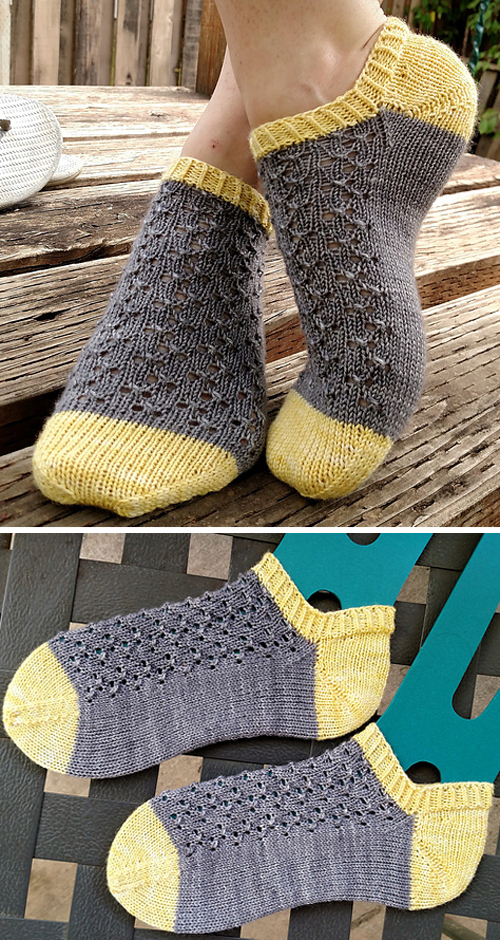
What beautiful Knitted ankle socks with lace (Free Pattern)! I like these socks...Very speedy to knit (because of not having a leg).

Full Post: Neptunia Socks

Adult Ribbed Slipper Boots – Free Two-Needle Knitting Pattern + Video

Adult Ribbed Slipper Boots free two needle knitting pattern by Katerina Mushin

These Adult Ribbed Slipper Boots by Katerina Mushin are cozy knitted house slippers featuring a textured ribbed cuff and a comfortable bootie-style shape.

One of the most appealing features of this design is that the slippers are worked on two knitting needles, making them an interesting alternative for knitters who prefer flat knitting to traditional sock construction on double-pointed needles.

The original pattern and accompanying video are still available free from Prjaga, the source originally featured by Amazing Knitting.

Design: Katerina Mushin. Featured photo/source: Prjaga.

Adult Ribbed Slipper Boots Pattern Overview

  • Designer: Katerina Mushin
  • Project: Adult slipper boots / house slippers
  • Construction: Worked flat on two needles
  • Sizes: 35–36 (37–38, 39–40)
  • Yarn: Alize Superlana Midi
  • Fiber: 25% wool, 75% acrylic
  • Yarn weight: 100g / 170m
  • Needles: 6.5 mm and 5.5 mm
  • Additional tool: Crochet hook
  • Main techniques: Ribbing, garter stitch, shaping and seaming
  • Pattern format: Written instructions + video
  • Availability: Free

About the Ribbed Slipper Boots

These slippers combine the comfort of knitted house shoes with the extra coverage of a short boot.

The tall textured cuff wraps around the ankle, while the foot develops below it into a shaped slipper with a defined upper, toe and sole.

The contrast between the ribbed cuff and simpler knitted sections gives the finished slippers plenty of texture without requiring an elaborate colorwork design.

Three Adult Sizes

The original pattern provides three women's size ranges:

  • 35–36
  • 37–38
  • 39–40

The original video demonstrates the 39–40 size.

Because knitted footwear depends heavily on gauge and yarn thickness, follow the stitch counts for your chosen size and compare the developing slipper with the intended foot whenever possible.

Yarn

Katerina Mushin's original version uses Alize Superlana Midi, a yarn containing 25% wool and 75% acrylic with approximately 170 meters per 100g.

The pattern calls for approximately:

  • 80g of Yarn A
  • 20g of Yarn B

Using two colors highlights the different sections of the slipper and makes the cuff and foot details stand out.

Needles and Tools

The original instructions specify:

  • 6.5 mm knitting needles
  • 5.5 mm knitting needles
  • Crochet hook
  • Yarn needle for seaming and finishing

The crochet hook is used as part of the cast-on method demonstrated in the original pattern.

Worked on Two Needles

A major advantage of this project is that the slipper boots are knitted on two needles.

Many sock patterns require double-pointed needles, Magic Loop or another method for working small circumferences in the round. This design instead develops through flat knitted sections that are shaped and later joined.

That makes the construction particularly interesting for knitters who enjoy flat knitting but want to experiment with handmade footwear.

The Textured Cuff

The tall cuff is one of the most recognizable features of the design.

Alternating knit and purl stitches create vertical texture, while another textured section gives the upper part of the slipper additional depth.

The substantial cuff also provides extra ankle coverage compared with a low-cut knitted slipper.

How the Slipper Is Constructed

The project develops through several distinct sections rather than being knitted as a simple rectangle.

After the cuff is established, the knitting moves into the central section that forms the upper part of the foot.

The toe is then shaped with decreases. Stitches are picked up along the sides of the upper section so that the foot and sole can continue to develop.

Finally, the sole is shaped with additional decreases before the slipper is seamed.

Garter Stitch Around the Foot

Garter stitch is used in parts of the foot construction.

Because garter stitch creates a flexible fabric with horizontal ridges, it works well alongside the more pronounced vertical texture of the cuff.

The combination gives the slipper visual interest while keeping much of the construction based on familiar knit stitches.

Toe Shaping

The toe is shaped gradually with decreases on both sides of the central foot section.

This changes the flat knitted section into a more foot-like shape before additional stitches are picked up along its edges.

Follow the original instructions carefully because the stitch counts vary between the three sizes.

Shaping the Sole

After stitches have been picked up around the foot, the pattern uses a series of decreases to shape the sole.

The final construction is completed with seaming along the foot, heel and cuff.

A neat but flexible seam is particularly important for slippers because a bulky seam can become uncomfortable underneath the foot.

Useful Skills for This Project

Before beginning, it is helpful to be comfortable with:

  • Casting on
  • Knitting and purling
  • Working flat on two needles
  • Ribbed stitch patterns
  • Garter stitch
  • Knitting two stitches together
  • Left-leaning decreases
  • Picking up stitches
  • Following different stitch counts for multiple sizes
  • Seaming knitted fabric
  • Weaving in yarn ends

Tips for Knitting Better-Fitting Slippers

Use the correct size instructions. The stitch counts change between sizes, particularly around the upper foot and sole.

Keep your tension consistent. The slipper needs enough stretch for comfort without becoming so loose that it moves around on the foot.

Count picked-up stitches carefully. Picking up the correct number along each side helps keep the foot symmetrical.

Make notes while knitting the first slipper. This makes it easier to reproduce the same tension and finishing choices on the second slipper.

Check the seam. A smooth seam is particularly important around the sole and heel where bulky finishing may be felt while walking.

Consider a Non-Slip Finish

Like many handmade knitted slippers, the finished fabric can slide on smooth floors.

If these slippers will be worn regularly on tile, polished wood or another smooth surface, consider adding an appropriate non-slip slipper sole or purpose-made non-slip treatment.

Why These Adult Slipper Boots Are Worth Knitting

This project offers considerably more construction interest than a basic rectangular slipper while still allowing the majority of the work to be done on two needles.

The combination of ribbing, garter stitch, picked-up stitches and shaping provides useful practice with several techniques in one relatively compact project.

The tall cuff also makes the finished slippers particularly appealing for cold-weather lounging at home.

Get the Free Adult Slipper Boots Pattern + Video

The complete pattern is currently available free from Prjaga and is credited to Katerina Mushin.

The original source includes the written instructions and a video tutorial. Use it for the complete stitch counts, shaping sequence and finishing instructions.

Get the Free Pattern + Video →

More Free Sock & Slipper Knitting Patterns

Looking for another cozy footwear project? Explore our collection of free socks, slippers and booties:

Explore 8 Free Sock & Slipper Knitting Patterns →

Pattern Availability

Amazing Knitting links readers to legitimate designer or publisher sources whenever possible. Pattern prices, download locations and availability can change after an article is published.

Read Our Pattern Availability Policy →

Amazing Knitting is an independent pattern discovery and project-guide site. The Adult Ribbed Slipper Boots design and original instructions belong to Katerina Mushin and their respective publisher. This guide provides project information and directs knitters to the original pattern rather than reproducing the complete instructions.

Pavo Slipper Socks - Knitting Pattern

Pavo Slipper Socks - Knitting Pattern
Photos above © Interweave Knits
What beautiful knit slipper socks pattern! I found it on Pinterest...
Ankle high slippers with cables running up the side. Knit in worsted weight yarn. Designed by Chrissy Gardiner. Customize the size by using a different weight of yarn.

Full Post: Pavo Slipper Socks

Skimmer Socks Revisited – Free No-Show Sock Knitting Pattern

Skimmer Socks Revisited free no-show sock knitting pattern by Sheila Toy Stromberg

Skimmer Socks Revisited by Sheila Toy Stromberg is a clever free knitting pattern for low-cut, no-show socks designed to sit comfortably inside shoes while still providing a secure knitted fit.

Unlike traditional ankle socks, the upper portion is kept deliberately low. The pattern uses toe-up construction, short-row shaping and a ribbed back section to create a sock that covers the foot without extending far above the shoe line.

The updated version includes six sizes and is designed to accommodate a wide range of feet, from larger children through adult sizes. The designer also provides a free tutorial video for knitters who are learning toe-up sock construction.

Design and original pattern © Sheila Toy Stromberg.

Skimmer Socks Revisited Pattern Overview

  • Designer: Sheila Toy Stromberg
  • Pattern: Skimmer Socks Revisited
  • Craft: Knitting
  • Category: No-show socks / footie socks
  • Published: May 2018
  • Construction: Toe-up, worked in the round
  • Sizes: Extra Small, Small, Medium, Large, Extra Large and Extra-Extra Large
  • Arch circumference: Approximately 5.75–10.75 in / 14.5–27.5 cm depending on size
  • Yarn weight: Fingering / sock weight
  • Suggested yarn: Hedgehog Fibres Sock
  • Yardage: Approximately 125–185 yd / 115–170 m
  • Main needles: US 1 / 2.25 mm
  • Smaller needles: US 0 / 2 mm
  • Gauge: Approximately 32–34 stitches × 40 rows = 4 in / 10 cm in stockinette stitch
  • Main techniques: Judy's Magic Cast-On, knitting in the round, increases, decreases, short rows and picking up stitches
  • Language: English
  • Pattern availability: Free from the designer

A No-Show Sock Designed for Real Shoes

The main appeal of Skimmer Socks Revisited is the low-profile shape. Traditional hand-knit socks often extend well above the ankle, but this design is intended to disappear almost completely inside many everyday shoes.

That makes the pattern useful when you want the comfort of hand-knit socks without a tall cuff showing above sneakers, loafers or other low-cut footwear.

The sock still includes a structured back section to help protect the heel from rubbing while helping the finished sock stay in position.

Why the Revisited Version Is Different

Skimmer Socks Revisited is an updated version of Sheila Toy Stromberg's earlier Skimmer Socks design.

The designer created the original pattern after finding very few no-show sock patterns available in a broad range of sizes. Several years later, she reworked the design with improved shaping and a larger size range.

The revised version is intended to fit many different feet, including larger children, teens and adults.

Choosing the Right Size

Unlike some sock patterns that rely only on shoe size, Skimmer Socks Revisited places particular importance on arch circumference and foot length.

The available arch measurements are approximately:

  • Extra Small: 5.75 in / 14.5 cm
  • Small: 6.75 in / 17 cm
  • Medium: 7.75 in / 19.5 cm
  • Large: 8.75 in / 22 cm
  • Extra Large: 9.75 in / 25 cm
  • Extra-Extra Large: 10.75 in / 27.5 cm

Because knitted socks usually rely on some negative ease for a secure fit, taking accurate measurements before choosing a size is especially important.

Toe-Up Construction

These socks are knitted from the toe upward.

The project begins with Judy's Magic Cast-On, a popular method for starting toe-up socks because it creates a smooth, nearly seamless beginning at the toe.

After the toe is established, increases shape the front of the foot and the sock continues in the round toward the heel.

Heel Shaping

The pattern includes shaped heel construction designed specifically for the low-cut profile of the sock.

Short rows are used during the shaping process, along with picked-up stitches to form the surrounding structure.

This is one of the areas where working carefully is worthwhile. A well-fitted heel helps prevent a no-show sock from sliding downward inside the shoe.

The Ribbed Back Section

A taller ribbed section at the back of the heel is one of the practical features of the design.

It provides additional coverage where the shoe may rub against the back of the foot while helping the knitted sock remain secure.

The ribbing also gives the fabric elasticity, allowing it to stretch over the foot without making the entire sock tall.

Yarn Requirements

The pattern uses approximately 125–185 yards / 115–170 meters of sock-weight yarn depending on the selected size.

This relatively small yardage makes Skimmer Socks Revisited an excellent project for using leftover fingering-weight yarn from larger sock projects.

The sample was knitted with Hedgehog Fibres Sock, but another suitable fingering-weight sock yarn can be used as long as you can achieve the required gauge and produce a durable fabric.

Why Sock Yarn Works Well

Sock yarn is generally designed to create a thin but durable fabric suitable for frequent wear.

A smooth fingering-weight yarn also allows the sock to remain relatively low-bulk inside shoes, which is particularly important for a no-show design.

If substituting yarn, choose one that provides enough elasticity and abrasion resistance for footwear.

Needles and Notions

  • US 1 / 2.25 mm circular or double-pointed needles
  • US 0 / 2 mm circular or double-pointed needles
  • 1 locking stitch marker
  • Small stitch holder
  • Tapestry needle

The exact needle size may need to change depending on your individual tension. The goal is to achieve the pattern gauge rather than automatically using the listed needle size.

Skills You'll Use

  • Knitting in the round
  • Judy's Magic Cast-On
  • Toe-up sock construction
  • Basic increases
  • Basic decreases
  • Short-row shaping
  • Picking up stitches
  • Stockinette stitch
  • Ribbing
  • Measuring for sock fit
  • Finishing and weaving in ends

Is This a Good First Sock Pattern?

The designer describes Skimmer Socks Revisited as suitable for experienced knitters who are beginners to sock knitting.

That is a useful distinction. Someone who already feels comfortable knitting in the round and following shaping instructions may find this a very approachable introduction to toe-up socks.

A complete beginner may want to practice circular knitting and basic increases or decreases before beginning.

Free Video Tutorial

Sheila Toy Stromberg also created a tutorial video for Skimmer Socks Revisited to help knitters understand the construction.

The video is particularly useful if you are new to toe-up socks or would like to see how the shaping develops before attempting the pattern yourself.

Watch the Skimmer Socks Tutorial →

Tips for a Better Fit

Measure the foot before choosing a size. Arch circumference and foot length are more reliable than choosing only by shoe size.

Check your gauge. Socks rely heavily on accurate gauge because even a small difference can noticeably change the fit.

Keep the fabric firm. A sock fabric that is too loose may stretch excessively during wear.

Pay close attention to the heel. Correct heel shaping is especially important in a no-show design because the sock needs to stay securely around the back of the foot.

Try the sock on as you work. One advantage of toe-up construction is that you can check the developing length before completing the upper section.

Is Skimmer Socks Revisited a Free Knitting Pattern?

Yes. Skimmer Socks Revisited is currently available as a free knitting pattern directly from designer Sheila Toy Stromberg.

The designer's official page currently lists the pattern at $0.00 and provides access to the pattern together with sizing, materials and tutorial information.

Because the official designer source is available and the exact pattern is still free, Amazing Knitting links directly to that source rather than to third-party pattern copies.

Get the Free Skimmer Socks Revisited Pattern →

Why These Socks Are Worth Knitting

Skimmer Socks Revisited fills an unusual niche in hand-knit footwear. Instead of producing another conventional ankle or crew sock, it gives knitters a practical no-show option designed specifically for low-cut shoes.

The broad size range, small yarn requirement and free tutorial make it especially appealing if you want to learn toe-up sock construction or use leftover fingering-weight yarn.

It is also a useful pattern to keep available once you find your preferred size because additional pairs can be made from many different sock yarns and color combinations.

Pattern Availability

Amazing Knitting links readers to legitimate designer or publisher sources whenever possible. Pattern prices, download locations and availability can change after an article is published.

Read Our Pattern Availability Policy →

Amazing Knitting is an independent pattern discovery and project-guide site. The Skimmer Socks Revisited design and knitting pattern remain the intellectual property of Sheila Toy Stromberg. This guide does not reproduce the designer's complete row-by-row pattern instructions.

Spruce Socks – Spruce Tree Sock Knitting Pattern

Spruce Socks knitting pattern by Kaitlin Barthold with spruce tree ankle detail

Spruce Socks. Photos © Originally Lovely

Spruce Socks by Kaitlin Barthold of Originally Lovely are a beautifully detailed pair of top-down knitted socks featuring tiny spruce trees along the outer ankle.

Designed with fingering-weight sock yarn, these socks combine classic sock construction with slipped stitches and small cable techniques to create the distinctive evergreen motif. The pattern includes four adult sizes from S through XL and instructions for either Magic Loop or double-pointed needles.

Spruce Socks Pattern Details

  • Designer: Kaitlin Barthold / Originally Lovely
  • Published: December 2018
  • Craft: Knitting
  • Category: Adult mid-calf socks
  • Pattern availability: Paid digital pattern
  • Sizes: S, M, L and XL
  • Finished foot circumference: 7, 8, 9 and 10 inches
  • Yarn weight: Fingering / sock yarn
  • Yardage: Approximately 330–450 yards (302–411 m)
  • Needles: US 1 (2.25 mm)
  • Gauge: 32 stitches = 4 inches (10 cm) in stockinette stitch
  • Construction: Top down, worked in the round
  • Heel: Heel flap and gusset
  • Toe: Shaped with decreases and finished with Kitchener stitch
  • Techniques: Slipped stitches, small cables, increases and decreases
  • Methods: Magic Loop or double-pointed needles
  • Language: English

Spruce Tree Detail at the Ankle

The feature that makes these socks immediately recognizable is the spruce tree motif positioned on the outer ankle.

Instead of using traditional stranded colorwork, the design creates texture within a single-color sock using slipped stitches, increases, decreases and small cable movements.

The result is subtle enough for everyday wear but detailed enough to make the socks especially attractive for winter and holiday knitting.

A Festive Sock Without Traditional Colorwork

Spruce Socks are a particularly interesting choice if you love the look of seasonal knitted motifs but don't necessarily want to manage several yarn colors at once.

The spruce trees are formed through stitch manipulation rather than conventional stranded knitting.

This allows the tree motif to emerge from the texture of the knitted fabric itself.

Four Adult Sizes

The pattern includes four sizes: S (M, L, XL).

Finished foot circumferences are approximately:

  • Small: 7 inches
  • Medium: 8 inches
  • Large: 9 inches
  • XL: 10 inches

The designer provides approximate women's and men's US shoe-size guidance as well, making this a versatile unisex sock pattern.

Women's and Men's Sizing

Approximate women's US shoe sizes are:

  • S: 3–6
  • M: 6–9
  • L: 8–12
  • XL: 12+

Approximate men's US shoe sizes are:

  • S: 6–8
  • M: 8.5–10
  • L: 10.5–12
  • XL: 12.5–14

Foot circumference is generally the more useful measurement when selecting your pattern size, while foot length can be adjusted during knitting.

Top-Down Sock Construction

Spruce Socks are constructed one at a time from the cuff down.

After the cuff and decorative ankle section are completed, the pattern transitions into a traditional heel-flap construction.

The gusset is then formed before the foot continues in stockinette stitch toward the toe.

Why the Tree Placement Matters

The spruce tree design is intended to sit on the outer ankle of each sock.

This means the left and right socks need slightly different positioning when the knitting reaches the heel section.

The pattern includes separate adjustment instructions so that after the heel flap is positioned, the decorative trees remain on the outside of each ankle rather than both appearing on the same side.

Traditional Heel Flap and Gusset

The heel uses a classic heel flap, heel turn and gusset construction.

This is a useful technique to learn because heel-flap socks offer a familiar fit and make it possible to reinforce the back of the heel through slipped stitches.

After turning the heel, stitches are picked up along the heel flap and gusset decreases gradually return the sock to its original stitch count.

Adjustable Foot Length

Once the heel and gusset are complete, the foot is worked in stockinette stitch.

This section can be adjusted to suit the wearer's actual foot length. The designer instructs knitters to begin the toe shaping before reaching the desired total length.

This is particularly useful because shoe size alone doesn't always provide the best indication of knitted sock length.

Kitchener Stitch Toe

After the toe decreases are complete, the remaining stitches are grafted together using Kitchener stitch.

Grafting creates a smooth join across the toe rather than a bulky seam, which is especially desirable for socks that will be worn inside shoes.

Magic Loop or Double-Pointed Needles

The pattern is written so you can knit the socks using either Magic Loop or double-pointed needles (DPNs).

Both methods use US 1 (2.25 mm) needles, or the size required to achieve the correct gauge.

This flexibility lets you use whichever small-circumference knitting technique you find most comfortable.

Fingering-Weight Sock Yarn

Spruce Socks use approximately 330–450 yards (302–411 m) of fingering-weight yarn, depending on size and any length adjustments.

The original sample was shown in Kenyarn Cirrus Fingering in the Sitka Spruce colorway.

A fingering-weight wool blend containing nylon is a practical choice for socks because it combines warmth with additional durability.

Choosing a Substitute Yarn

You don't need to use the original yarn to make Spruce Socks.

Look for a fingering-weight sock yarn that can produce the required gauge of 32 stitches per 4 inches in stockinette.

Because the spruce motif relies on visible stitch texture, a solid, tonal or lightly variegated yarn may show the trees more clearly than a very busy multicolored yarn.

Gauge

The specified gauge is:

32 stitches = 4 inches (10 cm)
in stockinette stitch

Gauge is particularly important for socks because even a relatively small difference can noticeably change the finished circumference.

If necessary, adjust your needle size rather than automatically using the needle listed in the pattern.

Skills Used in Spruce Socks

Useful techniques for this project include:

  • Knitting and purling
  • Knitting in the round
  • Magic Loop or double-pointed needles
  • Slipped stitches
  • Simple cable techniques
  • Increasing and decreasing
  • Heel-flap construction
  • Turning a heel
  • Picking up stitches
  • Gusset decreases
  • Toe shaping
  • Kitchener stitch

Are Spruce Socks Beginner Friendly?

Spruce Socks are best suited to a knitter who is already comfortable with basic knitting and wants to develop more sock-knitting skills.

The pattern combines small-circumference knitting, slipped stitches, simple cables, heel construction, picking up stitches and Kitchener grafting.

If you have already made a basic pair of socks, this can be an especially enjoyable next project because the construction remains familiar while the spruce motif introduces something new.

Great for Winter and Holiday Knitting

The tiny evergreen trees naturally give Spruce Socks a festive winter character.

They can work beautifully as Christmas socks without relying on bright red-and-green colorwork, especially when knitted in forest green, charcoal, cream or another wintry shade.

The same understated motif also makes them wearable throughout the colder months rather than limiting them to the holiday season.

A Beautiful Handmade Gift

A pair of hand-knitted socks makes a thoughtful gift, and the spruce detailing gives this design an extra handmade touch.

Because the pattern includes four circumferences and guidance for both men's and women's shoe sizes, you have considerably more sizing flexibility than with a one-size sock pattern.

Why Knit the Spruce Socks?

Spruce Socks combine a dependable top-down sock construction with an unusual textured motif that makes the finished pair instantly recognizable.

The slipped-stitch spruce trees provide visual interest without requiring traditional stranded colorwork, while the heel flap, gusset and grafted toe give you a classic sock structure.

With four adult sizes, adjustable foot length and instructions for both Magic Loop and DPNs, the pattern also offers useful flexibility for different knitters and recipients.

Get the Spruce Socks Knitting Pattern

The complete Spruce Socks by Kaitlin Barthold of Originally Lovely are currently available as a paid digital knitting pattern from the designer's Ravelry store.

Get the Spruce Socks Knitting Pattern →

This pattern is not currently free. Pattern availability and pricing on external websites may change over time.

Discover More From the Archive

A fresh mix of knitting patterns and tutorials from the Amazing Knitting archive.

Finding patterns from the archive…