Skip to content

...

Showing posts sorted by relevance for query baby sweater cardigan. Sort by date Show all posts

Trellis Baby Sweater – Free Cable Cardigan Knitting Pattern

Trellis Baby Sweater free cable cardigan knitting pattern by Britta Stolfus Rueschhoff

Trellis by Britta Stolfus Rueschhoff is a classic baby cardigan featuring decorative cables, seed stitch and a cozy shawl collar. Originally published in Knitty in 2005, the design remains a popular choice for knitters who enjoy traditional texture and structured garment knitting.

The sweater is worked in pieces from the bottom up and then seamed together. Its most distinctive feature is the repeating trellis cable motif, which creates a rich textured surface across the body while the shawl collar gives the cardigan a timeless, polished look.

The complete Trellis pattern is still available free from its original publisher, Knitty.

Design and original pattern © Britta Stolfus Rueschhoff.

Trellis Baby Sweater Pattern Overview

  • Designer: Britta Stolfus Rueschhoff
  • Pattern: Trellis
  • Craft: Knitting
  • Category: Baby cardigan / sweater
  • Published: March 2005
  • Original publication: Knitty, Spring 2005
  • Sizes: 6, 12 and 18 months
  • Finished chest: Approximately 21, 23 and 25 in
  • Finished length: Approximately 11, 12 and 13 in
  • Yarn weight: Aran
  • Suggested yarn: Rowan All Seasons Cotton
  • Yardage: Approximately 392–490 yd / 358–448 m
  • Needles: US 7 / 4.5 mm
  • Gauge: 21 stitches and 28 rows = 4 in / 10 cm in pattern
  • Construction: Bottom up, worked flat and seamed
  • Main techniques: Cables, seed stitch, shaping, seaming and shawl collar construction
  • Pattern availability: Free

A Classic Baby Cardigan With Trellis Cables

The feature that makes Trellis immediately recognizable is its all-over cable texture.

The cable motifs form repeated interlocking shapes across the knitted fabric, creating the visual effect of a trellis or lattice.

This gives the sweater much more depth than a plain stockinette cardigan while still keeping the overall design traditional and suitable for either boys or girls.

The 18-Row Cable Repeat

The central texture is built around an 18-row repeating cable pattern.

Although that sounds long compared with a simple rib repeat, cable patterns often become much easier once the structure begins to appear in the fabric. The growing cables themselves provide visual clues about where you are in the repeat.

It is still worth keeping a row counter nearby, especially during the first few repeats.

Seed Stitch Details

Trellis combines the cable pattern with seed stitch, which adds another layer of texture without competing with the main cable motifs.

Seed stitch alternates knit and purl stitches to create a small pebbled surface. In this design, it helps frame the more pronounced cable sections and gives the cardigan a carefully finished look.

The Shawl Collar

A shawl collar is one of the most attractive features of Trellis.

Unlike a simple ribbed neckline, the collar creates extra fabric around the neck and front opening, giving the sweater a warm, jacket-like appearance.

This style works especially well with the traditional cable texture because both elements give the cardigan a classic hand-knit character.

How Trellis Is Constructed

The cardigan is worked flat from the bottom up.

The individual garment pieces are knitted separately and then assembled with seams. This is a more traditional sweater-construction method than seamless top-down knitting.

Because the pieces are worked flat, knitters do not need to manage the entire garment in the round while following the cable pattern.

Seamed Construction

Trellis is not a seamless cardigan. The finished pieces must be joined during the finishing stage.

Good seaming can make a major difference in the final appearance of a cable sweater. Align the row edges carefully so that the texture remains balanced across the garment.

Blocking the individual pieces before final assembly can also help make the edges easier to match.

Baby Sizes

The original pattern includes three baby sizes:

  • 6 months: approximately 21 in finished chest
  • 12 months: approximately 23 in finished chest
  • 18 months: approximately 25 in finished chest

The corresponding finished lengths are approximately 11, 12 and 13 inches.

As with any baby garment, use the finished measurements rather than relying only on the age label when selecting a size.

Yarn for the Trellis Cardigan

The original sample uses Rowan All Seasons Cotton, an Aran-weight cotton and acrylic blend.

The published yardage is approximately 392–490 yards / 358–448 meters, depending on size.

An Aran-weight yarn with clear stitch definition is a good choice for this project because the cable texture is one of the main visual features.

Choosing a Yarn Substitute

When substituting yarn, look for an Aran-weight yarn that can produce the required gauge while still showing cables clearly.

Very fuzzy yarns may hide some of the trellis definition, while a smooth wool, cotton blend or similarly structured yarn will usually make the cable crossings more visible.

For a baby garment, also consider softness, washability and durability.

Gauge

The published gauge is:

21 stitches and 28 rows = 4 in / 10 cm in the pattern stitch.

Gauge is especially important for a fitted garment because it directly affects the finished chest measurement and sleeve length.

Cable fabrics can behave differently from plain stockinette, so make your swatch in the actual pattern stitch whenever possible.

Needles

The original pattern recommends US 7 / 4.5 mm needles.

Treat that size as a starting point rather than a fixed requirement. Use whichever needle size allows you to match the published gauge with your chosen yarn.

Skills You'll Use

  • Casting on
  • Knit stitches
  • Purl stitches
  • Seed stitch
  • Working cables
  • Reading a cable chart
  • Increasing and decreasing
  • Garment shaping
  • Working flat
  • Seaming sweater pieces
  • Working a shawl collar
  • Button placement and finishing
  • Blocking

Is Trellis Beginner Friendly?

Trellis is better suited to an intermediate knitter or a confident advanced beginner ready to learn garment construction and cables.

The project combines several skills at once: cable work, pattern tracking, shaping, seaming and collar finishing.

None of these techniques is unusually difficult on its own, but together they make the sweater more involved than a basic garter-stitch baby cardigan.

Tips for Better Cable Definition

Use a smooth yarn. Clear stitch definition helps the trellis motifs remain visible.

Keep cable tension even. Avoid pulling too tightly immediately after crossing stitches.

Track the 18-row repeat. A row counter can prevent accidental misalignment between garment pieces.

Block before seaming. This can help the cable fabric relax and make the garment pieces easier to join neatly.

Check cable orientation regularly. Catching a reversed cable crossing early is much easier than fixing it several repeats later.

Tips for Neater Seams

Before assembling the cardigan, lay out the blocked pieces and make sure the edges and pattern sections align correctly.

Use consistent tension while seaming. Pulling the seam too tightly can distort the cable fabric, while a very loose seam may create visible gaps.

Take particular care where sleeves meet the body, since bulky cable fabrics can create extra thickness at garment joins.

Is Trellis a Free Knitting Pattern?

Yes. Trellis by Britta Stolfus Rueschhoff is currently listed as a free knitting pattern.

The design was originally published by Knitty in its Spring 2005 issue, and the free pattern remains associated with that original publication.

Amazing Knitting therefore directs readers to the original Knitty pattern rather than to copied PDFs or unofficial downloads.

View the Free Trellis Pattern at Knitty →

Why This Baby Cardigan Is Worth Knitting

Trellis is a strong choice if you want a baby sweater that feels more substantial and traditional than a very simple beginner cardigan.

The cables provide enough repetition to make the knitting interesting, while the seed stitch and shawl collar give the finished garment a polished, heirloom-style appearance.

It is also an excellent small-scale project for practicing techniques that transfer directly to adult cable sweaters, including chart reading, shaping, seaming and collar construction.

Pattern Availability

Amazing Knitting links readers to legitimate designer or publisher sources whenever possible. Pattern prices, download locations and availability can change after an article is published.

Read Our Pattern Availability Policy →

Amazing Knitting is an independent pattern discovery and project-guide site. The Trellis design and knitting pattern remain the intellectual property of Britta Stolfus Rueschhoff and its original publisher, Knitty. This guide does not reproduce the designer's complete row-by-row pattern instructions or charts.
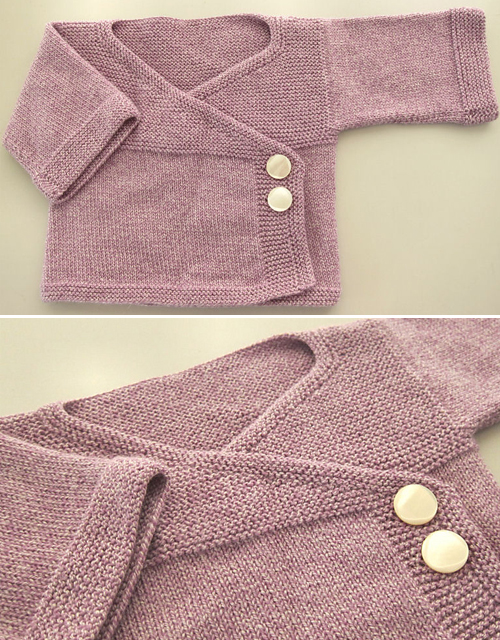
Baby Kimono - Free Knitting Pattern

Baby Kimono - Free Knitting Pattern
Photos above © Tichiro

Garter Stitch Baby Cardigan by Joji Locatelli, often known by knitters as the Garter Stitch Baby Kimono, is a sweet wrap-style baby cardigan worked almost entirely in garter stitch.

Its crossover front gives the little sweater its kimono-inspired appearance, while the simple stitch pattern makes it an appealing project for knitters ready to try a small baby garment.

✓ Free Pattern

This project is commonly referred to as the Baby Kimono, but the pattern's official name is Garter Stitch Baby Cardigan by Joji Locatelli. A free copy of the designer's original pattern remains available online.

Baby Kimono at a Glance

Official Pattern: Garter Stitch Baby Cardigan

Designer: Joji Locatelli

Craft: Knitting

Category: Baby Cardigan / Kimono-Style Sweater

Sizes: Newborn, 1–3 months, 3–6 months

Main Stitch: Garter stitch

Needles: 2.5–3 mm

Gauge: 28 stitches = 10 cm in garter stitch

Yarn: Approximately 100–150 g, depending on size

Notions: Two approximately 15 mm buttons

Availability: Free pattern

About the Garter Stitch Baby Kimono

Joji Locatelli originally wrote down this design after the knitted cardigan attracted considerable interest from other knitters.

The result is a simple wrap-style baby cardigan with overlapping fronts. Because garter stitch forms most of the fabric, the visual interest comes primarily from the shape of the garment rather than complicated stitch patterns.

The crossover construction also makes it quite different in appearance from a conventional button-front baby cardigan.

Three Baby Sizes

The original pattern includes three sizes:

  • Newborn
  • 1–3 months
  • 3–6 months

The published finished chest measurements are approximately:

  • Newborn: 40 cm / 16 inches
  • 1–3 months: 45 cm / 18 inches
  • 3–6 months: 50 cm / 20 inches

Finished total lengths are approximately 20, 24 and 26 cm (8, 9.5 and 11 inches) respectively.

When possible, choose a size from the finished measurements rather than relying only on the baby's age.

Yarn Requirements

Joji's original sample was knitted with an acrylic yarn called NUBE Dralón, which she found in Argentina.

However, the pattern specifically allows another suitable yarn to be substituted.

The approximate yarn quantities given in the original pattern are:

  • Smaller size: approximately 100 g
  • Larger sizes: approximately 150 g

Rather than choosing a substitute based only on fibre or label, make sure your yarn can produce the required gauge and a fabric appropriate for a soft baby cardigan.

Needles and Gauge

The original pattern recommends needles in the range of:

2.5–3 mm

The designer also notes that you should use whatever needle size is necessary to obtain the correct gauge.

Published gauge is:

28 stitches = 10 cm / 4 inches in garter stitch

Making a small swatch is especially worthwhile for a baby garment because even a modest difference in gauge can noticeably change such a small finished size.

Why Garter Stitch Works So Well

Garter stitch is created by knitting every row when working flat. It produces a fabric with distinctive horizontal ridges and plenty of natural stretch.

It also lies relatively flat, making it particularly useful for a wrap-style cardigan where clean edges help the overlapping fronts sit comfortably.

For a newer knitter, using one familiar stitch throughout much of the garment means more attention can be given to learning the construction and shaping.

The Kimono-Style Front

The crossover front is what gives this cardigan its familiar “baby kimono” nickname.

Rather than meeting at the center like a conventional cardigan, one front overlaps the other. The original design uses buttons together with an inside fastening to help hold the layers in position.

The pattern calls for two buttons approximately 15 mm in diameter.

Skills That Help

Useful skills for this project include:

  • Casting on
  • Garter stitch
  • Basic shaping
  • Increasing and decreasing
  • Making buttonholes
  • Picking up stitches
  • Working sleeves
  • Binding off
  • Simple finishing
  • Weaving in yarn ends

Use Joji Locatelli's original pattern for the exact stitch counts, shaping sequence, sleeve construction and finishing instructions.

A Popular Little Cardigan

One reason this design has remained recognizable for so many years is its simplicity.

Thousands of knitters have made versions of the Garter Stitch Baby Cardigan, experimenting with different yarns, colours and small finishing modifications while retaining the characteristic wrap-front shape.

That makes the Ravelry project gallery especially useful for inspiration before choosing yarn for your own version.

Choosing Yarn for a Baby Cardigan

In addition to matching gauge, consider how the finished garment will be used.

Softness matters for clothing worn close to a baby's skin, while easy washing can be valuable for an everyday garment. Also check that the finished garter-stitch fabric is not excessively dense or loose.

A smooth yarn can emphasize the simple garter ridges, while a gently heathered or subtly variegated yarn can add colour interest without competing with the clean construction.

Is the Baby Kimono Pattern Free?

Yes. The Garter Stitch Baby Cardigan pattern by Joji Locatelli was released as a free knitting pattern.

Amazing Knitting does not reproduce Joji's copyrighted row-by-row instructions. Instead, we link readers to the existing pattern source.

Get the Free Baby Kimono Pattern

The pattern is available as a PDF under its original name, Garter Stitch Baby Kimono / Garter Stitch Baby Cardigan.

View the Free Baby Kimono Pattern →

More Free Baby Cardigans

If you enjoy small wrap-style garments, continue exploring the Amazing Knitting archive for more free baby sweaters and cardigans.

Explore Free Baby Cardigan Patterns →

You can also browse free baby sweaters, newborn knitting patterns, and garter-stitch baby cardigans.

Before You Start

Choose your size from the finished measurements, make a garter-stitch gauge swatch, and check that your yarn creates a soft but stable fabric before beginning the cardigan.

Read the complete original pattern before casting on so that you understand how the overlapping fronts, sleeves and fastenings come together.

Pattern credit: Garter Stitch Baby Cardigan / Baby Kimono was designed by Joji Locatelli. The existing photographs on this Amazing Knitting page are credited to Tichiro. Amazing Knitting does not reproduce the designer's copyrighted row-by-row knitting instructions.

Favorite Cardigan Baby by PixenDk – Knitting Pattern Guide

Favorite Cardigan Baby knitting pattern by PixenDk

Favorite Cardigan Baby by PixenDk is a beautiful top-down baby and toddler cardigan featuring raglan shaping and subtle textured details across the shoulders.

The cardigan is worked while holding two strands of yarn together, creating a comfortable fabric while allowing the simple stockinette body and decorative shoulder sections to remain the focus of the design.

Pattern availability update: this pattern was originally available digitally through the designer's Ravelry store, but that source is now marked as discontinued and the digital pattern is no longer available online.

Design and featured photos: PixenDk.

Favorite Cardigan Baby Pattern Overview

  • Pattern: Favorite Cardigan Baby (ENG)
  • Designer: PixenDk
  • Published: July 2019
  • Category: Baby and toddler cardigan
  • Construction: Top-down raglan
  • Main fabric: Stockinette stitch with textured shoulders
  • Yarn: CaMaRose Yaku
  • Yarn weight: Fingering, held double
  • Gauge: 19 stitches × 27 rows = 4 in / 10 cm
  • Sizes: 0 months through 3 years
  • Pattern language: English
  • Current availability: Discontinued / no longer available online

About the Favorite Cardigan Baby

Favorite Cardigan Baby uses a classic top-down raglan construction that allows the cardigan to develop from the neckline toward the body.

Most of the garment is worked in stockinette stitch, while textured sections on the shoulders add visual interest to the otherwise clean design.

The designer also notes that the shoulder texture can be continued farther down the sleeves if you prefer a more pronounced textured effect.

Sizes

The original pattern was published in six baby and toddler sizes:

  • 0 months
  • 6 months
  • 9 months
  • 1 year
  • 2 years
  • 3 years

The approximate finished bust measurements were: 48 (54) 57 (59) 63 (65) cm.

Approximate body lengths were: 14 (16) 18 (20) 22 (24) cm.

These measurements are preserved here as useful information about the original design. They are not a replacement for the designer's complete sizing and knitting instructions.

Yarn

The featured version was knitted with CaMaRose Yaku, a 100% merino wool yarn with approximately 200 meters per 50g.

The original yarn requirements were approximately:

  • 3 skeins for the smallest sizes
  • 4 skeins for the intermediate sizes
  • 5 skeins for the largest sizes

The sample cardigan was knitted in Yaku color 1809.

The original pattern also suggested alternatives including CaMaRose Pimabomuld and Økologisk Sommeruld.

Holding Two Strands Together

An important feature of this design is that the yarn is held double while knitting.

Holding two strands of a finer yarn together produces a thicker working yarn and changes both the density and appearance of the finished fabric.

If recreating a similar cardigan with another currently available pattern, remember that simply choosing a yarn labelled with the same weight does not guarantee identical gauge.

Needles and Notions

The original published pattern information listed:

  • 3.5 mm circular needle, approximately 40 cm
  • 4 mm circular needle, approximately 60 cm
  • 4.5 mm circular needle, approximately 60 cm
  • 4 mm double-pointed needles
  • 4.5 mm double-pointed needles
  • Approximately 5–7 buttons, about 15 mm in diameter

Gauge

The documented gauge for the original design is:

19 stitches × 27 rows = 10 × 10 cm / 4 × 4 inches in stockinette stitch, holding two strands together on 4.5 mm needles.

Gauge is especially important for children's garments because it affects the finished chest circumference, sleeve proportions and overall fit.

Top-Down Raglan Construction

The cardigan is knitted from the top down using raglan shaping.

Top-down construction is popular for baby and children's sweaters because much of the garment develops as one connected piece rather than requiring several large pieces to be assembled afterward.

It can also make it easier to visualize the proportions of the garment as the body and sleeves develop.

The Textured Shoulders

Although much of Favorite Cardigan Baby is worked in simple stockinette, the shoulders introduce a contrasting textured detail.

This gives the cardigan additional visual interest without covering the entire garment in a complex stitch pattern.

According to the original description, the shoulder texture can also be continued through the full sleeve length if desired.

Useful Skills for a Similar Project

Knitters interested in top-down baby cardigans of this style will generally benefit from experience with:

  • Casting on
  • Knitting and purling
  • Working stockinette stitch
  • Raglan shaping
  • Increasing stitches
  • Working with circular needles
  • Working small circumferences
  • Making buttonholes
  • Binding off
  • Weaving in ends

Why Top-Down Baby Cardigans Are Popular

A top-down cardigan is an appealing project because the construction begins with the relatively small neckline and gradually develops into the full garment.

Baby and toddler sizes also provide an opportunity to practice garment construction on a smaller scale before committing to an adult sweater.

The button-front design makes a cardigan practical for layering, while the raglan lines give the garment a classic knitted-sweater shape.

Is Favorite Cardigan Baby Still Available?

No current authorized digital download could be verified for this exact pattern during our latest review.

The original pattern page identifies the design as Favorite Cardigan Baby (ENG) by PixenDk, but the source is now listed as out of print and the digital pattern is described as no longer available online.

For that reason, Amazing Knitting does not link to unofficial copies, reuploads or reconstructed versions of the pattern.

If PixenDk or another authorized publisher makes the exact pattern available again, this guide can be updated with the new legitimate source.

Looking for a Baby Cardigan Pattern You Can Knit Now?

You can explore our collection of baby sweaters and cardigans whose individual pattern pages provide current availability information.

Explore 9 Free Baby Sweater & Cardigan Knitting Patterns →

Pattern Availability

Amazing Knitting links readers to legitimate designer or publisher sources whenever possible. Pattern prices, download locations and availability can change after an article is published.

Read Our Pattern Availability Policy →

Amazing Knitting is an independent pattern discovery and project-guide site. Favorite Cardigan Baby and its original knitting instructions remain the intellectual property of PixenDk. This article preserves project information and does not reproduce the discontinued pattern instructions.

Storybook Baby Hoodie – Free Baby & Toddler Knitting Pattern

Storybook Baby Hoodie free baby and toddler knitting pattern by Lion Brand

Storybook Baby Hoodie. Photo © Lion Brand

Storybook Baby Hoodie is a free baby and toddler cardigan knitting pattern from Lion Brand Yarn. Worked in cozy garter stitch, this classic hooded cardigan comes in four sizes ranging from 3–6 months to 4 years.

The design uses worsted-weight yarn and simple textured garter stitch throughout. A roomy hood, long sleeves, buttoned front and playful tassel give the finished sweater its charming storybook look.

Storybook Baby Hoodie Pattern Details

  • Designer: Lion Brand Yarn
  • Pattern number: 90427AD
  • Published: January 2010
  • Craft: Knitting
  • Category: Baby and child hooded cardigan
  • Pattern availability: Free pattern
  • Sizes: 3–6 months (12–18 months, 2 years, 4 years)
  • Yarn weight: #4 Medium / Worsted
  • Suggested yarn: Lion Brand Pound of Love
  • Needles: 4 mm (US 6)
  • Crochet hook: 5 mm (US H-8), for the tassel
  • Gauge: 18 stitches + 40 rows = 4 inches (10 cm) in garter stitch
  • Main stitch: Garter stitch
  • Construction: Worked flat and seamed
  • Features: Hood, long sleeves, buttons and tassel
  • Language: English

A Classic Hooded Cardigan for Babies and Toddlers

Storybook Baby Hoodie combines the practicality of a cardigan with the extra warmth of a knitted hood. The simple garter-stitch fabric gives the sweater plenty of texture without requiring an elaborate stitch pattern.

The buttoned front makes the cardigan easy to layer over other baby clothes, while the hood and long sleeves make it especially appealing for cooler weather.

Four Baby and Child Sizes

The free Lion Brand pattern includes four sizes: 3–6 months, 12–18 months, 2 years and 4 years.

The approximate finished chest measurements are:

  • 3–6 months: 19½ inches (49.5 cm)
  • 12–18 months: 21½ inches (54.5 cm)
  • 2 years: 23 inches (58.5 cm)
  • 4 years: 25 inches (63.5 cm)

The approximate finished lengths are:

  • 3–6 months: 9½ inches (24 cm)
  • 12–18 months: 10 inches (25.5 cm)
  • 2 years: 11 inches (28 cm)
  • 4 years: 12 inches (30.5 cm)

When choosing a size, compare the finished measurements with a garment that fits the child comfortably rather than relying only on age.

Garter Stitch Knitting

One of the defining features of Storybook Baby Hoodie is its all-over garter stitch.

The pieces are worked flat, so the garter-stitch fabric is created by knitting every row. The horizontal ridges give the cardigan a soft, textured appearance while keeping the stitch pattern consistent throughout the project.

How Is the Storybook Baby Hoodie Constructed?

The main sweater body is initially worked in one piece up to the armholes. At that point, the knitting is divided to form the two fronts and the back.

The sleeves are knitted separately, and the hood is also worked as a separate piece. The completed pieces are then assembled and seamed according to the Lion Brand instructions.

Because the pieces are worked back and forth rather than in the round, the project does not require knitting the sleeves on double-pointed needles or using another small-circumference method.

Yarn for the Storybook Baby Hoodie

The original pattern uses Lion Brand Pound of Love, a #4 Medium / Worsted acrylic yarn.

Lion Brand specifies one ball of Pound of Love for the pattern. Because a Pound of Love ball contains a very generous amount of yarn, the designer notes that the specified amount is sufficient for more than one sweater.

If you substitute another worsted-weight yarn, do not simply buy one ball. Skein sizes vary dramatically between yarns, so use the pattern requirements and gauge when calculating your substitute.

For a baby or toddler cardigan, softness, durability and easy washing are useful qualities to consider when choosing yarn.

Needles and Gauge

Storybook Baby Hoodie uses 4 mm (US 6) knitting needles.

The specified gauge is: 18 stitches + 40 rows = 4 inches (10 cm) in garter stitch.

Checking gauge is particularly important for a fitted garment because it determines whether the finished chest and length measurements will correspond to the intended size.

The Hood and Tassel

The hood is one of the features that gives this cardigan its distinctive appearance. It is knitted separately and attached during finishing.

A tassel adds a playful detail to the top of the hood. Lion Brand uses a small amount of crochet when finishing the tassel, so the materials list also calls for a 5 mm (US H-8) crochet hook.

The crochet portion is only a small part of the overall project; the cardigan itself is a knitting pattern.

Buttons and Finishing

The pattern calls for two ½-inch (13 mm) buttons. These create the simple front closure while leaving the lower portion of the cardigan open.

Lion Brand also notes that the button and buttonhole placement can be reversed, allowing you to customize the front closure if desired.

Since the sweater is constructed from flat pieces, neat seaming is an important part of the finishing process. Taking time with the shoulder, sleeve and hood seams will help give the cardigan a polished appearance.

Skills Used in the Storybook Baby Hoodie

Useful techniques for this project include:

  • Garter stitch
  • Working back and forth on straight or circular needles
  • Increasing stitches
  • Dividing the body for fronts and back
  • Buttonholes
  • Basic garment shaping
  • Seaming knitted pieces
  • Attaching sleeves and a hood
  • A small amount of crochet for the tassel

About the Skill Level

Older versions of the Lion Brand pattern described Storybook Baby Hoodie as Easy+. Lion Brand's current pattern page uses its newer classification of Level 4 – Intermediate+.

Regardless of the label, it is useful to review the techniques and construction before beginning. The garter stitch itself is simple, but the project also involves garment shaping, separate sleeves and hood, buttonholes, seaming and finishing.

Why Knit the Storybook Baby Hoodie?

Storybook Baby Hoodie is a versatile children's project because the same free pattern covers both baby and toddler sizes.

Its garter-stitch texture keeps the knitting visually simple, while the hood, tassel, buttons and cardigan construction add enough detail to make the finished garment special.

It can also make a lovely handmade baby gift, especially because you can return to the same pattern in a larger size as the child grows.

Get the Free Storybook Baby Hoodie Pattern

The complete Storybook Baby Hoodie, pattern 90427AD, is currently available free from Lion Brand Yarn.

Get the Free Storybook Baby Hoodie Pattern at Lion Brand

Pattern availability was checked when this article was updated. Availability and access requirements on external websites may change over time.

Pink Lady Baby Cardigan – Free 3-Month Knitting Pattern

Pink Lady Baby Cardigan free 3 month knitting pattern by Creativa Atelier

The Pink Lady Baby Cardigan by Marta Porcel of Creativa Atelier is a charming baby sweater with an unusual sideways construction. Instead of beginning at the neckline or lower edge, the cardigan starts at one sleeve and is worked across the body before finishing with the second sleeve.

The design combines garter stitch with the reverse side of stockinette stitch, creating a soft textured contrast across the garment.

A complete step-by-step tutorial for the 3-month size is currently available free from Creativa Atelier. Additional baby and child sizes are available separately as paid PDF patterns.

Design, images and original pattern © Marta Porcel / Creativa Atelier.

Pink Lady Baby Cardigan Pattern Overview

  • Designer: Marta Porcel
  • Source: Creativa Atelier
  • Pattern: Pink Lady Baby Cardigan
  • Craft: Knitting
  • Category: Baby cardigan
  • Free size: 3 months
  • Additional paid sizes: 6, 9, 12 and 18 months; 2, 4 and 6 years
  • Construction: Sideways, from one sleeve to the other
  • Main stitches: Garter stitch and reverse stockinette
  • Yarn weight: DK / Light
  • Suggested yarn: Katia Merino Classic
  • Yarn amount for 3 months: 1 ball / 100 g / approximately 240 m
  • Needles: 4 mm straight knitting needles
  • Gauge: 20 stitches × 38 rows in garter stitch
  • Closure: One button
  • Main techniques: Knit, purl, k2tog, KFB, casting on, binding off and seaming
  • Pattern availability: Free online tutorial for size 3 months

A Baby Cardigan Worked From Sleeve to Sleeve

The most distinctive feature of Pink Lady is its construction.

Instead of starting at the neck or hem, the project begins with one sleeve. Extra stitches are then added to form the front and back of the cardigan before the knitting continues sideways across the body.

After shaping the neckline and front opening, the body is completed and the second sleeve is worked at the opposite end.

This creates a garment with vertical rather than conventional horizontal construction.

Why the Sideways Construction Is Interesting

Sideways knitting changes the direction of the stitches across the finished cardigan.

It also allows the sleeves and body to form part of one continuous piece rather than requiring separate sleeve pieces to be knitted and attached later.

For knitters who have already made traditional bottom-up or top-down baby cardigans, Pink Lady offers a noticeably different construction method.

Garter Stitch and Reverse Stockinette

The cardigan combines two simple textures: garter stitch and reverse stockinette stitch.

Garter stitch creates a soft ridged fabric, while reverse stockinette uses the purl side of traditional stockinette as the visible surface.

This contrast gives the finished cardigan a distinctive appearance without requiring cables, lace or stranded colorwork.

Yarn for Pink Lady

The free 3-month tutorial uses:

1 ball of Katia Merino Classic, 100 g / approximately 240 m.

The yarn is classified as DK / Light weight.

A similar DK yarn can be substituted as long as you can achieve a comparable gauge and create a soft fabric suitable for a baby garment.

Choosing a Yarn Substitute

For a baby cardigan, consider yarn that is:

  • Soft against the skin
  • Comfortable and flexible
  • Easy to wash
  • Suitable for 4 mm needles
  • Close to DK / Light weight

Always make a small gauge swatch when changing yarn, because differences in fiber and thickness can affect the final size.

Needles and Materials

  • 4 mm straight knitting needles
  • DK / Light yarn
  • One wooden or decorative button
  • Tapestry needle
  • Scissors

The designer notes that you may need to adjust the needle size if necessary to obtain the intended tension.

Gauge

The designer lists:

20 stitches × 38 rows in garter stitch.

Gauge is important for a baby cardigan because the construction depends on specific widths and lengths as the knitting moves sideways across the garment.

If your stitches are significantly larger or smaller, the finished cardigan may not match the intended 3-month size.

Starting With the First Sleeve

The project begins at the cuff of the first sleeve.

The sleeve is knitted to the required length before additional stitches are added at both ends to create the front and back sections of the cardigan.

From this point, the work begins to resemble a sideways garment rather than a traditional sleeve.

Shaping the Body

Once the body stitches have been added, different stitch textures are used across the row.

The central sleeve and shoulder area uses garter stitch, while sections of the body use reverse stockinette.

This contrast helps define the structure of the cardigan visually.

Creating the Neck Opening

The neckline is shaped while working across the garment.

A section of stitches is bound off to create the opening, allowing the front and back portions to be worked separately for part of the construction.

This is one of the areas where it is especially useful to follow the designer's original step-by-step tutorial carefully.

The Front Opening and Buttonhole

The cardigan has a simple front opening secured with one button.

A buttonhole is incorporated into the smaller front section before the pieces are rejoined.

The single-button closure keeps the overall design clean and minimal.

Working the Second Sleeve

After the body is complete, stitches are bound off at both sides until only the sleeve stitches remain.

The second sleeve is then knitted to match the first.

This completes the main sideways piece of the cardigan.

Finishing the Cardigan

Once the knitting is complete, the sleeve and side seams are joined with a tapestry needle.

The button is then attached to the front.

The designer also discusses an optional lower hem to help control curling along the bottom edge.

Skills You'll Use

  • Casting on
  • Knit stitch
  • Purl stitch
  • Garter stitch
  • Reverse stockinette
  • Knit two together (k2tog)
  • Knit front and back (KFB)
  • Binding off
  • Adding stitches at the edge
  • Making a buttonhole
  • Sideways garment construction
  • Seaming
  • Attaching a button

Is Pink Lady Beginner Friendly?

The individual stitches are relatively simple, so a confident beginner who already knows how to knit and purl can learn a lot from this project.

The unusual sideways construction requires more concentration than a basic rectangular project, especially around the neckline and front opening.

Fortunately, the designer provides a detailed photographic tutorial that shows how the garment develops step by step.

Free Size vs. Paid Sizes

The important availability detail is that the 3-month size is available free in the online tutorial.

Creativa Atelier also offers additional pattern sizes:

  • 3 months
  • 6 months
  • 9 months
  • 12 months
  • 18 months
  • 2 years
  • 4 years
  • 6 years

The expanded sizes and printable PDF editions are sold separately by the designer.

Is Pink Lady a Free Knitting Pattern?

Yes, the complete online tutorial for the 3-month Pink Lady Baby Cardigan is currently available free from Creativa Atelier.

Larger baby and child sizes are available as paid PDF patterns from the same designer.

Amazing Knitting therefore links directly to Creativa Atelier, the original designer source, rather than to third-party copies.

View the Free Pink Lady Baby Cardigan Tutorial →

Want Another Size?

Creativa Atelier also offers paid downloadable PDF patterns for additional baby and child sizes.

These PDFs include detailed sizing information and printable row-by-row instructions.

View All Pink Lady Size Options →

Why This Baby Cardigan Is Worth Knitting

Pink Lady stands out because it teaches a different way of thinking about garment construction.

Rather than building the cardigan vertically from neck to hem or hem to neck, the sweater grows sideways from one sleeve to the other.

The use of garter stitch and reverse stockinette also gives the design a distinctive handmade texture without adding technically difficult stitch patterns.

For knitters who already understand basic stitches and want to explore a more unusual baby sweater construction, Pink Lady is an interesting next project.

Pattern Availability

Amazing Knitting links readers to legitimate designer or publisher sources whenever possible. Pattern prices, download locations and availability can change after an article is published.

Read Our Pattern Availability Policy →

Amazing Knitting is an independent pattern discovery and project-guide site. The Pink Lady Baby Cardigan design, images and complete knitting instructions remain the intellectual property of Marta Porcel / Creativa Atelier. This guide does not reproduce the designer's complete row-by-row pattern instructions.

Pull Gaspard Baby Sweater - Knitting Pattern

Pull Gaspard - Knitting Pattern
Photo above © Christine Rouvillé

Photo above © Christine Rouvillé

Pull Gaspard by Christine Rouvillé is a distinctive baby and toddler sweater with a cozy hood, short sleeves and a large front pocket. Its unusual construction and simple textured details give it a modern look while keeping the finished garment practical for layering.

The original pattern is still available from the designer, although it is currently sold as a paid knitting pattern.

Pattern Availability Update

Pull Gaspard is currently available as a paid pattern for €4.00 EUR through Christine Rouvillé's Ravelry store. If you were looking for the original design, the authorized pattern is still available.

Looking specifically for a free baby sweater? Keep reading for free alternatives from the Amazing Knitting archive.

Pull Gaspard at a Glance

Designer: Christine Rouvillé

Craft: Knitting

Category: Baby / toddler pullover

Sizes: 6, 12, 18 and 24 months

Yarn Weight: DK

Suggested Yarn: Graine de laine Physalis

Needles: US 4 (3.5 mm)

Gauge: 22 stitches and 30 rows = 4 inches

Yardage: Approximately 393–457 yards (359–418 m)

Availability: Paid pattern

What Makes Pull Gaspard Special?

Pull Gaspard is immediately recognizable because it does not look like a conventional baby pullover. The large hood frames the neckline while the front pocket creates a strong geometric detail across the lower body.

Garter-stitch sections contrast with the smoother main fabric, adding definition without relying on complicated colorwork.

It is also designed as a layering piece, with short sleeves that allow it to be worn comfortably over another garment.

Flat or In the Round

An especially useful feature of the current pattern is the choice of construction method. Christine Rouvillé updated Pull Gaspard so the pattern now includes instructions for knitting it flat or in the round.

This gives knitters more flexibility to choose the construction method they prefer.

Yarn and Sizing

The original pattern calls for DK-weight Graine de laine Physalis. The designer indicates that two skeins are used for all listed sizes.

If substituting another DK yarn, matching the pattern gauge is more important than matching the original yarn exactly, particularly for a fitted baby or toddler garment.

Get the Original Pull Gaspard Pattern

The complete pattern belongs to Christine Rouvillé and is available through her Ravelry store. Amazing Knitting does not reproduce the designer's copyrighted instructions.

View Pull Gaspard on Ravelry →

Looking for a Free Alternative?

If you love knitting small baby garments but specifically want a free pattern, we have several verified options in the Amazing Knitting archive.

French Macaroon Baby Sweater

A charming small sweater project with an authorized free pattern currently available from the designer.

View the Free French Macaroon Baby Sweater →

Fuss Free Baby Cardigan

If you prefer a cardigan, this simple baby design is another currently verified free project from our reviewed archive.

View the Free Fuss Free Baby Cardigan →

Harvest Cardigan

For a wider size range and a classic open-front construction, Tin Can Knits' Harvest is another excellent free option.

View the Free Harvest Cardigan →

Why does this page no longer say “Free Pattern”?

Pattern availability can change over time. When Amazing Knitting reviews an older archive page and finds that the original authorized pattern is currently paid, we update the page rather than continuing to describe it as free.

Pattern credit: Pull Gaspard was designed by Christine Rouvillé. Amazing Knitting provides an independent project guide and directs knitters to the designer's authorized pattern listing. Complete copyrighted instructions are not reproduced here.

See our Pattern Availability & Editorial Policy for more information.

Harvest Cardigan - Free Pattern

Harvest Cardigan - Free Pattern
Photo above © Tin Can Knits

Harvest by Tin Can Knits is a wonderfully approachable seamless cardigan designed for the whole family. With sizes ranging from babies through adults, it is especially appealing to knitters looking for a first sweater project without complicated seaming.

Harvest is part of the well-known Simple Collection from Tin Can Knits, a series created to help knitters build their skills through practical projects. Best of all, the Harvest cardigan pattern is still available free.

✓ Free Pattern Availability

Good news: Harvest is still available as a free knitting pattern from Tin Can Knits. The current pattern has an even broader size range than the version originally featured on Amazing Knitting, extending from babies all the way through adult 6XL.

Harvest Cardigan at a Glance

Pattern: Harvest

Designer: Tin Can Knits

Collection: The Simple Collection

First Published: December 2013

Craft: Knitting

Category: Cardigan / Sweater

Yarn Weight: Worsted

Needles: US 6 / 4 mm and US 8 / 5 mm

Gauge: 18 stitches × 24 rows = 4 inches / 10 cm

Yardage: Approximately 250–2,300 yards / 229–2,103 m

Sizes: 0–6 months through adult 6XL

Construction: Seamless cardigan

Current Availability: Free pattern

About the Harvest Cardigan

Harvest was designed as an accessible introduction to sweater knitting. Instead of creating separate fronts, back and sleeves and sewing everything together at the end, the cardigan uses a seamless construction.

This makes it particularly attractive to knitters who have already made scarves, hats or other smaller projects and are ready to try their first garment.

The clean design also makes Harvest highly adaptable. A simple change of yarn colour can make the same basic cardigan appropriate for a baby, child or adult.

An Extraordinary Size Range

One of the strongest features of Harvest is its exceptionally broad sizing.

The current pattern includes:

  • 0–6 months
  • 6–12 months
  • 1–2 years
  • 2–4 years
  • 4–6 years
  • 6–8 years
  • 8–10 years
  • XS
  • S
  • S/M
  • M
  • M/L
  • L
  • XL
  • XXL
  • 3XL
  • 4XL
  • 5XL
  • 6XL

This family-friendly range means you can use the same design concept for a tiny baby cardigan, a child's sweater or a full-size adult garment.

Yarn and Yardage

Harvest is designed for worsted-weight yarn. The current pattern lists several suitable yarns, including Cascade 220, SweetGeorgia Merino Worsted, Madelinetosh Tosh Vintage, Brooklyn Tweed Shelter and other comparable worsted yarns.

Because the pattern covers such a large size range, yarn requirements vary substantially:

Approximately 250–2,300 yards / 229–2,103 metres

Always check the current pattern for the exact yardage required for your chosen size before buying yarn.

Needles

The published needle sizes are:

  • US 6 / 4 mm
  • US 8 / 5 mm

Smaller sizes use shorter circular needles, while larger adult sizes need longer circulars to comfortably accommodate the stitches.

The pattern also allows small circumferences to be worked with double-pointed needles or with the magic loop technique using a long circular needle.

Gauge

The published stockinette gauge on the larger needles is:

18 stitches × 24 rows = 4 inches / 10 cm

Gauge matters considerably in a sweater. Even when following the correct size instructions, a different stitch gauge can make the finished garment noticeably larger or smaller than intended.

Make a swatch with your chosen yarn and adjust needle size when necessary rather than assuming the recommended needle will automatically produce the correct gauge.

Why Harvest Is a Good First Cardigan

Tin Can Knits created the Simple Collection specifically around projects that help knitters develop useful skills.

Harvest is especially suitable as a first cardigan because its straightforward style allows you to concentrate on garment construction without combining it with elaborate cables, lace or colourwork.

You still learn valuable sweater-making skills while producing a garment that is practical enough to wear regularly.

Skills You Can Practice

Harvest can help build confidence with techniques such as:

  • Working a gauge swatch
  • Knitting a garment
  • Working with circular needles
  • Increasing and decreasing
  • Working sleeves
  • Knitting small circumferences
  • Using double-pointed needles or magic loop
  • Picking up stitches
  • Finishing and weaving in yarn ends

Use the official Tin Can Knits pattern and tutorials for the exact construction sequence, stitch counts and shaping instructions.

Baby, Child or Adult Harvest?

The same pattern can produce very different projects depending on the size and yarn colour you choose.

A baby Harvest can make a practical handmade gift, while children's sizes create an everyday layering sweater. The adult sizes turn the same clean design into a versatile wardrobe cardigan.

This makes Harvest particularly useful if you enjoy knitting matching or coordinating garments for several members of a family.

Choosing Yarn for Harvest

Since the cardigan has a relatively simple surface, yarn choice can have a strong influence on its final appearance.

A smooth solid yarn emphasizes the clean construction, while heathered or subtly variegated yarn can add visual interest without changing the knitting pattern itself.

For baby and children's sizes, also consider softness, durability and washing requirements. For an adult cardigan, drape and resistance to pilling may become especially important.

Is the Harvest Cardigan Still Free?

Yes. Harvest by Tin Can Knits is still available as a free knitting pattern.

The pattern can currently be obtained through the Tin Can Knits ecosystem and is also listed as a free Ravelry download.

Amazing Knitting does not reproduce the designers' copyrighted row-by-row instructions. Instead, we direct readers to the legitimate current pattern.

Get the Free Harvest Cardigan Pattern

The Ravelry pattern page provides the current free download and links back to Tin Can Knits.

Get the Free Harvest Cardigan Pattern →

More Free Cardigan Patterns

If you enjoy Harvest, continue exploring the Amazing Knitting archive for more free sweaters and cardigans.

Explore Free Cardigan Knitting Patterns →

You can also browse free baby cardigans, children's sweaters, and free sweater patterns.

Before You Start

Download the current Harvest pattern first and choose your size from the designer's finished measurements rather than age or clothing size alone. Then confirm the yarn requirement for that size and make a gauge swatch.

If this is your first cardigan, take advantage of the supporting Tin Can Knits tutorials as you work through the project.

Pattern credit: Harvest was designed by Tin Can Knits and published as part of The Simple Collection. The existing project photograph on this Amazing Knitting page is credited to Tin Can Knits. Amazing Knitting does not reproduce the designers' copyrighted row-by-row knitting instructions.

French Macaroon Baby Sweater - Free Knitting Pattern

French Macaroon Baby Sweater - Free Knitting Pattern
Photos above © The Noble Thread

French Macaroon by Caro in the City is a charming little baby and child sweater that proves a simple knitting pattern can still have plenty of personality.

The sweater uses easy garter stitch, playful color blocking and a classic boat neckline. Its straightforward flat construction also makes it an appealing project for newer knitters who are ready to make their first small garment.

With six sizes from newborn through 4 years, this is not just a tiny baby pattern you will immediately outgrow. You can return to the same design several times as a child grows — or knit a colorful set for siblings.

Best of all, French Macaroon is still available as a free pattern. This guide will help you understand the construction, yarn, sizing and useful techniques before you download the original pattern.

✓ Free Pattern Availability

French Macaroon is currently available as a free Ravelry download. Use the official pattern record linked below for the designer's complete instructions and current download.

French Macaroon at a Glance

Pattern: French Macaroon

Designer: Caro in the City

Original Source: The Noble Thread

First Published: September 2017

Category: Baby / Child Pullover

Sizes: Newborn, 3 months, 6–9 months, 12–18 months, 2–3 years, 4 years

Yarn Weight: DK

Suggested Yarn: Cascade Yarns Ultra Pima

Yardage: Approx. 300–600 yd / 274–549 m

Needles: US 5 / 3.75 mm

Gauge: 22 stitches × 44 rows = 4 in / 10 cm in garter stitch

Main Stitch: Garter stitch

Neckline: Boat neck with one-button back opening

Construction: Worked flat in two main sides

Availability: Free Ravelry download

About the French Macaroon Sweater

French Macaroon is a simple garter-stitch pullover with a distinctive two-color look.

Its uncomplicated silhouette allows the color combination to become part of the design, making it a particularly fun project if you enjoy choosing yarn colors.

The boat neckline gives the sweater a clean modern appearance, while the small button opening at the back helps make dressing easier.

Six Sizes from Newborn to 4 Years

One of the strongest features of this free pattern is its useful size range.

  • Newborn
  • 3 months
  • 6–9 months
  • 12–18 months
  • 2–3 years
  • 4 years

This gives the pattern much more longevity than a design written for only one newborn size.

If you enjoy knitting the first sweater, you can revisit the same construction later in a larger size and a completely different color combination.

Simple Garter Stitch

The sweater is primarily knitted in garter stitch, making it approachable for knitters who have mastered the basic knit stitch but are still building confidence with garment construction.

Garter stitch also creates a soft, textured fabric that works especially well with the simple shape of this little pullover.

Worked Flat

You do not need to knit the sweater body in the round.

Each side is worked as one piece, and the garment is assembled afterward. This can be reassuring for knitters who prefer straight back-and-forth knitting.

The shoulders are joined with a three-needle bind-off, followed by simple side seaming.

What Is a Three-Needle Bind-Off?

A three-needle bind-off joins two sets of live stitches while binding them off at the same time.

It creates a neat, stable join and is particularly useful at sweater shoulders.

If this technique is new to you, practice it on a small swatch first. Once understood, it is a useful skill that appears in many other knitting patterns.

The Boat Neck

French Macaroon uses a simple boat-style neckline rather than a deep traditional crew neck.

A one-button opening at the back provides additional room when dressing the baby or child.

This little construction detail is both decorative and practical.

Important Finishing Detail

Pay particular attention to the button-placket area during finishing. The designer includes a note concerning securing the free flap on the inside of the sweater.

Follow the current original pattern for the exact finishing method rather than relying on photographs alone.

Choosing Two Colors

The French Macaroon design is especially attractive when two colors create a clear contrast.

You could try:

  • A soft neutral with a bright accent
  • Two pastel shades
  • Two strong contrasting colors
  • Two tones from the same color family
  • A neutral body with a colorful upper section

Because the sweater itself is so simple, changing the color combination can make two versions of the same pattern look surprisingly different.

Suggested Yarn

The pattern record suggests Cascade Yarns Ultra Pima, a DK-weight cotton yarn.

However, the exact original yarn is less important than producing the correct gauge and a fabric suitable for a baby or child's garment.

How Much Yarn?

Published yardage ranges from approximately:

300–600 yards / 274–549 meters

The amount naturally increases with size.

If you are using two colors, consult the original pattern before buying yarn so you know how the total amount is divided between them for your chosen size.

Gauge

The published gauge is:

22 stitches × 44 rows = 4 inches / 10 cm in garter stitch

The listed needle size is:

US 5 / 3.75 mm

Use the needle size that gives you the required gauge rather than assuming every knitter will obtain the same fabric with 3.75 mm needles.

Gauge Matters on Baby Sweaters

A small difference in gauge can become significant in a small garment.

If your stitches are substantially larger than the designer's gauge, the sweater may fit more like the next size up. If they are smaller, the finished garment can become unexpectedly tight.

Make a garter-stitch swatch with your chosen yarn before beginning, particularly when substituting yarn.

Choosing a Baby-Friendly Yarn

When substituting yarn, consider how the finished sweater will actually be used.

Useful qualities include:

  • Softness
  • Comfort against sensitive skin
  • Easy washing
  • Good stitch definition
  • Appropriate drape
  • Colorfastness

Easy-care yarn can be particularly welcome when the sweater is intended as a frequently worn baby gift.

A Good First Garment Project

French Macaroon is an interesting step between basic rectangular projects and more complicated sweater construction.

The knitting itself remains repetitive and approachable, while the project introduces several garment-making concepts:

  • Following garment measurements
  • Changing colors
  • Creating a neckline
  • Joining shoulders
  • Seaming sides
  • Adding a button
  • Finishing a wearable neatly

Those skills can prepare you for more advanced baby and adult sweater patterns later.

Keep Your Edges Neat

Because the garment is assembled after knitting, clean edges will make the final seaming easier.

Try to maintain consistent tension at the beginning and end of each row.

Avoid pulling the first stitch excessively tight, as this can make the edge harder to seam evenly.

Check Measurements as You Knit

With garter stitch it can be tempting to count rows and continue without measuring.

Instead, periodically compare your work with the measurements in the pattern.

Yarn, washing and individual knitting tension can all influence how the fabric behaves.

Secure the Button Carefully

Because this is a baby and child garment, attach the back button very securely.

Check it periodically during use and replace it if it ever becomes loose.

Good finishing is especially important when small decorative components are used on children's clothing.

A Matching Free Hat Exists Too

If you want to turn French Macaroon into a coordinated gift set, Tiny Tot by Kristen Rettig was designed as a matching hat for the sweater.

Tiny Tot is also currently available as a free pattern and includes sizes from newborn through child.

View the Free Tiny Tot Matching Hat →

Is French Macaroon Still Free?

Yes.

The French Macaroon pattern is currently listed as a free Ravelry download.

Amazing Knitting does not reproduce the designer's complete copyrighted instructions. Use the current Ravelry pattern page for the original instructions, exact stitch counts and finishing details.

Get the Free French Macaroon Pattern

Visit the current pattern record for the free download:

Get the Free French Macaroon Pattern →

More Free Baby Sweater Patterns

If you like simple baby garments, continue with these free patterns already verified in the Amazing Knitting archive:

Or browse more:

Before You Start

Choose your size first, then check the current original pattern for the required yarn quantities and measurements.

Make a garter-stitch gauge swatch, especially if you are substituting yarn, and decide on your two colors before casting on.

Pay attention to the shoulder join and back button-placket finishing. Those small finishing details are what turn two simple pieces of garter stitch into a polished little sweater.

And if you enjoy the first one, the six-size range makes French Macaroon an excellent pattern to revisit in new colors as the child grows.

Pattern credit: French Macaroon was designed by Caro in the City and originally published through The Noble Thread in 2017. The existing photographs on this Amazing Knitting page are credited to The Noble Thread. Amazing Knitting provides an independent project guide and does not reproduce the designer's complete copyrighted knitting instructions.

Lullaby Layette - Free Baby Knitting Pattern

Lullaby Layette - Free Pattern
Photo above © Lion Brand

Lullaby Layette by Lion Brand Yarn is a beautiful coordinated baby knitting set featuring four matching projects: a cardigan, hat, booties and baby blanket.

A delicate eyelet pattern ties the entire collection together, creating a classic lace-inspired look that works especially well for a handmade baby gift or coordinated newborn wardrobe.

You can knit the complete layette as a matching set or choose just one piece, such as the cardigan or blanket, as a standalone project.

Best of all, the original Lullaby Layette pattern is still officially available for free.

✓ Free Pattern Availability

Lion Brand's Lullaby Layette (Pattern #90060AD) remains available as a free knitting pattern. Current authorized sources include Lion Brand, and the pattern is also listed as free through Ravelry and LoveCrafts.

Important Pattern Update

Lion Brand has published corrections to this pattern over the years, including corrections applied in 2010 and 2021. If you have an older saved or printed copy, compare it with the current official version before beginning.

Lullaby Layette at a Glance

Pattern: Lullaby Layette / Aqua Layette Set

Designer / Publisher: Lion Brand Yarn

Pattern Number: 90060AD

First Published: January 2002

Projects: Cardigan, hat, booties and baby blanket

Suggested Yarn: Lion Brand Baby Soft

Yarn Weight: DK

Total Published Yardage: Approx. 1836 yd / 1679 m for the set

Cardigan Sizes: 3–6 months, 12 months, 24 months

Hat: One size

Booties: One size

Blanket: Approx. 22 × 33 in / 56 × 84 cm

Main Feature: Eyelet lace pattern

Availability: Free

What's Included in the Lullaby Layette?

Unlike a single baby garment pattern, Lullaby Layette gives you a coordinated collection of four projects:

  • A buttoned baby cardigan
  • A matching hat
  • A pair of baby booties
  • A rectangular baby blanket

The shared eyelet texture makes the individual pieces look like a deliberately coordinated set.

You do not have to knit all four pieces. The pattern is also useful when you simply want one matching baby accessory or garment.

The Eyelet Pattern

The defining feature of Lullaby Layette is its repeating eyelet texture.

Small openings created through lace-knitting techniques give the fabric a light decorative appearance without turning the projects into extremely open lace.

Because the same visual language appears throughout the set, the cardigan, hat, booties and blanket look especially attractive when made in the same yarn and color.

Cardigan Sizes

The cardigan is written in three sizes:

  • 3–6 months
  • 12 months
  • 24 months / 2 years

The published finished chest measurements are approximately:

18 (22, 26) in / 45.5 (56, 66) cm

Finished lengths are approximately:

10 (12, 14) in / 25.5 (30.5, 36.5) cm

Always compare the finished measurements with the intended baby's measurements rather than choosing a size only by age.

Baby Blanket Size

The finished blanket measures approximately:

22 × 33 inches / 56 × 84 cm

This compact size makes it a manageable baby project and also allows the eyelet texture to remain the main decorative feature.

Hat and Booties

The matching hat and booties are listed in one size.

They can be knitted as part of the complete set or paired with the cardigan for a smaller coordinated baby gift.

Original Yarn

The pattern was designed for Lion Brand Baby Soft, a DK-weight baby yarn.

The Ravelry pattern record lists approximately:

1836 yards / 1679 meters

for the complete set.

If you plan to make only one item, consult the current official pattern for the materials required for that specific piece.

Choosing a Substitute Yarn

You do not need to match only the brand name when choosing a substitute.

More important considerations include:

  • DK yarn weight
  • Correct gauge
  • Softness against baby's skin
  • Washability
  • Good eyelet stitch definition
  • Suitable fiber content
  • Enough yardage for your chosen pieces

Make a gauge swatch before committing to the full project, especially when substituting yarn.

Cardigan, Hat and Booties Gauge

For the smaller pieces, the published eyelet-pattern gauge is:

24 stitches × 32 rows = 4 in / 10 cm

using the specified US 4 / 3.5 mm needle.

Blanket Gauge

The blanket uses a different gauge:

22 stitches × 34 rows = 4 in / 10 cm

in the eyelet pattern with approximately US 6 / 4 mm needles.

Do not assume that the same needle size is used for every item in the layette.

Why Gauge Matters

Gauge is particularly important for the cardigan because it determines whether the finished garment matches the intended chest measurement.

It also affects the booties and hat, where even a relatively small difference in stitch size can noticeably change the finished dimensions.

For the blanket, gauge affects both finished size and yarn usage.

A Useful Introduction to Eyelet Knitting

If you already know basic knitting and purling, this set gives you an opportunity to practice decorative openwork across several different project types.

Useful skills include:

  • Knitting and purling
  • Working yarn overs
  • Working decreases
  • Maintaining an eyelet repeat
  • Checking gauge
  • Garment shaping
  • Finishing and seaming
  • Picking up or managing edge stitches where required

Keep Track of the Eyelet Repeat

Lace and eyelet patterns depend on increases and decreases occurring in the correct places.

If you accidentally omit a yarn over or decrease, the stitch count may change and later rows can become harder to follow.

Count stitches regularly while you are becoming familiar with the repeat.

Make One Piece First

If you are unsure whether you want to commit to the complete layette, begin with one of the smaller projects.

A hat or pair of booties can help you become familiar with the yarn, gauge and eyelet pattern before beginning the larger cardigan or blanket.

A Coordinated Handmade Baby Gift

The strongest appeal of Lullaby Layette is the ability to build a gift gradually.

You might knit only the cardigan, or combine the cardigan and hat, or create the entire four-piece collection for a more substantial handmade gift.

Using the same yarn and color across the pieces creates a particularly polished result.

Check the Current Pattern Before Starting

Using an Old Copy?

Lion Brand has issued corrections to Lullaby Layette. Corrections were incorporated into later versions of the pattern, including updates in 2010 and 2021. For that reason, we recommend using the latest official file rather than relying on an old printout or an unofficial copy.

Don't Confuse It with the Vintage Paragon Lullaby Layette

There is another vintage knitting pattern online called Lullaby Layette, originally published by Paragon.

That is a completely different design.

The pattern featured on this Amazing Knitting page is Lion Brand Lullaby Layette #90060AD, consisting of the eyelet cardigan, hat, booties and blanket.

When searching for project notes or yarn substitutions, including the Lion Brand pattern number can help avoid mixing information from the two unrelated patterns.

Is Lullaby Layette Still Free?

Yes.

Lion Brand's Lullaby Layette #90060AD remains available as a free knitting pattern.

Ravelry also currently identifies the pattern as free, and an authorized free downloadable version is available through LoveCrafts.

Amazing Knitting does not reproduce Lion Brand's complete copyrighted knitting instructions. Use an authorized source for the complete pattern.

Get the Free Lullaby Layette Pattern

Start with Lion Brand, the original publisher:

Get the Free Lullaby Layette Pattern →

Free PDF Alternative

LoveCrafts also currently lists the Lion Brand 90060AD pattern as a free downloadable PDF.

View the Free Pattern on LoveCrafts →

View Projects and Pattern Details

Ravelry is especially useful for browsing completed Lullaby Layette projects and checking the pattern record:

View Lullaby Layette on Ravelry →

More Free Baby Knitting Patterns

Continue with these verified free patterns already restored in the Amazing Knitting archive:

Explore More Baby Knitting

Before You Cast On

Decide whether you want to knit the complete four-piece set or begin with just one item.

Check your gauge carefully, particularly for the cardigan, hat and booties, and remember that the blanket uses a different published gauge and needle size.

Most importantly, use the current official version of Pattern #90060AD so that Lion Brand's published corrections are already incorporated.

Pattern credit: Lullaby Layette / Aqua Layette Set #90060AD is a Lion Brand Yarn design. The existing Amazing Knitting photograph is credited to Lion Brand. Amazing Knitting provides an independent project guide and does not reproduce Lion Brand's complete copyrighted knitting instructions.

Discover More From the Archive

A fresh mix of knitting patterns and tutorials from the Amazing Knitting archive.

Finding patterns from the archive…